
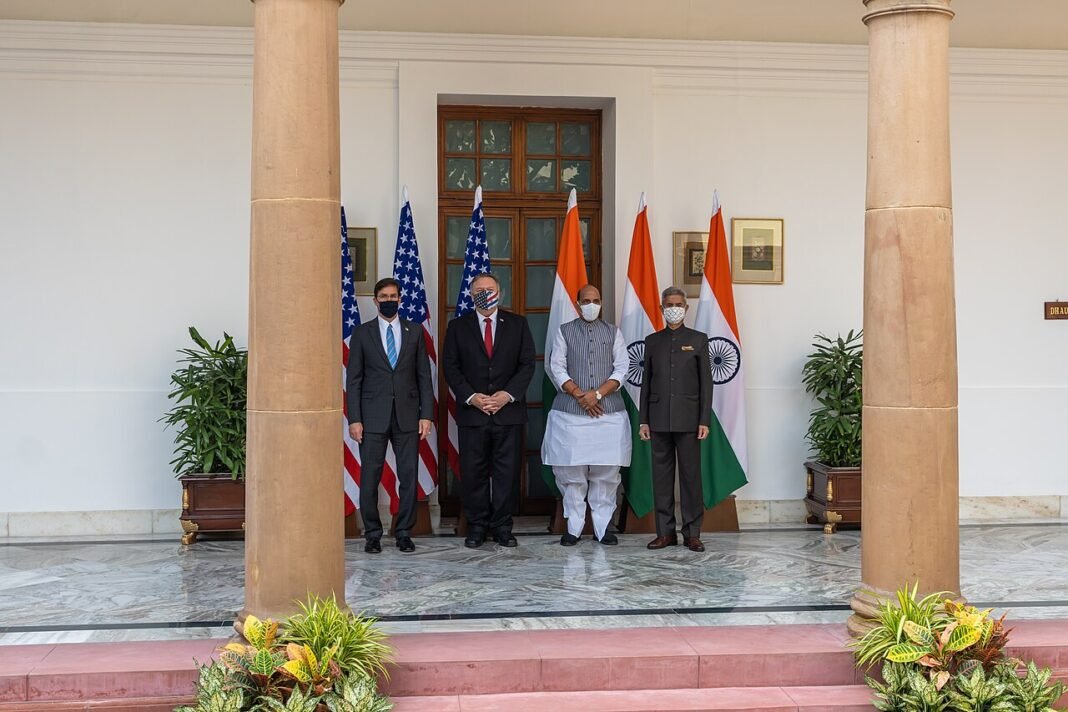
A ministry communiqué confirms that The External Affairs Minister, Dr. S. Jaishankar, is undertaking an official visit to the United Arab Emirates from October 14th to 16th, 2026. This visit, as announced by the Ministry of External Affairs, is intended to review the progress of the India-UAE Comprehensive Strategic Partnership. The statement does not mention the specific goals or benchmarks for this review, nor does it detail the anticipated outcomes of the discussions. The significance of this engagement lies in its placement within the broader context of India’s evolving diplomatic strategy across the Middle East, a region of increasing strategic importance for New Delhi.

Background
Prior to this visit, the Ministry of External Affairs issued a statement on October 6th, 2026, regarding Dr. Jaishankar’s earlier official visit to Ghana, Côte d’Ivoire, and Ethiopia. That statement highlighted bilateral meetings with counterparts and meetings with leadership in each nation to review “close bilateral ties of friendship and cooperation.” This suggests a pattern of engagement with key partners across Africa, mirroring a broader effort to diversify India’s diplomatic footprint. The current visit to the UAE represents a shift in focus, prioritizing a relationship already designated as “Comprehensive Strategic” by both nations.
Analysis
The core purpose of the visit, as articulated by the Ministry, is to “review the progress” of the India-UAE Comprehensive Strategic Partnership. The inclusion of the “2nd edition of Raisina Middle East event in Abu Dhabi” is notable. The Raisina Dialogue, traditionally held in New Delhi, is increasingly being extended to regional partners, signalling a deliberate effort to broaden India’s influence within the Middle East. This suggests a strategic intent to elevate the UAE’s role in India’s broader geopolitical calculations. The statement does not address the specific areas of cooperation being reviewed, leaving open the possibility of discussions related to defense, energy, trade, or security. The lack of detail regarding “progress” is particularly revealing, implying that the current assessment of the partnership may not be entirely positive, or at least not fully aligned with India’s ambitions.
Implications
The visit carries implications for regional stability. A strengthened India-UAE partnership could potentially alter the dynamics of regional alliances, particularly concerning maritime security and energy flows. The participation in the Raisina Middle East event elevates the UAE’s position within India’s strategic thinking, potentially influencing India’s approach to broader regional conflicts and dialogues. The visit also has implications for trade, with the potential for increased investment and cooperation in sectors such as renewable energy and technology. Should the visit yield an agreement on enhanced defense cooperation, as some analysts suggest, it would represent a significant step in bolstering India’s security posture in the region.
Outlook
If the discussions at the Raisina Middle East event are successful, and if the Ministry of External Affairs subsequently announces new initiatives or agreements, it would signal a renewed commitment to the Comprehensive Strategic Partnership. Should the visit primarily focus on maintaining existing agreements and addressing logistical challenges, the impact would likely be limited. The statement does not address the potential for disagreements or areas of contention between the two countries, leaving the future of the partnership contingent on the ability of both sides to find common ground.
Conclusion
The visit to the UAE underscores India’s ongoing efforts to solidify its strategic partnerships in the Middle East. However, the lack of specific details about the review process leaves open the question of whether the India-UAE Comprehensive Strategic Partnership is currently meeting its stated objectives, or if it is evolving to address new geopolitical realities.


.jpg)