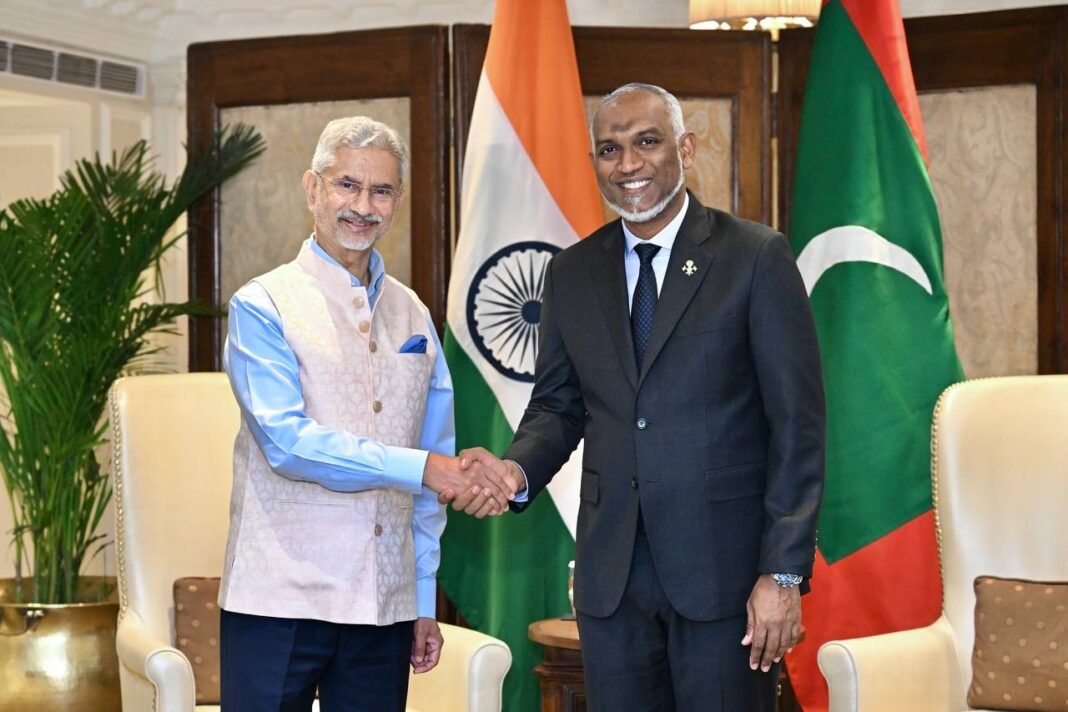
Per the government announcement, New Delhi, October 14, 2026 – External Affairs Minister Dr. S. Jaishankar met today with Canadian Foreign Minister Ms. Anita Anand to review ongoing efforts to strengthen the India-Canada Strategic Partnership. The meeting, focused on advancing cooperation across key areas, reflects a sustained diplomatic effort between the two nations. This engagement centers on the continued advancement of bilateral relations, as stated by the Ministry.

Background
The India-Canada Strategic Partnership, as outlined by the Ministry, has been the subject of recent high-level engagement. Prior to this meeting, in March the Ministry stated that “the two nations were committed to enhancing their defence and security cooperation,” referencing ongoing discussions with Canada regarding defence matters. Furthermore, the Prime Minister’s meeting with the Prime Minister of the Federal Democratic Republic of Ethiopia on the sidelines of the BRICS Summit in New Delhi (September 12, 2026) demonstrates the breadth of India’s diplomatic portfolio and the importance placed on global south partnerships. The Ministry’s statement in March also highlighted the commitment to “expanding cooperation in areas of mutual interest, including trade, science and technology, defence, security, energy, education, people-to-people ties and multilateral cooperation.”
Analysis
The meeting’s stated objectives – enhancing security and defence cooperation, expanding energy cooperation, and deepening the economic partnership – represent key priorities for both governments. The focus on a Comprehensive Economic Partnership Agreement (CEPA) suggests a continued, if somewhat protracted, effort to reduce trade barriers. The exchange of “perspectives on regional and global developments of mutual interest” indicates a desire to align positions on international issues, though the specific issues remain undefined. The meeting’s emphasis on “translating it into tangible outcomes” signals a desire to move beyond simply discussing cooperation and towards concrete deliverables. The statement does not address the ongoing negotiations on the CEPA, or any potential shifts in the trade relationship.
Implications
The sustained engagement between India and Canada carries implications for regional stability. Increased security cooperation, as discussed, could influence dynamics within the Indo-Pacific region, though the statement does not provide any detail on this. The pursuit of a CEPA, if successfully concluded, would have significant implications for bilateral trade, potentially boosting economic ties. Furthermore, the discussion of “people-to-people ties” suggests a continued focus on fostering cultural and educational exchanges, a common element in many bilateral partnerships. The meeting’s reaffirmation of a “constructive and forward-looking partnership” implies a commitment to maintaining diplomatic channels in a complex global environment.
Outlook
Should the progress towards an early conclusion of negotiations on the CEPA materialize, it would represent a notable step in the bilateral relationship. If the security and defence cooperation discussions yield concrete agreements on joint exercises or technology sharing, it would strengthen the strategic alignment between the two countries. If the ministers continue to exchange perspectives on regional and global developments, the two nations will likely continue to coordinate their approaches on key issues.