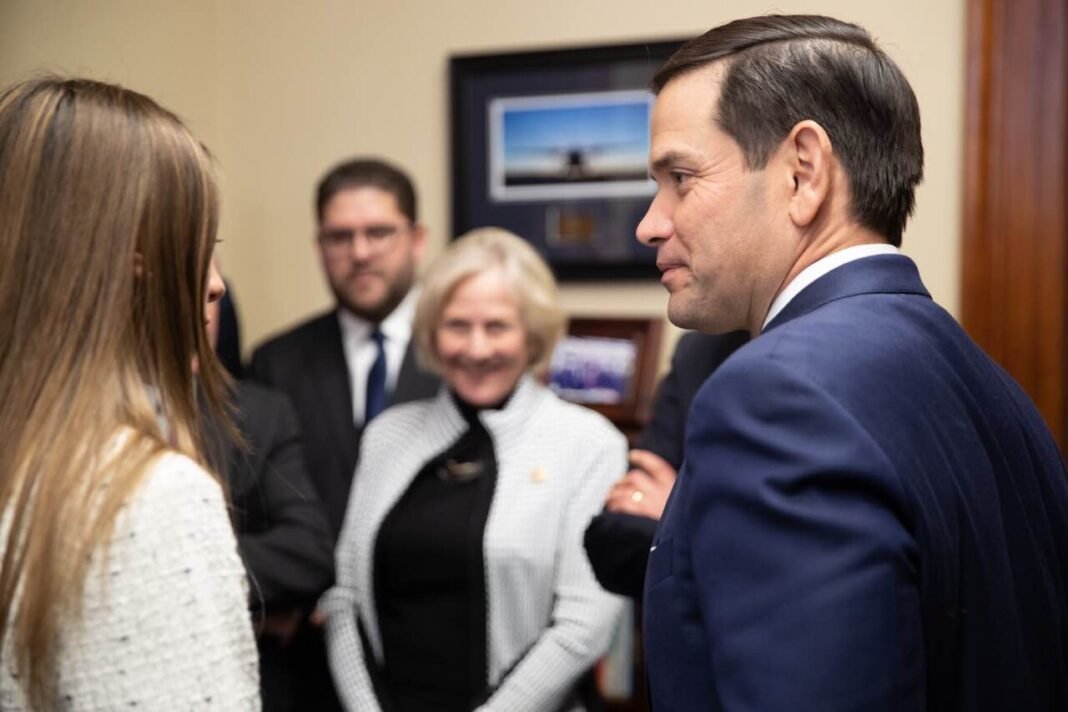
Per the government announcement, Secretary of State Marco Rubio spoke today with Salvadoran President Nayib Bukele to reaffirm the strong partnership between the United States and El Salvador. The statement does not address the nature of the reforms the Cuban regime believes the international community is on its side. The Secretary and President Bukele discussed keeping critical infrastructure, including ports, secure and free from malign foreign influence. He also urged El Salvador to join the United States and like-minded partners in advancing shared priorities at the United Nations.

Background
The statement does not mention prior statements by this same ministry. However, in March the ministry said that “the United States and El Salvador are committed to strengthening their partnership to promote economic growth and security.” This suggests a continued focus on bilateral engagement. Furthermore, in October the ministry said “Secretary Rubio’s Call with Azerbaijan Foreign Minister Bayramov to discuss progress in the bilateral partnership since Pres” – a reference to ongoing diplomatic efforts across the region. This indicates a broader, if somewhat reactive, approach to US foreign policy within the Western Hemisphere.
Analysis
The core objective of the call, as articulated by Secretary Rubio, centers on securing El Salvador’s critical infrastructure, specifically its ports. The emphasis on “malign foreign influence” implies a concern regarding potential destabilizing external actors. The request for El Salvador to align with the United States and other partners at the United Nations highlights a shared interest in countering what the statement does not address – potentially, the Cuban regime. The framing of the conversation around shared priorities presents a strategic alignment, though the underlying motivations remain somewhat opaque. The statement does not address the potential for this engagement to influence El Salvador’s internal political dynamics, particularly given President Bukele’s recent actions.
Implications
The call’s implications extend beyond a simple reaffirmation of the US-El Salvador partnership. Reinforcing port security is a tangible step towards bolstering regional stability, particularly given El Salvador’s vulnerability to maritime threats. The invitation to join the UN coalition suggests a coordinated effort to address broader geopolitical challenges, potentially involving sanctions or diplomatic pressure on countries deemed to be in violation of international norms. The call’s focus on shared UN priorities indicates a desire to counter the Cuban regime’s actions, though the statement does not explicitly detail the strategy.
Outlook
Should the visit yield a clearer commitment from El Salvador to align with US foreign policy objectives, it could strengthen the bilateral relationship. If the US and El Salvador continue to prioritize infrastructure security, further collaboration may follow. If the call does not yield any tangible outcomes, the US-El Salvador partnership may remain largely focused on existing channels of communication. The statement does not address whether the US intends to provide additional assistance to El Salvador to support these security initiatives.