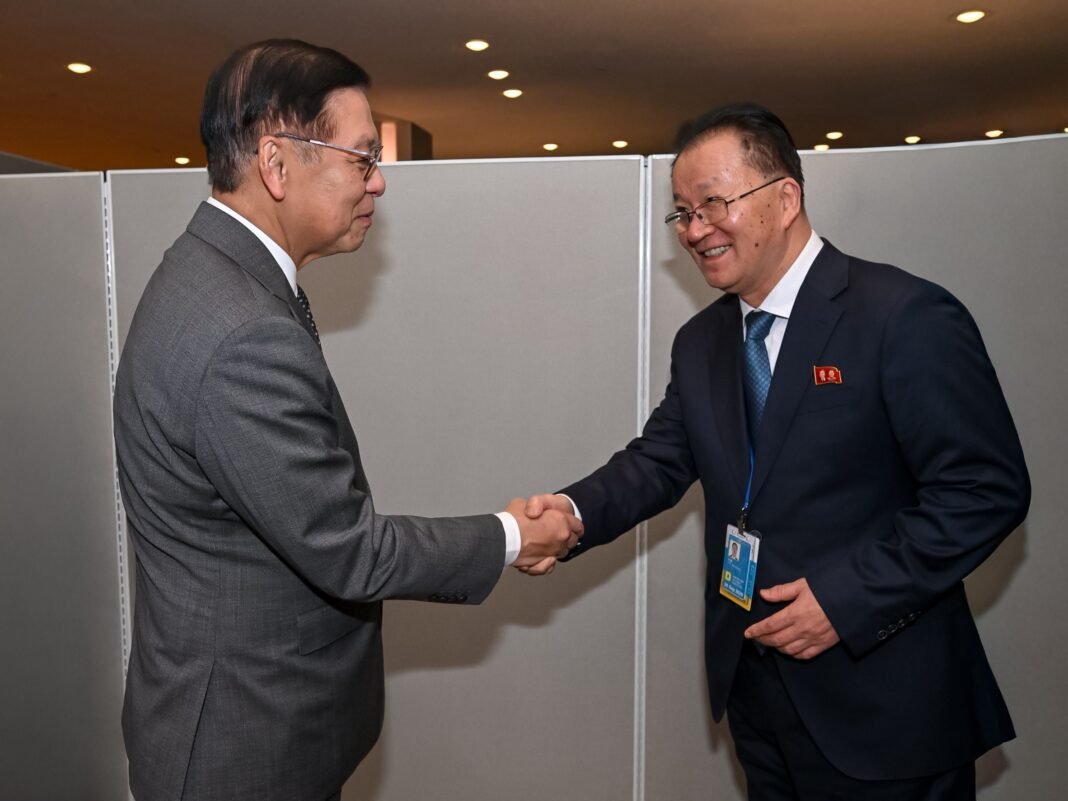
The official readout frames the trip as On September 28th, 2026, Ambassadors, Envoys and Governments of Denmark, Estonia, Finland, France, Iceland, Lithuania, Luxembourg, the Netherlands, Norway, Spain and Sweden and the United Kingdom released a joint statement on the occasion of International Safe Abortion Day. This statement reaffirms the rights of women and girls, in all their diversity, to make decisions about their own bodies and lives. Access to safe, timely and affordable abortion care is key for the realisation of bodily autonomy, gender equality, human rights, democracy and universal health coverage for all. The statement does not address the specific mechanisms through which France intends to support these goals.

Background
The joint statement follows previous declarations by the French Ministry of Foreign Affairs. In September, the ministry said “International Safe Abortion Day Feminist foreign policy Global health Statement On : September 28th 2026 On International Safe Abortion Day, 28 September, France reaffirms its unfailing commitment to women and girls having access to voluntary termination of pregnancy.” This suggests a consistent approach to aligning foreign policy with global health initiatives and human rights concerns. The statement does not mention any specific legislative changes or funding allocations related to abortion access. The World Health Organization (WHO) recognises that restrictive abortion laws create barriers to accessing safe, quality abortion care and lead to increased maternal mortality and morbidity, as well as other human rights violations. Its evidence shows that restricting abortion access, makes abortion unsafe. Women and girls in already vulnerable situations are affected the most.
Analysis
The statement’s core focus is on the realisation of bodily autonomy, gender equality, human rights, democracy and universal health coverage for all. The inclusion of the WHO’s perspective underscores the recognized risks associated with restrictive abortion laws. The statement does not explain the rationale behind this particular joint declaration. The emphasis on vulnerable populations highlights a potential area of concern – that the most affected individuals continue to face barriers to care. This suggests a recognition of the ongoing need for advocacy and policy reform within signatory nations.
Implications
The joint statement’s implications extend to regional stability and trade/security. Should the visit yield further diplomatic engagement, it could strengthen relationships with nations aligned on human rights principles. The statement does not address the potential impact on bilateral trade agreements or security collaborations. The statement does not address the potential for increased diplomatic pressure on nations with restrictive abortion laws.
Outlook
If the adoption of laws and policies that support access to safe abortion care is pursued, it could contribute to improved maternal health outcomes globally. Should the work of movements and human rights defenders to advance the decriminalisation of abortion and the right to access abortion care be protected and supported, it would represent a significant step forward. The statement does not address the timeline or specific actions planned to achieve these outcomes.