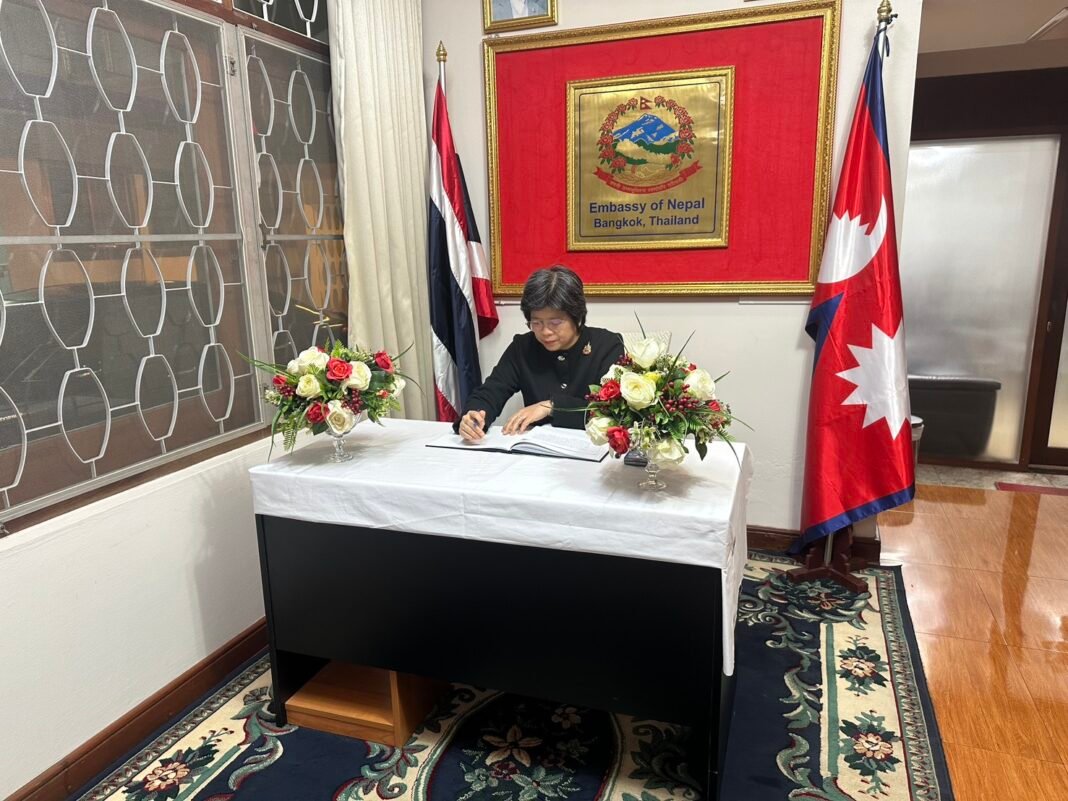
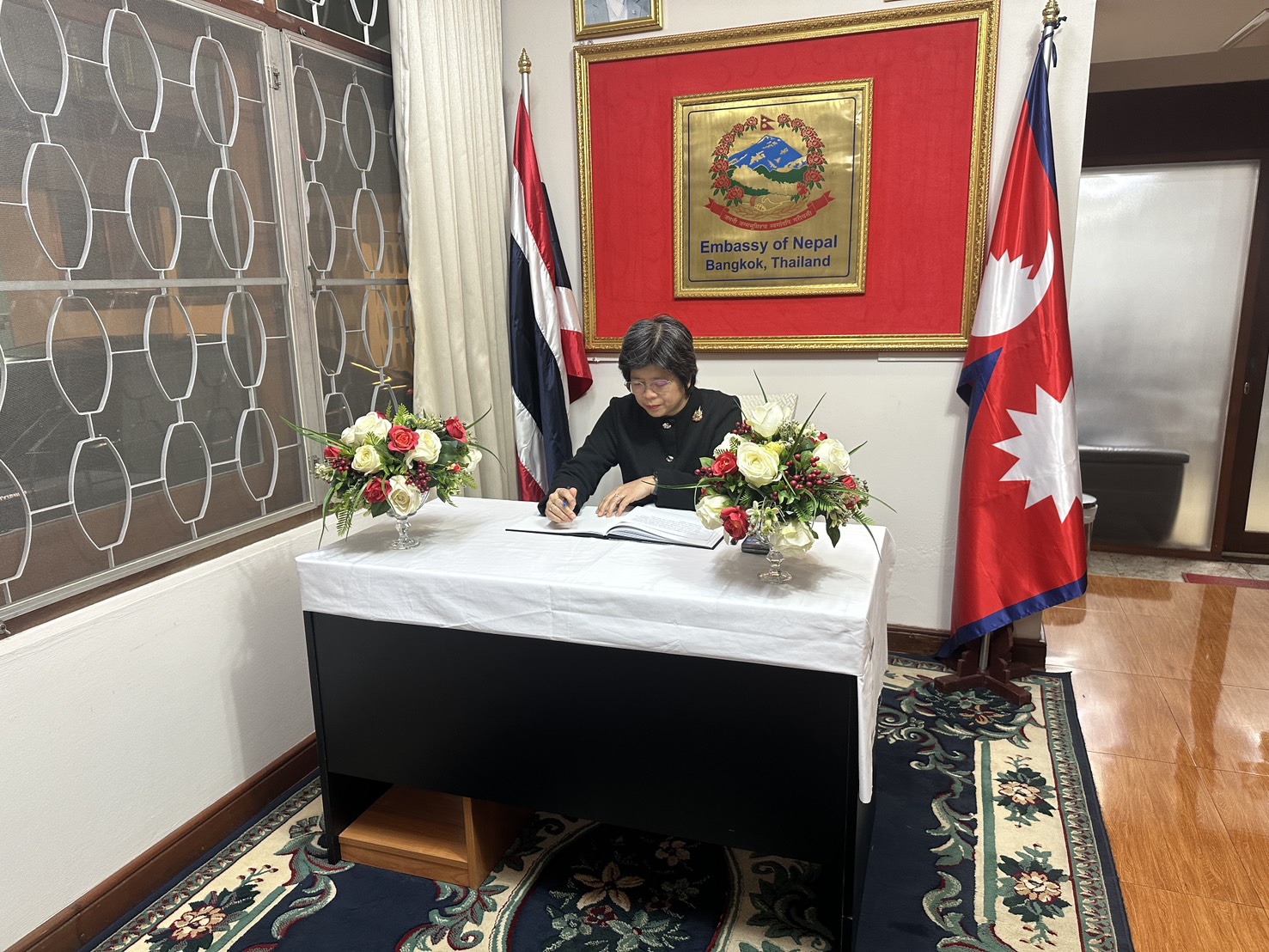
As set out in a formal announcement, On 2 September 2026, Mrs. Urasa Mongkolnavin, Director-General of the Department of South Asian, Middle Eastern and African Affairs, signed the condolence book at the Embassy of Nepal in Bangkok. This action, detailed in a press release from the Ministry of Foreign Affairs, represents Thailand’s initial formal response to the devastating flash floods and landslides that have impacted Nepal. The significance lies in the immediate expression of sympathy following a major natural disaster, demonstrating a commitment to diplomatic engagement in times of crisis.
Background
The Ministry of Foreign Affairs operates within the framework established by the 20-Year “5S” Foreign Affairs Masterplan – a policy initiative focused on strengthening Southeast Asian cooperation and promoting Thailand’s regional role. This plan, as outlined in the statement, prioritizes proactive engagement with neighboring nations. Prior to this event, on 31 August 2026, Mrs. Urasa Mongkolnavin had already discussed the disaster situation in Nepal with H.E. Mr. Dhan Bahadur Oli, Ambassador of Nepal to Thailand. This prior discussion underscores a pre-existing channel for communication and coordinated response planning.
Analysis
The Thai government’s action – signing the condolence book and reaffirming readiness to provide humanitarian assistance – centers on established diplomatic protocols. The statement does not address the specific volume of aid Thailand intends to offer, nor does it detail the nature of that assistance. However, the emphasis on “readiness” suggests an intention to mobilize resources swiftly should the situation warrant. This aligns with the broader ‘5S’ framework, aiming for strategic preparedness in regional crises. The act itself is a standard diplomatic gesture, intended to reassure Nepal and demonstrate Thailand’s commitment to international solidarity.
Implications
This event has limited immediate geopolitical implications beyond reinforcing Thailand’s image as a responsible Southeast Asian nation. For policymakers, the signing of the condolence book represents an opportunity to signal Thailand’s continued engagement with Nepal – a strategically important neighbor given its location and regional partnerships. The potential for humanitarian assistance, while not yet formalized, could strengthen bilateral ties further. Should Thailand successfully coordinate aid delivery, it may also provide a model for other ASEAN nations responding to similar disasters.
Outlook
If the situation in Nepal continues to deteriorate and requires sustained humanitarian support, Thailand’s willingness to contribute will be crucial. Should the Thai government secure agreements with international organizations – such as the United Nations – regarding logistical support or funding, this would represent a significant step. However, if the immediate crisis subsides and the need for substantial aid diminishes, this event may remain largely symbolic, reflecting standard diplomatic protocol rather than a deep commitment to long-term recovery efforts. The statement does not address whether Thailand’s response will be aligned with ASEAN disaster relief mechanisms.
Conclusion
The signing of the condolence book represents a procedural step in Thailand’s engagement with Nepal following the devastating floods, but it leaves open the key question: what tangible support – beyond initial expressions of sympathy – will be offered to assist in the country’s recovery?
Sources & Further Reading
- Official press release
- Foreign ministry source
- Vice Minister for Foreign Affairs signs the Condolence Book following the Flash Floods and Landslides in Nepal (5 Sep 2026)
- Director-General of the South Asian, Middle East and African Affairs Department discusses disaster situation in Nepal with Ambassador of Nepal to Thailand (3 Sep 2026)
- Director-General of Information Department and Spokesperson of the Ministry of Foreign Affairs meets with Spokesperson of the U.S. Embassy in Thailand (1 Sep 2026)