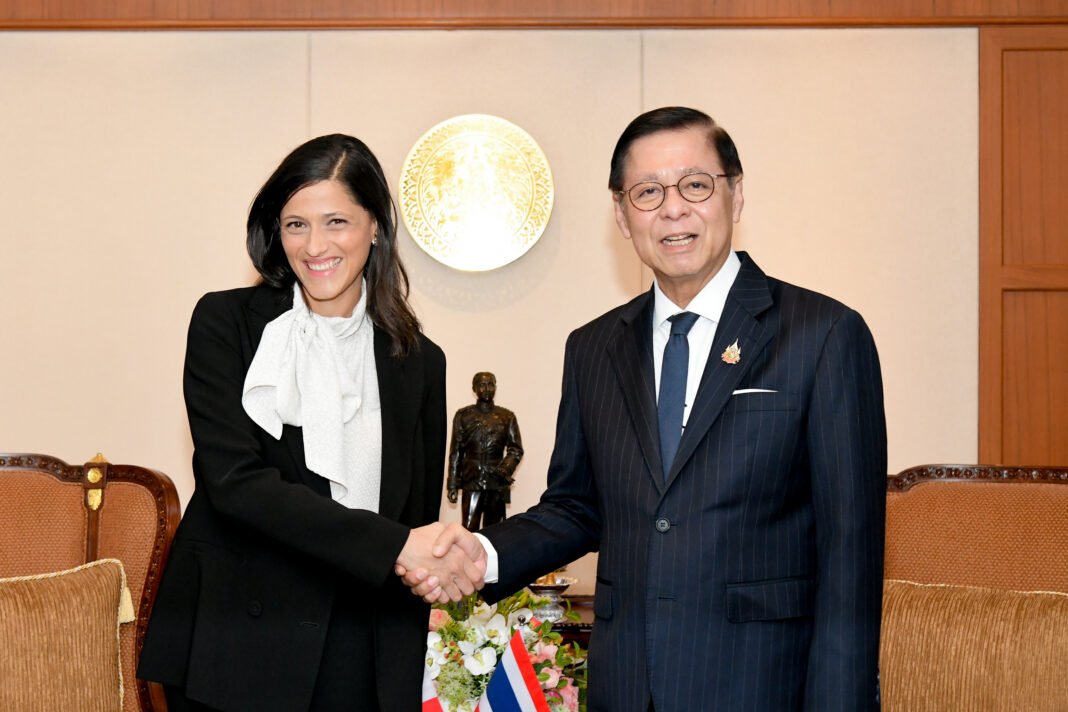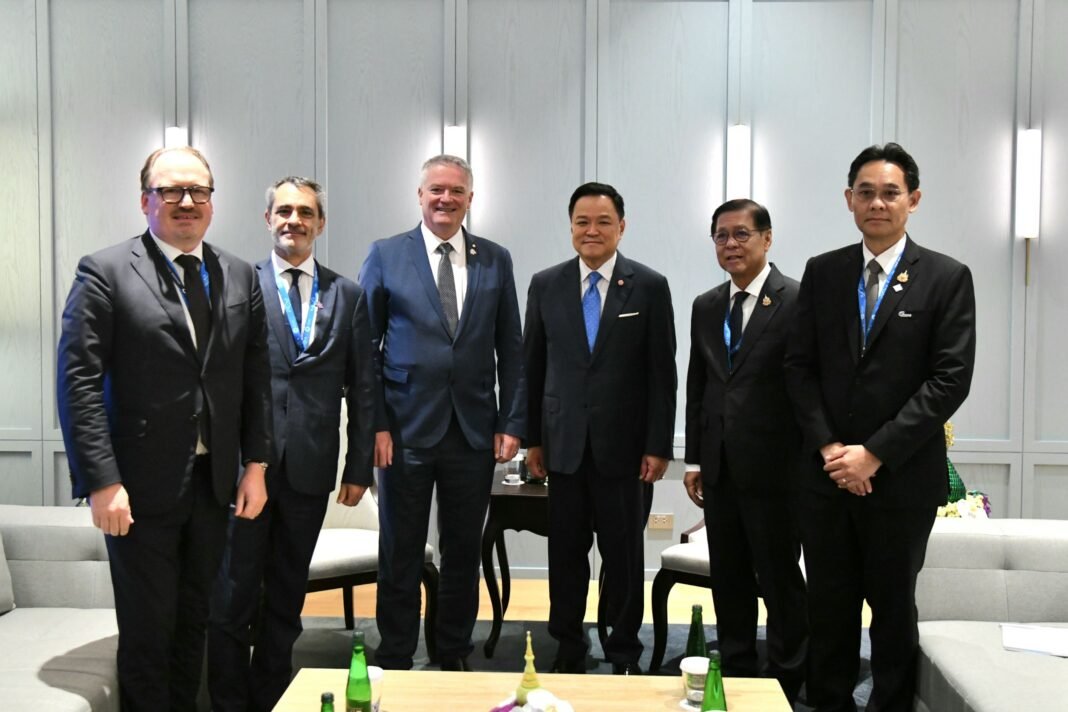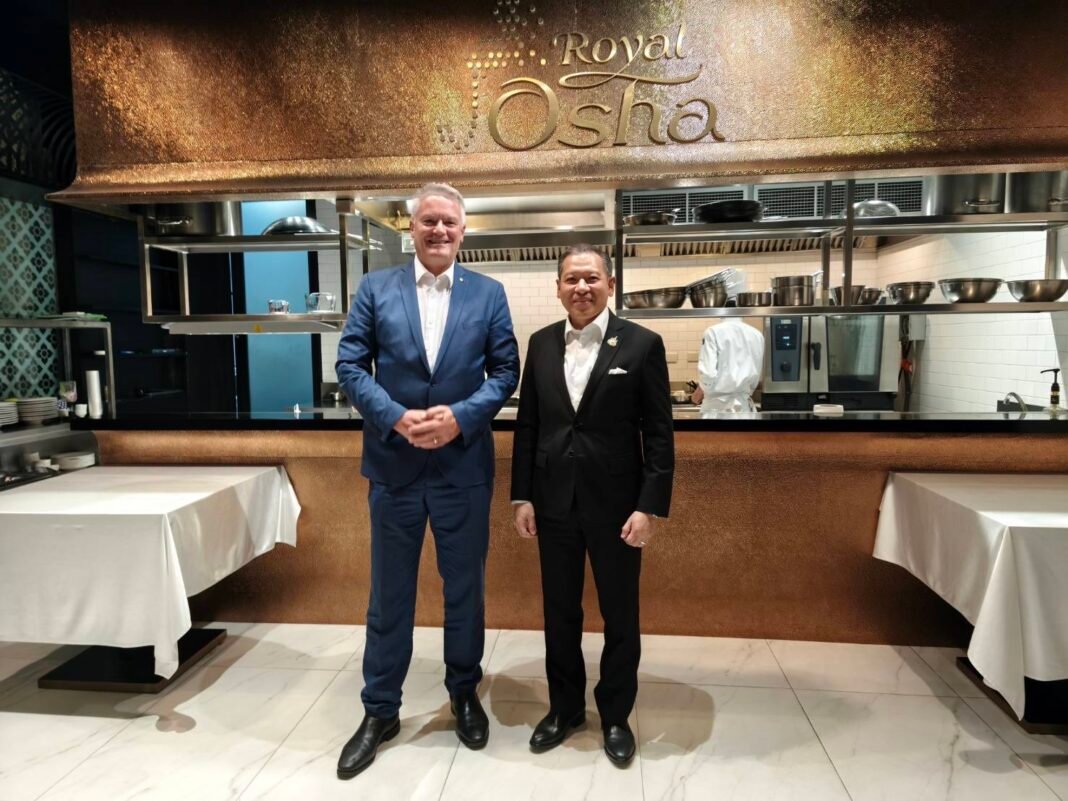
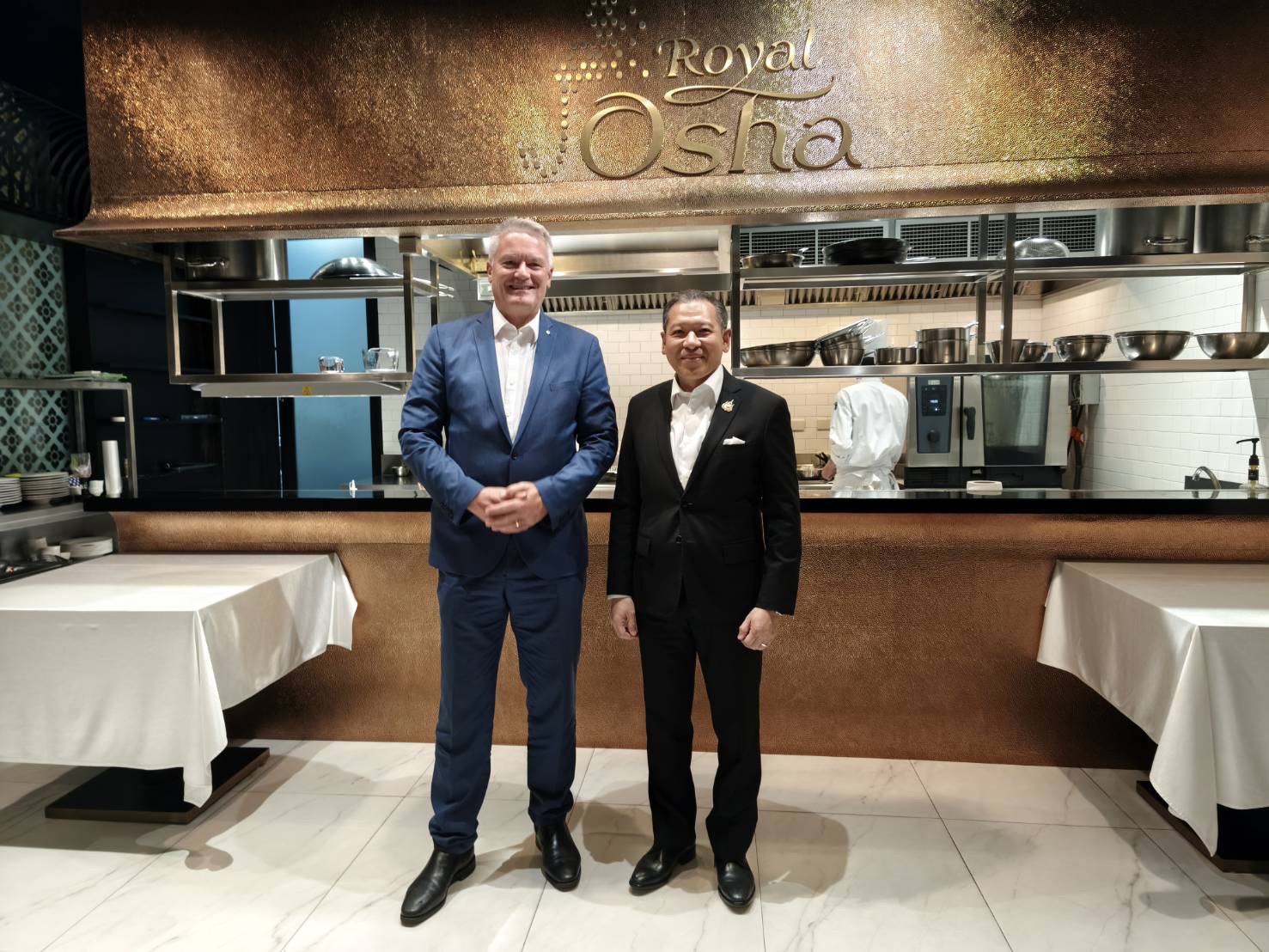
Per the government announcement, The Thai Government’s commitment to joining the Organisation for Economic Co-operation and Development (OECD) received a renewed impetus on 14 October 2026, following a dinner hosted by Vice Minister for Foreign Affairs, Mr. Sarun Charoensuwan, in honour of the OECD Secretary-General, Mr. Mathias Cormann. The event, as detailed in the Ministry of Foreign Affairs press release, underscores Thailand’s ongoing efforts to align domestic reforms with international standards, a key component of the nation’s 20-Year “5S” Foreign Affairs Masterplan. The fact that the OECD Secretary-General chose to visit Thailand to discuss this process highlights the organization’s perception of Thailand as a strategically important partner within Southeast Asia and the broader Association of Southeast Asian Nations (ASEAN) bloc. The press release does not mention the specific location of the dinner, only stating it was an “honour of” the OECD Secretary-General’s visit to Thailand to attend the IMF – World Bank Group Annual Meetings 2026.
Background
Thailand’s pursuit of OECD membership is a longstanding objective, driven by the government’s desire to promote sustainable economic growth and improve governance. Previous diplomatic engagements, including a visit by the Vice Minister for Foreign Affairs to Canada in September 2026, demonstrate the continued prioritization of this objective. The Ministry of Foreign Affairs’ “5S” Foreign Affairs Masterplan, launched in 2022, explicitly identifies OECD accession as a key strategic goal. The statement does not address the specific timeline for this process or the anticipated challenges. The press release references a meeting with the Secretary-General of the World Meteorological Organization (WMO) on 7 October 2026, suggesting a broader focus on international collaboration and expertise. The statement does not address any prior discussions between Thailand and the OECD regarding this specific meeting or the broader context of the IMF – World Bank Group Annual Meetings 2026.
Analysis
The meeting’s focus on the OECD accession process reveals Thailand’s strategic calculation: aligning with a respected international body offers the potential to bolster its economy and enhance its international standing. The Thai Government’s strong political commitment, reaffirmed by Mr. Charoensuwan, suggests a sustained effort to meet OECD requirements. The OECD’s emphasis on mutual benefits – Thailand advancing reforms while the organization gains valuable regional perspective – indicates a pragmatic approach to the partnership. The statement does not mention the potential for increased scrutiny of Thailand’s regulatory environment or the challenges associated with adopting OECD best practices. The OECD’s recognition of ASEAN’s “significant economic potential” further suggests a desire to leverage Thailand’s position within the region.
Implications
For Thailand, successful OECD accession would represent a significant step towards integrating into the global economy, potentially attracting foreign investment and bolstering trade. The process could catalyze domestic reforms across a range of sectors, including governance, transparency, and environmental standards. Should the OECD accession process yield positive results, it could strengthen Thailand’s diplomatic leverage within ASEAN and facilitate greater cooperation on regional issues. The meeting’s focus on Thailand’s “perspective and experience” highlights the potential for Thailand to play a more influential role in OECD deliberations, particularly concerning Southeast Asia. The statement does not address the potential impact on Thailand’s trade relations with other countries, nor the broader implications for regional trade agreements.
Outlook
Should the visit yield a renewed commitment from the OECD, Thailand will likely continue to prioritize reforms aligned with OECD standards. If the Thai Government successfully navigates the complex accession process, it could accelerate economic development and enhance its international reputation. Should the OECD’s support falter, Thailand may need to reassess its broader foreign policy strategy, potentially seeking alternative partnerships for economic growth and regional influence. The statement does not address any contingency plans should the OECD’s assessment of Thailand’s readiness prove insufficient.
Conclusion
The dinner in honour of the OECD Secretary-General represents a discrete, yet significant, engagement in a long-running process. The continued emphasis on OECD membership underscores Thailand’s ambition for sustained economic and political influence, yet the ultimate success of this endeavour remains contingent on a complex interplay of domestic reforms and international acceptance – a challenge Thailand has repeatedly faced in its pursuit of global integration.
Sources & Further Reading
- Official press release
- Foreign ministry source
- Vice Minister for Foreign Affairs of Thailand visits Canada (19 Sep 202)
- Deputy Prime Minister and Minister of Foreign Affairs to pay official visit to Lao PDR (30 Sep 202)
- Vice Minister for Foreign Affairs meets with the Secretary-General of the World Meteorological Organization (WMO) (8 Oct 2026)