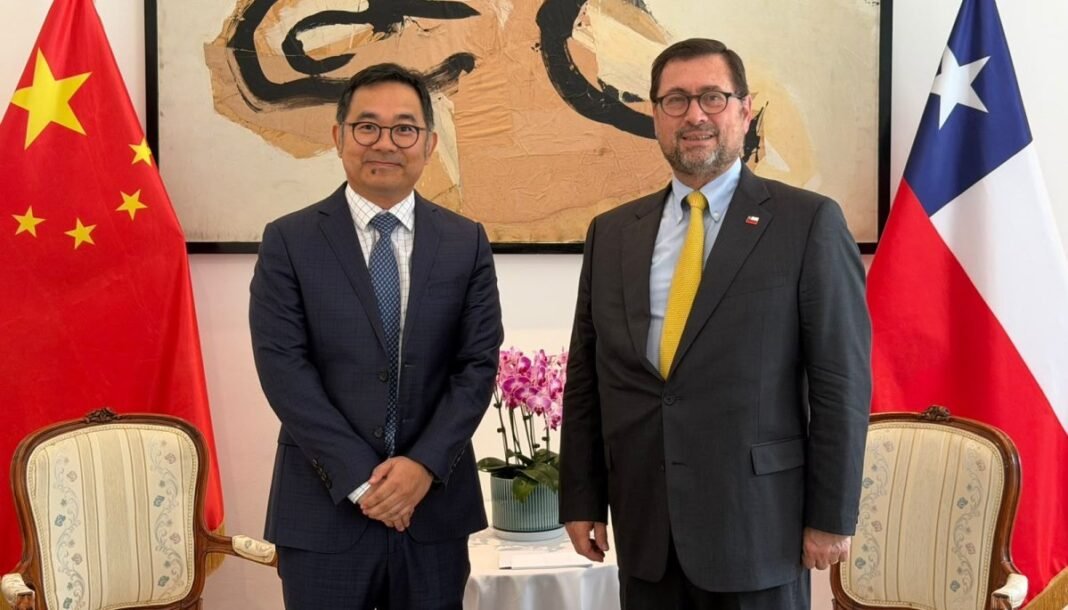
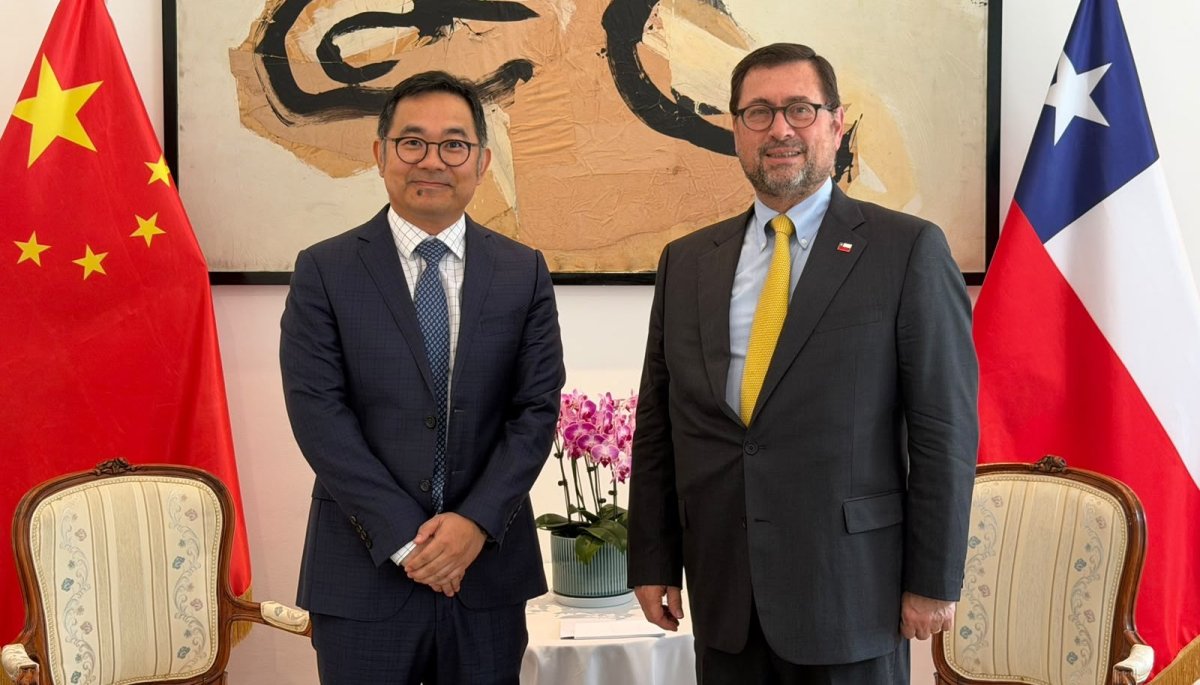
Reporting in a government statement, The Chilean Minister of Foreign Affairs, Francisco Pérez Mackenna, met this Thursday with Weining Meng, Vice President of the Sinovac laboratory, during his visit to Beijing, China. The press release states that Chile is, according to Sinovac, one of its most consolidated partners in public health: supplier of more than 17 million doses of trivalent influenza vaccine during two consecutive seasons (2025–2026), and contractor for the bidding of Hepatitis A vaccines for the period 2026–2028. This suggests a sustained, if currently limited, engagement with China on vital public health initiatives.
Background
Sinovac’s established role as a supplier dates back to multiple vaccine procurements. The statement does not mention the precise terms of these contracts or the total value exchanged. Prior to this meeting, Chile had already secured over 17 million doses of influenza vaccine through Sinovac for successive seasons, beginning in 2025 and extending through 2026. Furthermore, Chile was awarded a contract for Hepatitis A vaccines covering the period 2026–2028, demonstrating ongoing reliance on Chinese pharmaceutical technology. The press release highlights Sinovac’s contribution to vaccine supply during the COVID-19 pandemic, but the statement does not address the specific volumes or timelines involved in that effort.
Analysis
The meeting’s emphasis on influenza and Hepatitis A vaccines indicates a strategic focus by Chile. The continued procurement of these vaccines from Sinovac highlights a reliance on Chinese manufacturing capacity, particularly given ongoing global supply chain vulnerabilities. If implemented as described, this collaboration strengthens Chile’s public health infrastructure and provides access to established vaccine technologies. However, the statement does not address potential geopolitical considerations surrounding vaccine dependence or intellectual property rights associated with the technology itself.
Chile’s public positioning of itself as a “reliable public health partner” – bolstered by clinical studies conducted in conjunction with the Pontificia Universidad Católica de Chile – appears designed to solidify its standing within China’s broader international initiatives. This suggests an effort to portray Chile as a trusted ally on matters related to global health security. The press release does not mention any discussions regarding collaborative research or development of new vaccines, nor does it elaborate on the scope of the clinical studies undertaken.
Implications
This meeting carries implications for Chile’s foreign policy posture within Asia and potentially beyond. The deepening relationship with Sinovac could be seen as a step toward diversifying Chile’s strategic partnerships, particularly in sectors critical to national security – namely, healthcare. Should the visit yield further agreements on vaccine supply or research collaboration, it would bolster Chile’s capacity to respond to future pandemics and other public health emergencies.
The continued reliance on Chinese pharmaceutical companies raises questions about Chile’s long-term biosecurity strategy. The statement does not address the potential risks associated with concentrating supply chains for essential medicines and vaccines, nor does it outline any mechanisms for mitigating those risks. Furthermore, the partnership’s implications are unclear in the context of broader trade relations between Chile and China, including ongoing discussions regarding access to key mineral resources.
Outlook
If Sinovac continues to supply vaccines under existing agreements, it would represent a continuation of the current trajectory. Should the visit yield further agreements on vaccine production or research, this could significantly enhance Chile’s capacity for independent vaccine development and distribution. However, should China reduce its supply of these vaccines due to domestic pressures or geopolitical considerations, Chile would face significant challenges in securing adequate immunization coverage.
Conclusion
The meeting with Sinovac underscores a deepening Sino-Chilean health partnership, yet the limited details provided by the press release leave key questions unanswered regarding the full scope of this collaboration and its alignment with Chile’s broader strategic objectives. The statement does not address whether these initiatives will contribute to strengthening Chilean biosecurity capacity or if they represent a prioritization of economic convenience over national security considerations.