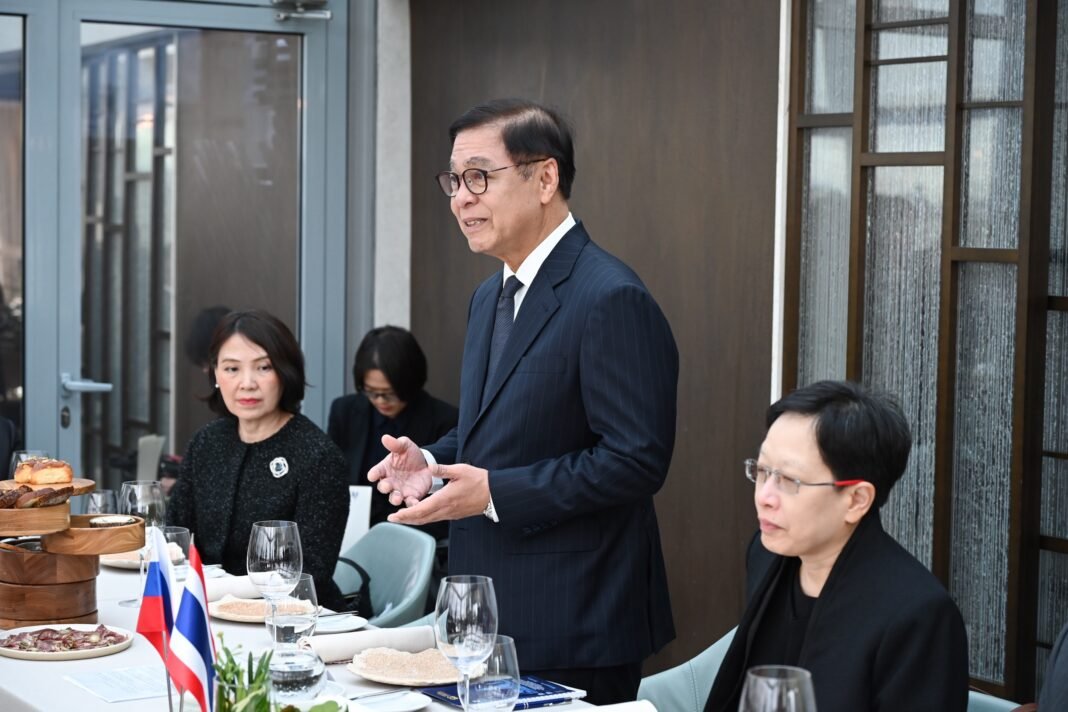
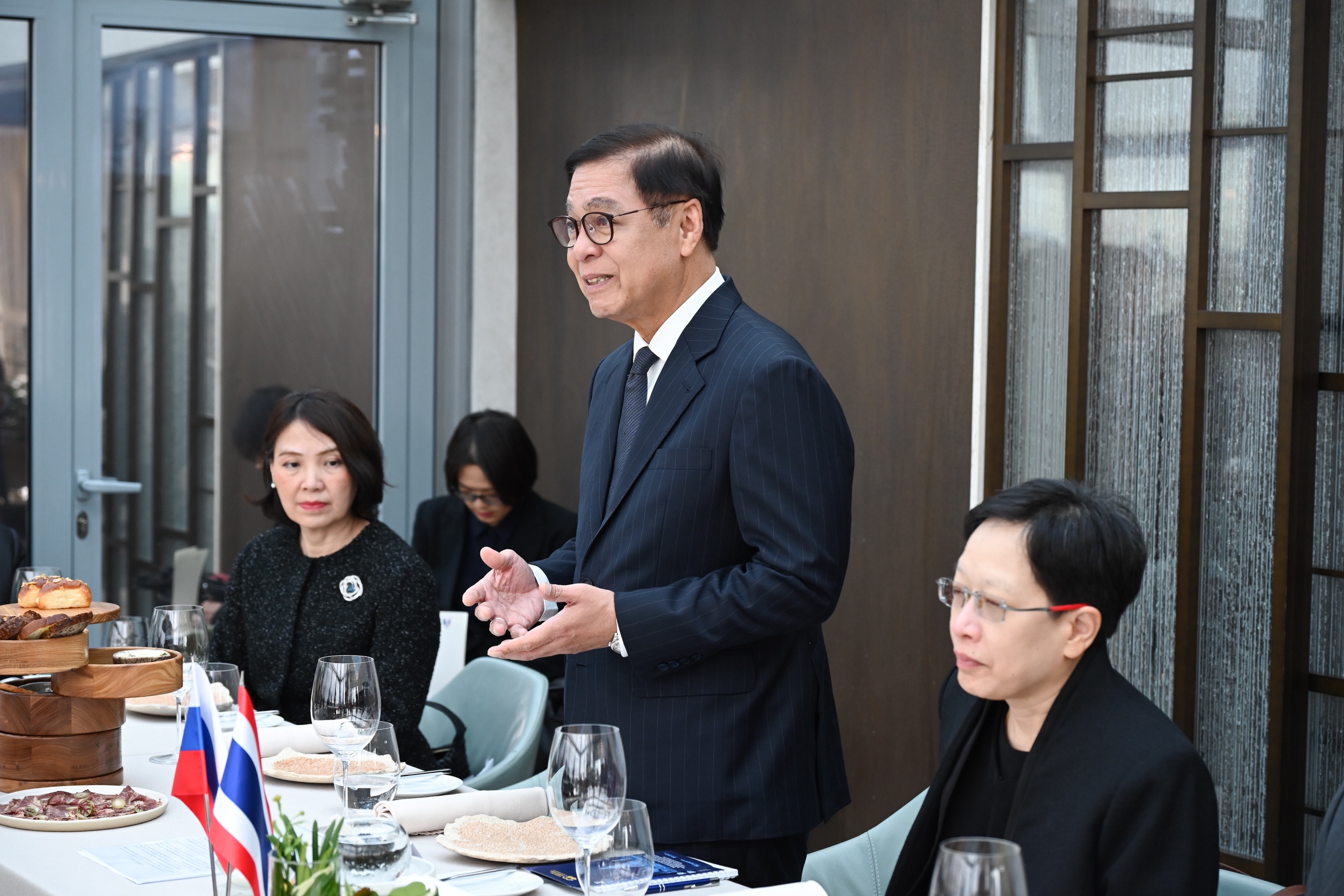
As set out in a formal announcement, The meeting between Deputy Prime Minister and Minister of Foreign Affairs Sihasak Phuangketkeow and Chairman of the Russian-Thai Business Council Ivan Demchenko, held on August 13th, 2026, focused on promoting trade and investment opportunities between Thailand and Russia (“Thailand – Russia”), according to a Ministry of Foreign Affairs press release. This event matters because it represents a deliberate effort by Thailand to actively engage with the Russian private sector in pursuit of specific economic goals – a goal underscored by the upcoming 2nd Russian-Thai Investment Forum slated for October 2026 in Bangkok. The statement does not mention any particular sectors prioritized, nor details surrounding the forum’s agenda or expected outcomes.
Background: The Russian-Thai Business Council (RTBC), established in 2006, operates to foster business and investment development between the two nations. The council comprises companies across diverse industries including heavy industry, energy, ICT and logistics – a reflection of Russia’s industrial base. Prior to this meeting, the statement does not mention any formal agreements or prior discussions that may have informed this engagement. It also references the “20-Year ‘5S’ Foreign Affairs Masterplan,” indicating an ongoing strategic framework for Thailand’s foreign policy direction, though the press release provides no details on how this specific event aligns with the broader plan. The statement does not address any previous meetings or collaborations between Thai and Russian officials.
Analysis: The impetus behind this working lunch appears to be a concerted effort by the RTBC to strengthen networks leading up to the October investment forum – a clear signal of Russia’s continued interest in Thailand as an investment destination. This suggests that Thailand is seeking to attract foreign capital, particularly within sectors where Russia possesses demonstrable expertise and resources. The council’s composition—spanning heavy industry, energy, ICT and logistics—indicates a targeted approach rather than a broad-based solicitation of investment. If implemented as described, this strategy represents a shift in focus from general economic cooperation towards more structured engagements with specific Russian companies. This also presents an opportunity for Thailand to potentially secure access to technological advancements within these sectors – if the visit yields positive outcomes.
Implications: The event holds implications for regional stability by reinforcing bilateral ties between Thailand and Russia, particularly given the broader geopolitical context. Should the investment forum attract significant foreign capital, it could bolster Thailand’s economic growth, though the statement does not address potential impacts on Thailand’s debt levels or trade balance. Strengthening commercial relationships with Russia also carries security considerations, requiring careful monitoring of Russian activities within Southeast Asia – a factor the press release entirely overlooks. The focus on targeted sectors—as outlined in the RTBC’s charter—could lead to increased competition within those industries and potentially disrupt existing Thai supply chains.
Outlook: If the investment forum proceeds as planned, Thailand faces the conditional challenge of attracting sufficient foreign investment without compromising its strategic autonomy or economic stability. Should the visit yield concrete agreements regarding specific projects – a crucial factor missing from the statement – it would represent a positive step toward diversifying Thailand’s economy and reducing reliance on traditional trading partners. The statement does not address any potential contingencies should the Russian private sector demonstrate limited interest in participating in the forum, or if geopolitical tensions escalate that could impact bilateral relations.