
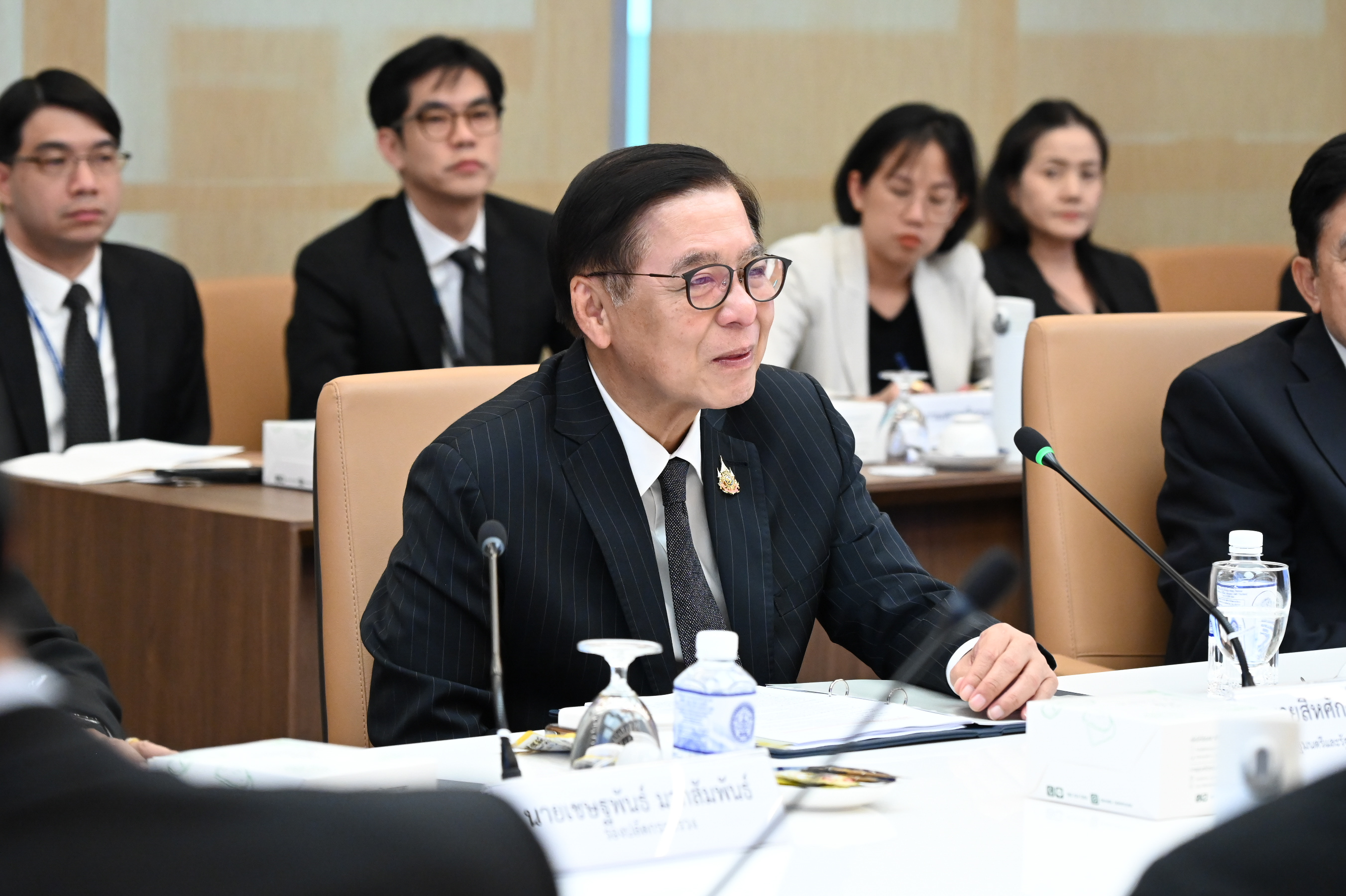
The official readout frames the trip as The statement does not mention specific trade agreements or target markets beyond “existing and new markets.” However, the fact that Deputy Prime Minister Sihasak Phuangketkeow met with Dr. Poj Aramwattananont, Chairman of the Thai Chamber of Commerce and the Board of Trade of Thailand, on 14 August 2026, is significant – it signals a renewed emphasis on economic diplomacy at a time when Thailand’s trade balance remains under pressure . The meeting’s purpose was to advance Thailand’s economic agenda, a core objective outlined in the 20-Year “5S” Foreign Affairs Masterplan . This masterplan, as the ministry states, prioritizes bolstering Thailand’s competitiveness and export capacity alongside strengthening public-private collaborations. The meeting’s timing – coinciding with ongoing discussions about trade barriers and challenges – underscores the urgency of this objective.
Background: The statement does not detail prior meetings or agreements between the Ministry of Foreign Affairs and the Thai Chamber of Commerce and Board of Trade. However, it references the “5S” Foreign Affairs Masterplan, a long-term strategic framework intended to guide Thailand’s foreign policy direction. This plan, as the ministry indicates, aims for an integrated “Team Thailand” approach, signifying a push towards greater collaboration between government agencies and private sector entities. The statement also highlights the importance of exploring new trade opportunities in both existing and new markets, reflecting broader concerns about diversifying Thailand’s economic base.
Analysis: The core incentive driving this meeting is clearly the desire to address trade-related challenges – specifically, “trade-related challenges and barriers” – a phrase repeated within the press release. The Deputy Prime Minister’s emphasis on an integrated “Team Thailand” approach suggests a recognition that purely government-led initiatives will prove insufficient in navigating increasingly complex global markets. This signals a shift towards greater engagement with private sector actors—particularly Thai entrepreneurs—to leverage platforms like the “Thai Festival” to generate further business opportunities. The statement does not address whether this strategy adequately accounts for potential geopolitical risks or evolving trade dynamics within ASEAN or beyond. If implemented as described, the focus on strengthening Thailand’s competitiveness and export capacity could provide a short-term boost to the Thai economy.
Implications: Should the visit yield positive results in forging stronger public-private partnerships, it could potentially unlock investment opportunities and stimulate economic growth. However, the statement does not address whether this approach will adequately diversify Thailand’s trade and investment risks. The emphasis on “new markets” without specifying destinations raises questions about Thailand’s strategic priorities – particularly given existing concerns regarding its reliance on certain key trading partners. The meeting’s focus on bolstering Thailand’s competitiveness could be viewed as a response to increasing competition from countries like Vietnam and Indonesia, but the statement does not provide insights into how Thailand intends to maintain an edge.
Outlook: If the “Team Thailand” approach successfully generates new trade agreements, it would represent a positive development for Thailand’s economic prospects. Should the visit yield concrete outcomes in terms of market access or investment flows, this could significantly reduce Thailand’s vulnerability to external shocks. However, should the meeting fail to produce tangible results, particularly regarding diversification efforts, Thailand risks remaining overly reliant on traditional markets and susceptible to fluctuations in global demand. The statement does not address the potential for increased trade tensions with key trading partners.
Conclusion: The meeting’s emphasis on collaborative economic diplomacy reflects a strategic imperative for Thailand. Yet, the lack of specific details regarding diversification strategies leaves open the question of whether this approach will ultimately deliver sustainable long-term growth or simply maintain the status quo.