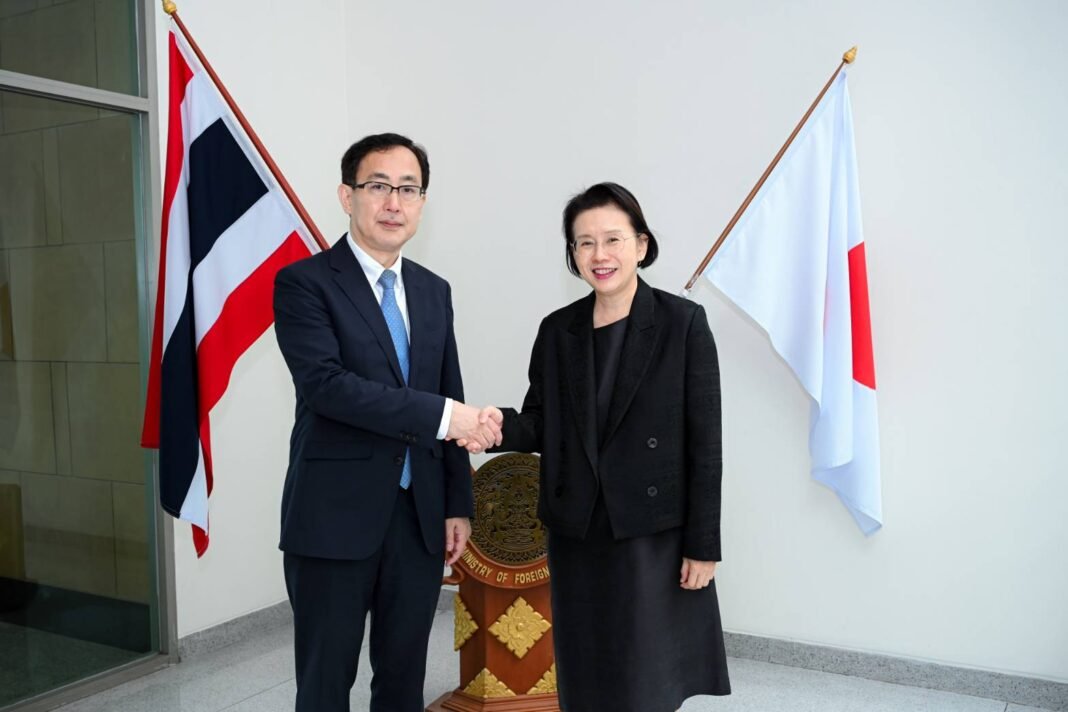
A ministry communiqué confirms that On August 11, 2026, Permanent Secretary for Foreign Affairs Ms. Eksiri Pintaruchi co-chaired the 11th Japan – Thailand Political Partnership Consultations (JTPPC) with Mr. Namazu Hiroyuki, Senior Deputy Minister for Foreign Affairs of Japan at the Ministry of Foreign Affairs. This event represents a key mechanism for ongoing discussions between the two nations, established in 2004 and traditionally co-chaired by the Permanent Secretary. The statement indicates that Thailand and Japan are approaching their 140th anniversary of diplomatic relations – to be celebrated in 2027 – with a renewed commitment to strengthening their Comprehensive Strategic Partnership. This signals an ongoing ambition, but provides no indication of how this partnership will adapt to shifts in the global landscape.
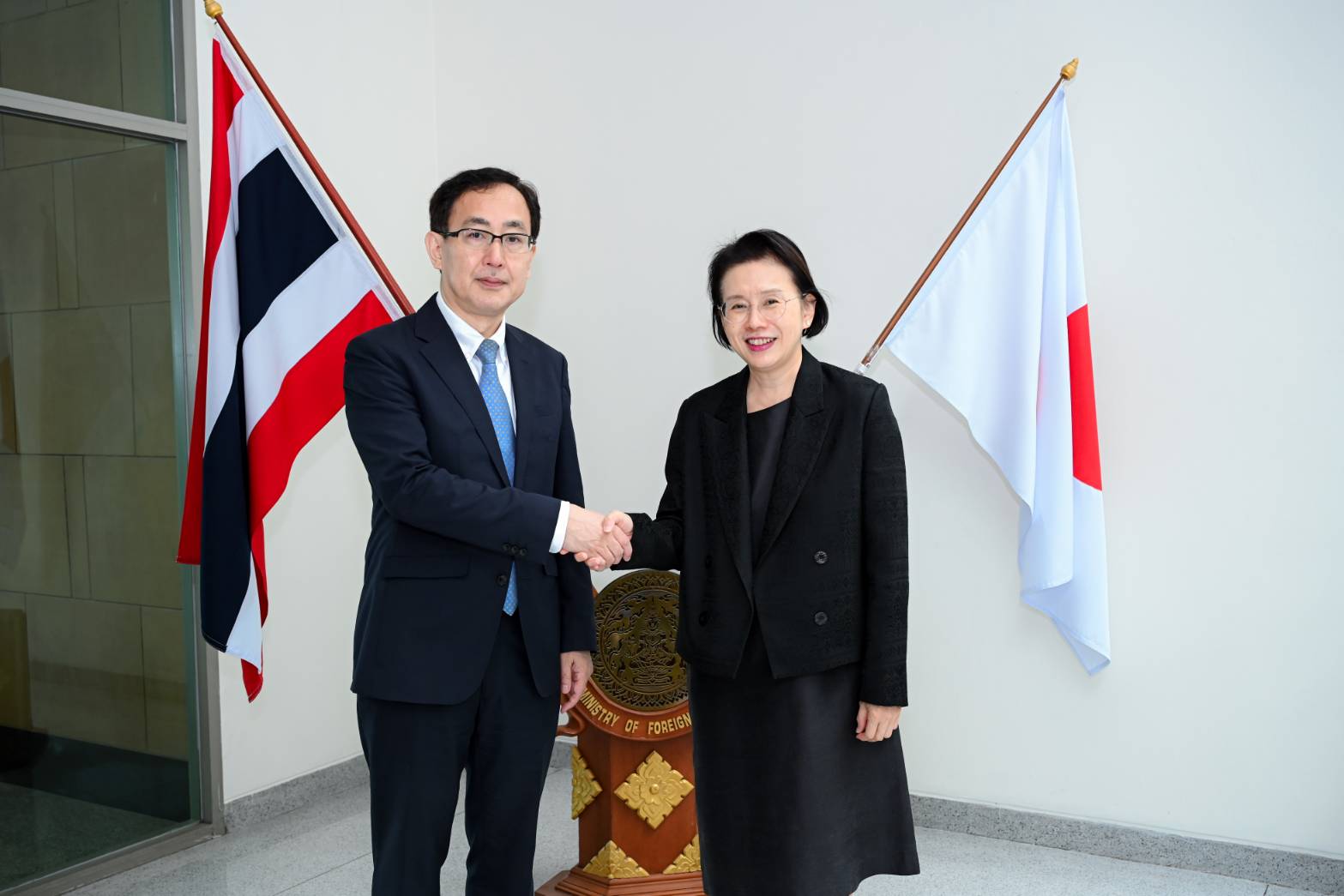
The JTPPC serves as one of several channels for consultation between Thailand and Japan regarding cooperation across various sectors. The statement highlights a timeline linked to the 140th anniversary of diplomatic relations, scheduled for 2027, emphasizing the long-term nature of this engagement. The inclusion of the Thailand – Japan High Level Joint Commission (HLJC) underscores a formalized structure for strategic coordination. This reiteration of existing mechanisms suggests a desire for continuity rather than radical change in established approaches to bilateral ties.
The stated goals of the JTPPC – advancing cooperation across political, economic, people-to-people, regional, and subregional spheres – reflect Thailand’s broader foreign policy priorities. The emphasis on “mutual competitiveness” implies a strategic focus on leveraging Japan’s technological prowess while simultaneously seeking to enhance Thailand’s own economic standing. The reference to “exploring cooperation in new areas” suggests an openness to diversification, although the statement doesn’t detail what these potential areas might be. This approach reflects a cautious strategy, prioritizing established relationships alongside opportunistic engagement – particularly given the context of a “volatile global environment,” as explicitly stated. The mention of milestones for the future of Thailand – Japan relations is notable.
The reaffirmation of the Comprehensive Strategic Partnership has clear implications for regional stability, particularly within Southeast Asia. Japan’s continued engagement with Thailand acts as a stabilizing force and demonstrates support for Thailand’s democratic transition – however fragile. Furthermore, deepening economic cooperation, alongside advancing security cooperation, is likely to bolster Thailand’s trade relationships and potentially enhance its defense capabilities. The stated intention of exploring new areas of cooperation could further integrate Thailand into broader regional networks.
Should the visit yield continued dialogue on economic frameworks, a gradual increase in Japanese investment within Thailand’s strategic sectors – particularly those related to advanced manufacturing and renewable energy – is possible. If the HLJC continues to prioritize security cooperation, this could manifest as increased training exercises or collaborative efforts in maritime domain awareness. However, should the JTPPC fail to generate concrete proposals beyond reaffirming existing commitments, it risks becoming a routine diplomatic exercise, offering limited tangible benefits for either nation.
The 11th Japan – Thailand Political Partnership Consultations confirm the enduring importance of bilateral relations. However, the statement does not address whether this partnership will adapt to the increasing competition within Southeast Asia or outline specific strategies for navigating emerging geopolitical pressures – leaving open a critical question regarding Thailand’s long-term strategic alignment.