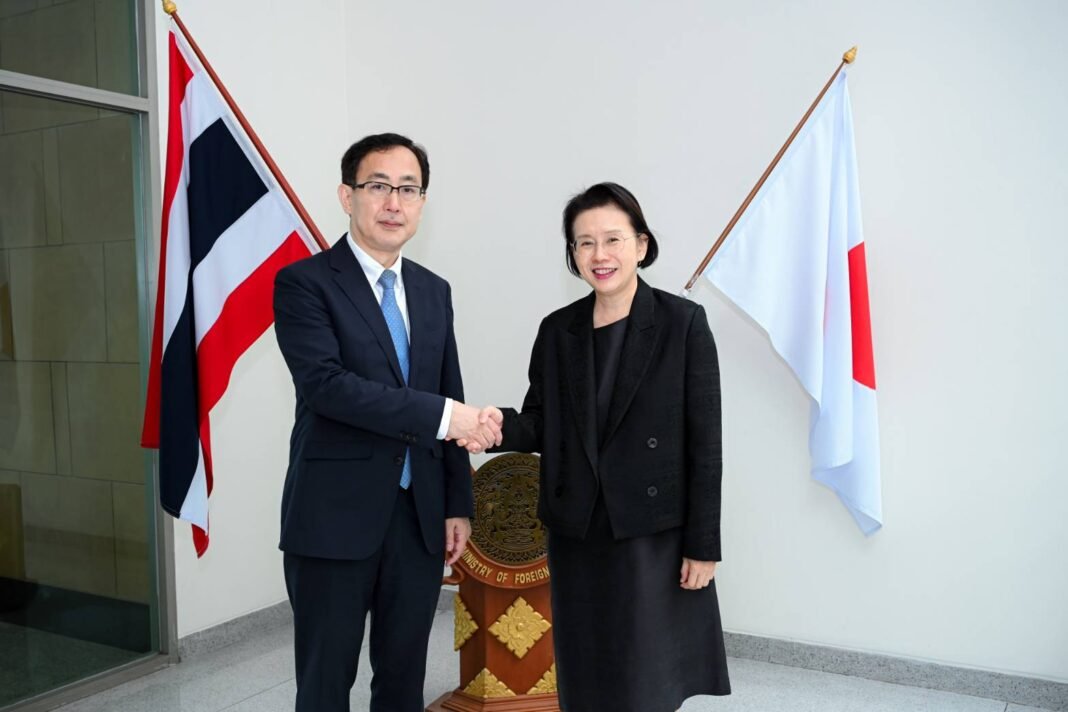

Reporting in a government statement, The Permanent Court of Arbitration’s (PCA) announcement on 14 August 2026 regarding the selection of Ambassador Katrina Cooper as Chairperson of the Conciliation Commission within the UNCLOS proceedings represents a key step in Thailand’s long-running dispute with neighboring countries. This development matters because it formalizes the international legal framework intended to resolve maritime boundary disagreements, a process that has already spanned decades and significant diplomatic effort. The statement does not mention specific timelines or anticipated outcomes of the proceedings.
Background: Thailand’s involvement in the UNCLOS framework stems from its accession to the Convention in 1982. Prior meetings have centered on establishing the Conciliation Commission – a body mandated by UNCLOS to facilitate peaceful settlement of disputes through negotiation and conciliation, rather than adjudication by an international tribunal. The statement references previous agreements regarding the appointment process, highlighting that Ambassador Cooper was one of several candidates Thailand supported. This reflects a strategic approach prioritizing legal expertise alongside diplomatic considerations. The release names Australia’s prior engagement in similar proceedings with Timor-Leste, demonstrating a shared understanding of the complexities involved.
Analysis: Thailand’s support for Ambassador Cooper suggests a desire to leverage her experience and knowledge within the established UNCLOS process. This indicates an intention to proceed through the recognized legal channels, potentially aiming for a negotiated settlement rather than pursuing a contentious judicial route. The selection of a former Australian ambassador as Chairperson underscores the high-stakes nature of the proceedings – Thailand is signaling its willingness to engage with a seasoned international figure accustomed to navigating delicate diplomatic situations. A key element is the tentative scheduling of a first meeting in September 2026, focused initially on establishing the Rules of Procedure for the Commission’s work. If implemented as described, this signifies a commitment to adhering to established protocols and a methodical approach. The statement does not address the underlying territorial claims driving the dispute or how Thailand perceives the PCA’s role.
Implications: This appointment has significant implications for regional stability. Should the Conciliation Commission successfully facilitate a resolution, it could reduce tensions amongst claimant states over maritime resources – particularly in the contested areas of the Gulf of Thailand. However, if negotiations stall, the protracted nature of UNCLOS proceedings could exacerbate existing geopolitical dynamics and potentially heighten the risk of miscalculation. The move also impacts Thailand’s trade relations, as unresolved maritime boundaries can create obstacles to energy exploration and transit routes. The statement does not address potential ramifications for Thai fishing industries or regional security alliances.
Outlook: If the first meeting in September 2026 yields agreement on the Rules of Procedure, it would represent a positive initial step towards a negotiated settlement. Should this occur, Thailand’s continued commitment to international law and peaceful dispute resolution could bolster its diplomatic standing within ASEAN and beyond. Conversely, if disagreements arise regarding the rules – particularly concerning access to data or the scope of the Commission’s mandate – the proceedings could be delayed indefinitely. The appointment itself does not, on its own, change the fundamental nature of the territorial dispute; it merely formalizes Thailand’s engagement with a legally prescribed process for addressing it.
Conclusion: Ambassador Cooper’s appointment marks a new phase in a long-standing challenge for Thailand, one that demands sustained diplomatic effort and unwavering adherence to international legal frameworks – but ultimately raises the question of whether a truly equitable outcome can be achieved through this established process.