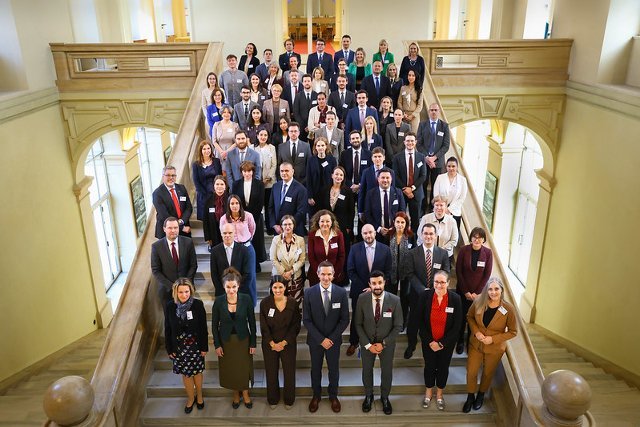
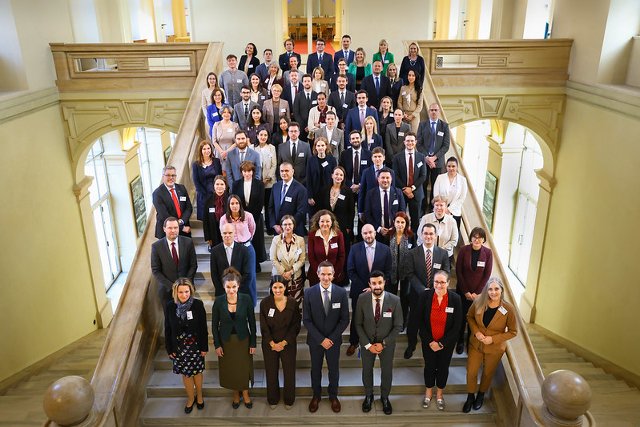
Details in a press release show that The Černin Palace hosted a working meeting of experts from NATO member states on 11–12 March 2026 dedicated to the NATO REACH (Reach, Engage, Attract, Connect, Hire) Talent Diversity Programme. This initiative aims to strengthen cooperation between the International Staff and member states in the area of human resources, with a particular focus on supporting under‑represented Allies in developing national activities that can help increase their personnel representation within the Alliance. The statement does not address the specific goals or metrics for success defined by this programme.
Background
The meeting was organised by the NATO International Staff in cooperation with the Ministry of Foreign Affairs of the Czech Republic. Participants attended a series of panels and workshops focused on modern recruitment strategies, data‑driven HR processes, and support for candidates preparing for selection procedures. The statement does not mention previous iterations or outcomes of this REACH programme.
The main guest was Pilar Cortes, Head of Talent Management at NATO. The Czech Republic was represented by State Secretary Radek Rubeš, Ambassador to NATO David Konecký, and Head of the National Contact Point Martin Klepetko. This delegation highlights a deliberate effort on Prague’s part to actively participate in shaping Alliance-wide human resources policies.
Analysis
The REACH Talent Diversity Programme represents an attempt to address persistent imbalances within NATO personnel, particularly regarding representation from Allied nations considered “under‑represented.” This suggests a recognition by the Alliance that broader diversity is seen as crucial for operational effectiveness and strategic decision-making. The focus on recruitment strategies and data-driven processes indicates a shift toward more targeted interventions.
The involvement of State Secretary Radek Rubeš, Ambassador to NATO David Konecký, and Head of the National Contact Point Martin Klepetko signals a significant level of engagement from the Czech Republic. This demonstrates an investment of resources and political capital into supporting this initiative. The statement does not detail the specific funding commitments or resource allocation associated with Prague’s participation.
Implications
The meeting at Černin Palace suggests a potential shift in Czech foreign policy priorities, prioritizing contributions to Alliance operational capabilities alongside traditional diplomatic engagement. Should the visit yield success in integrating Czech expertise into NATO’s HR processes, it could strengthen Prague’s position within the Alliance and enhance its influence on broader strategic discussions.
The initiative itself has implications for NATO’s overall recruitment strategy. If implemented as described, it could lead to a more diverse pool of candidates and potentially improve the representation of under‑represented Allies in key positions throughout the Alliance. The Czech Republic’s involvement could also influence other member states to adopt similar approaches.
Outlook
If the discussions at Černin Palace result in concrete agreements regarding resource allocation and collaborative projects, this would represent a significant step forward. Should the meeting yield further commitments from participating Allies, it could accelerate the implementation of the REACH Talent Diversity Programme.
However, without clear milestones or measurable outcomes linked to the programme, the Czech Republic’s engagement remains conditional. The statement does not address the potential challenges associated with achieving long-term diversity goals within a complex and politically sensitive environment.
Conclusion
The meeting at Černin Palace establishes Prague’s interest in shaping Alliance personnel strategy, but it leaves open the core question of sustained Czech commitment to this particular initiative – a key factor for assessing its long-term value.