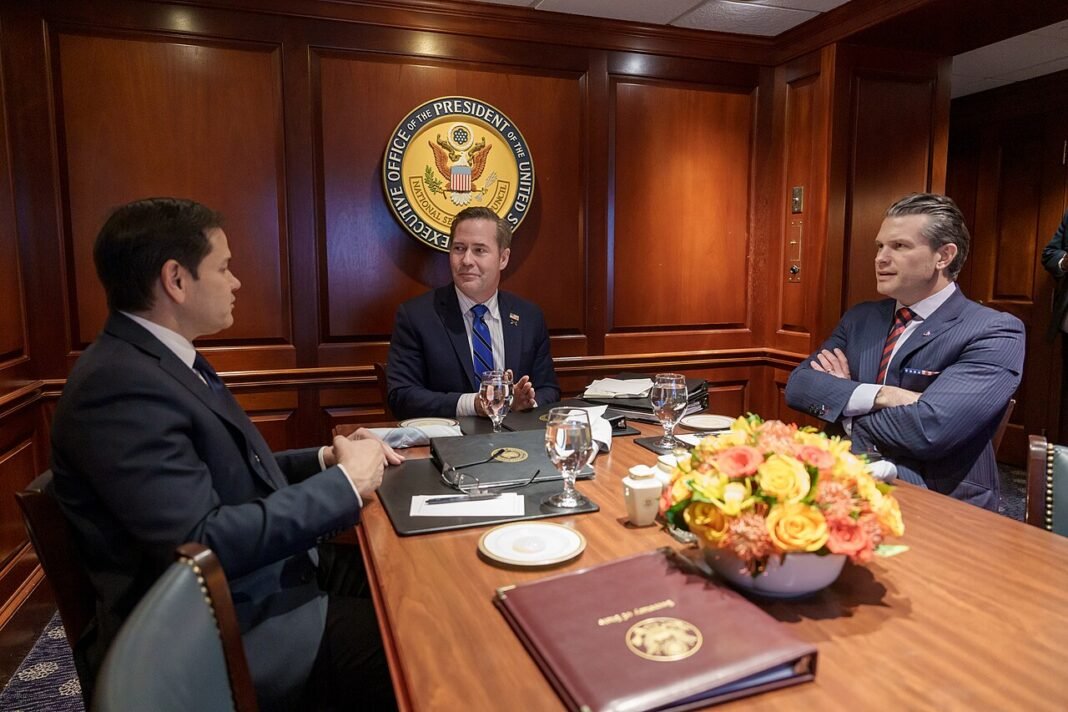
The United States Secretary of State, Marco Rubio, announced August 7th the signing of twenty-seven new critical mineral agreements during President Trump’s roundtable on American mining (https://www.state.gov/releases/office-of-the-spokesperson/2026/08/secretary-of-state-marco-rubio-at-president-trumps-roundtable-on-american-mining/). This expansion, building upon the creation of the FORGE international partnership announced earlier this year, reflects a concerted effort to address what Rubio characterized as “25 or 30 years of mistakes” regarding national sovereignty and supply chain resilience. The stakes are fundamentally tied to the nation’s ability to independently secure resources vital for industrial strength and defense, a priority explicitly framed by Rubio as essential for the country’s survival.

Background
The event, held in Washington D.C., brought together representatives from across sectors – government, universities, private industry, and student groups – reflecting a “whole-of-nation effort” according to Rubio. The roundtable occurred within the context of ongoing efforts to bolster American industrial capacity, particularly in critical minerals. Earlier this year, the State Department convened a Critical Minerals Ministerial, establishing FORGE—an international partnership chaired by the United States—to leverage public finance and diplomatic support for securing global supply chains. This initiative followed a documented 25-30 year trend of diminished US investment and strategic focus on domestic mineral production.
Analysis
The rapid expansion of critical mineral agreements, reaching twenty-seven signatures under the current administration, suggests a deliberate shift in priorities. This is predicated on the assertion that past administrations failed to adequately prioritize national sovereignty and supply chain security—a claim directly attributed to Rubio. The establishment of FORGE represents an attempt to circumvent traditional diplomatic channels and exert direct influence over global resource allocation through financial incentives and coordinated political pressure. The involvement of private industry, as exemplified by Jacob Helberg’s Pax Silica initiative – focused on investment in mining, refining, and processing – indicates a recognition that simply securing access is insufficient; domestic capacity must be cultivated. The fact that the US government is actively engaging with numerous countries simultaneously implies an attempt to diversify supply chains and diminish reliance on any single source, mitigating potential geopolitical risks.
Implications
The State Department’s actions have significant implications for regional stability and international trade. The expansion of FORGE signals a willingness to engage in what could be considered assertive diplomacy, potentially altering established patterns of resource access and creating new competitive dynamics within the critical minerals market. Should the US successfully leverage its economic influence through FORGE, it could reshape global supply chains, impacting countries heavily reliant on American demand for these materials. The commitment to working with “allies around the world” suggests a strategic effort to build coalitions against potential adversaries seeking to exploit vulnerabilities in global supply networks.
Outlook
If the FORGE partnerships prove effective in securing reliable access to critical minerals, it would represent a demonstrable success in bolstering US national security. Should the agreements face resistance from key partners or fail to materialize tangible results within a defined timeframe, the initiative’s credibility could be undermined. The State Department’s willingness to utilize its global presence – “unmatched” according to Rubio – suggests a long-term commitment; however, achieving sustained cooperation across diverse geopolitical contexts remains a considerable challenge.
Conclusion
The State Department’s renewed focus on critical minerals agreements leaves open the question of whether this represents a fundamental reorientation of US foreign policy or merely a tactical response to evolving economic and security concerns. The long-term success of FORGE will hinge on its ability to translate diplomatic engagement into tangible improvements in supply chain resilience, a goal that remains decidedly undefined.