
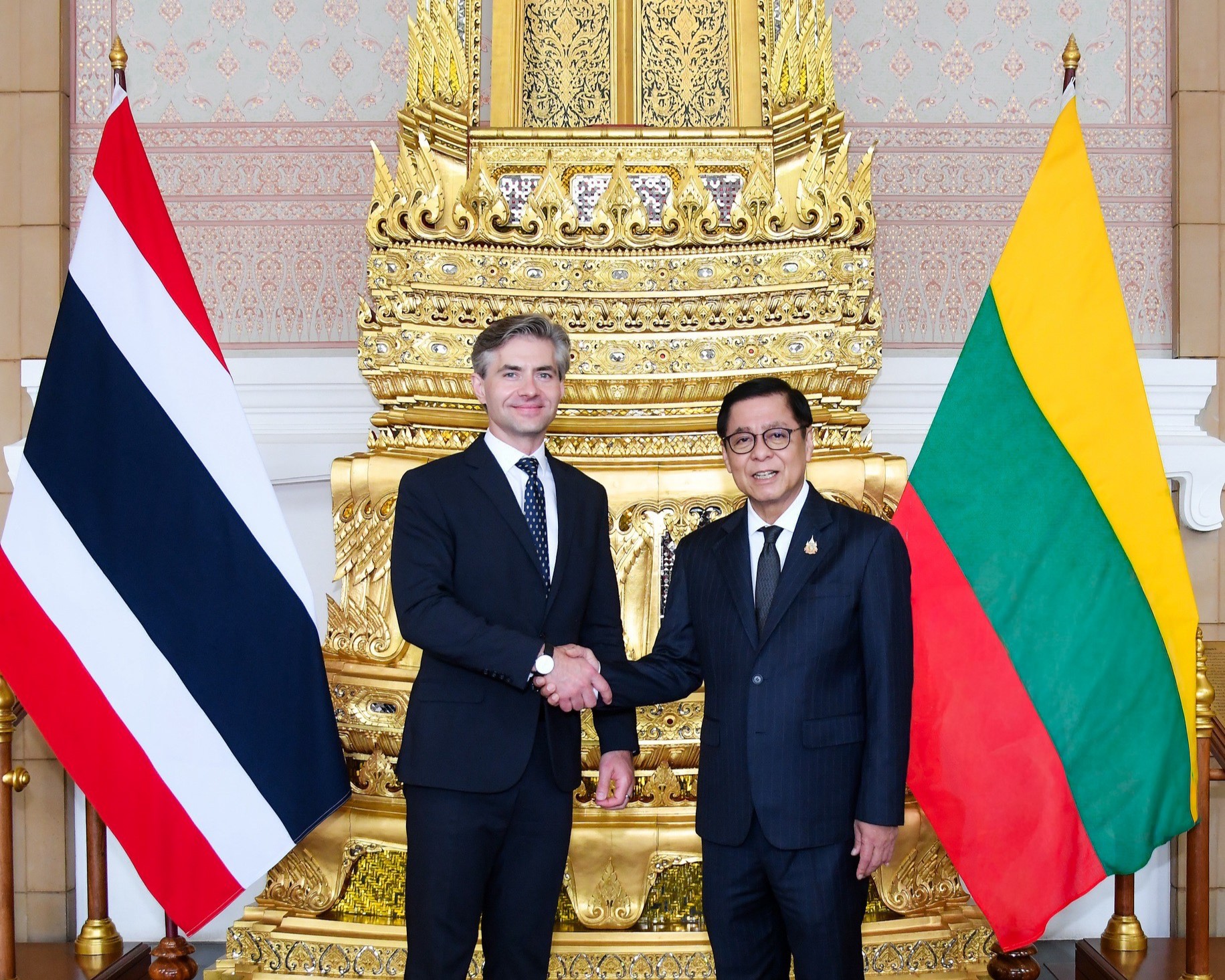
As set out in a formal announcement, The statement released by the Ministry of Foreign Affairs on July 29th, 2026, details a significant diplomatic event – the bilateral talks between Deputy Prime Minister and Minister of Foreign Affairs Sihasak Phuangketkeow and his Lithuanian counterpart, Kęstutis Budrys. This meeting, occurring amidst Lithuania’s recent accession to the Treaty of Amity and Cooperation in Southeast Asia (TAC), immediately elevates Thailand’s strategic positioning within ASEAN. The fact that this marks the first official visit by a Lithuanian Foreign Minister to Thailand in 22 years underscores a deliberate effort to re-establish connections within the broader regional framework, particularly following Lithuania’s entry into the TAC at the 59th ASEAN Foreign Ministers’ Meeting/Post Ministerial Conferences (AMM/PMC) held in Manila.
Background
The statement does not address specific details of prior interactions between Thailand and Lithuania. However, it clearly establishes a timeline – 22 years since the last formal visit – highlighting a renewed interest from both sides. The mention of the TAC, originating from the 59th AMM/PMC in Manila, contextualizes this engagement within the established ASEAN structure and underscores Lithuania’s commitment to regional cooperation. The statement also references Thailand’s ambition for OECD accession, suggesting a long-term economic strategy intertwined with broader diplomatic objectives.
Analysis
The core of this visit centers on Thailand’s pursuit of strategic support from key partners. Seeking Lithuania’s backing for OECD membership – the statement does not address the specific obstacles to Thai accession – represents a calculated move to bolster its economic credentials and integrate further into global trade networks. The stated areas of cooperation – trade, investment, life sciences, cybersecurity, and education – reflect Thailand’s efforts to diversify its economy and attract foreign investment, particularly in technologically advanced sectors. Lithuania’s support for this would be contingent on demonstrating alignment with OECD standards and potentially addressing concerns regarding governance transparency, a gap the statement does not address. The timing of the visit, coinciding with Lithuania’s recent TAC accession, suggests a proactive effort to leverage this new relationship.
Implications
For Thailand, the visit carries implications beyond simply securing support for OECD membership. It signals a willingness to actively engage with emerging European nations and demonstrates a broadening of its diplomatic horizons. Should Lithuania provide the requested backing, it would strengthen Thailand’s arguments within international forums and potentially accelerate its accession process. Regionally, this engagement could subtly shift the dynamics within ASEAN, particularly if other member states perceive Thailand as strategically aligning itself with Europe – the statement does not address whether this will impact existing ASEAN alliances. The emphasis on cybersecurity represents a growing concern for Southeast Asian nations, reflecting broader global trends in digital security and potential collaboration opportunities.
Outlook
If the visit yields commitments regarding Lithuanian support for OECD accession, Thailand’s prospects would improve significantly – should Lithuania demonstrate a genuine willingness to advocate for Thailand’s interests. However, the statement does not detail the nature of this support, leaving the outcome uncertain. Should the Prime Minister’s courtesy call prove productive, it could pave the way for further high-level engagements and potentially lead to concrete agreements in areas such as trade or investment – if both sides can overcome logistical hurdles. The visit’s success hinges on a shared understanding of priorities and a willingness to build sustained diplomatic relations.
Conclusion
The meeting between Phuangketkeow and Budrys represents an initial step in what is likely to be a longer-term effort to deepen Thailand’s engagement with Europe, but the statement offers no insight into whether this ambition will translate into tangible economic or political benefits. The question remains: can Thailand successfully leverage its strategic location and growing economy to secure meaningful support from key partners like Lithuania?