
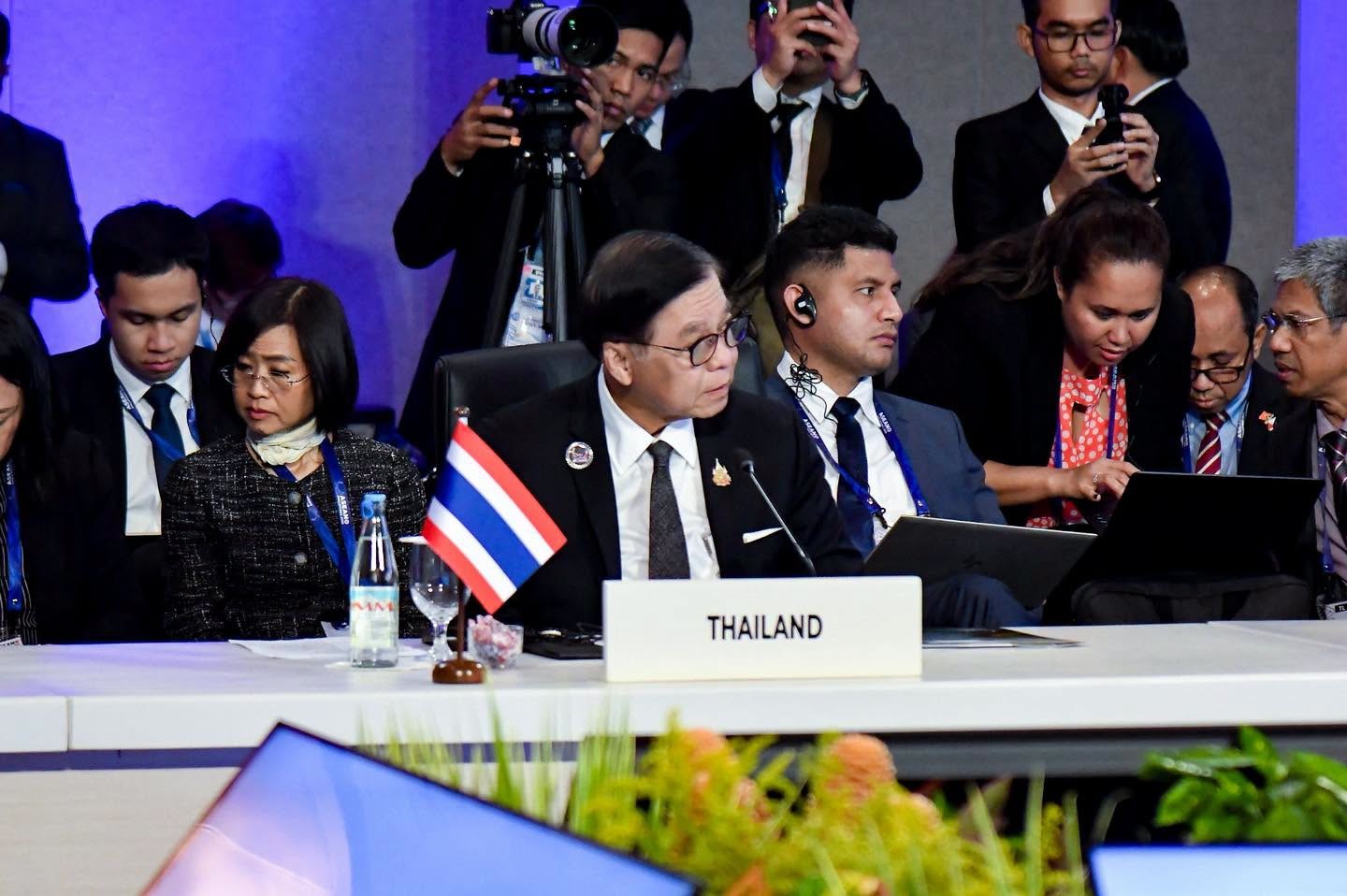
The foreign ministry readout describes The Deputy Prime Minister and Minister of Foreign Affairs, Sihasak Phuangketkeow, participated in the ASEAN Post-Ministerial Conference with China on 22 July 2026 in Manila, Philippines – a key event highlighting Thailand’s prioritization of regional stability through enhanced cooperation with Beijing. The fact that this engagement occurred alongside the fifth anniversary of the ASEAN – China Comprehensive Strategic Partnership (CSP) underscores a deliberate strategy to build trust and manage shared security concerns within Southeast Asia. This meeting, focused on practical collaboration, directly addresses escalating threats such as online scams, financial fraud, and cybercrime – issues recognized as demanding immediate attention from regional partners.
Background
The ASEAN – China Comprehensive Strategic Partnership (CSP) was established five years prior to this conference. The statement does not address the specific historical context of this partnership or the evolving dynamics within ASEAN itself. It references the 59th ASEAN Foreign Ministers’ Meeting and Related Meetings, indicating Thailand’s continued participation in a broader multilateral forum. Furthermore, it notes the ‘swift entry into force’ of the ASEAN – China Free Trade Area (ACFTA) 3.0 Upgrade Protocol, highlighting a long-standing trade agreement intended to bolster economic ties between the two regions – a process initiated years earlier.
Analysis
The Deputy Prime Minister’s focus on “building regional trust and stability” suggests a recognition of vulnerabilities within Southeast Asia. The explicit mention of “emerging security challenges, such as online scams, financial fraud and cybercrimes” signals an acknowledgement that traditional diplomatic approaches alone are insufficient to address these transnational threats. This strategy aligns with Thailand’s broader efforts to solidify its role as a stabilizing force in the region. The encouragement for “deeper economic collaboration” – including the digital economy, ACFTA 3.0, and RCEP utilization– demonstrates an attempt to leverage China’s economic influence while simultaneously seeking greater integration within regional trade networks. The call for an “accelerated green transition” indicates a strategic interest in securing energy and food security, issues increasingly relevant given global climate pressures.
Implications
This engagement carries significant implications for regional stability. Should the visit yield tangible outcomes regarding cybersecurity cooperation, it would represent a crucial step toward mitigating shared vulnerabilities. The accelerated green transition, if fully implemented as described, could reshape Thailand’s economic trajectory and potentially alter its reliance on external energy sources. The push to utilize RCEP – a trade agreement encompassing 15 nations – suggests Thailand is positioning itself at the center of an expanding regional trade network, though this simultaneously raises questions about potential competitive pressures.
Outlook
If the partnership continues to prioritize practical cooperation as outlined in the statement, Thailand could strengthen its influence within ASEAN. Should the integration efforts surrounding ACFTA 3.0 and RCEP prove successful, it would enhance Thailand’s economic competitiveness and solidify its position as a key trading partner. However, given the evolving geopolitical landscape, sustained engagement will require careful navigation – particularly regarding China’s broader strategic ambitions.
Conclusion
The Deputy Prime Minister’s participation in this conference underscores Thailand’s commitment to regional security and economic integration, yet it does not resolve fundamental questions about the balance between cooperation with China and maintaining ASEAN unity. The statement avoids addressing the potential tensions inherent in deepening ties with a rising global power.