
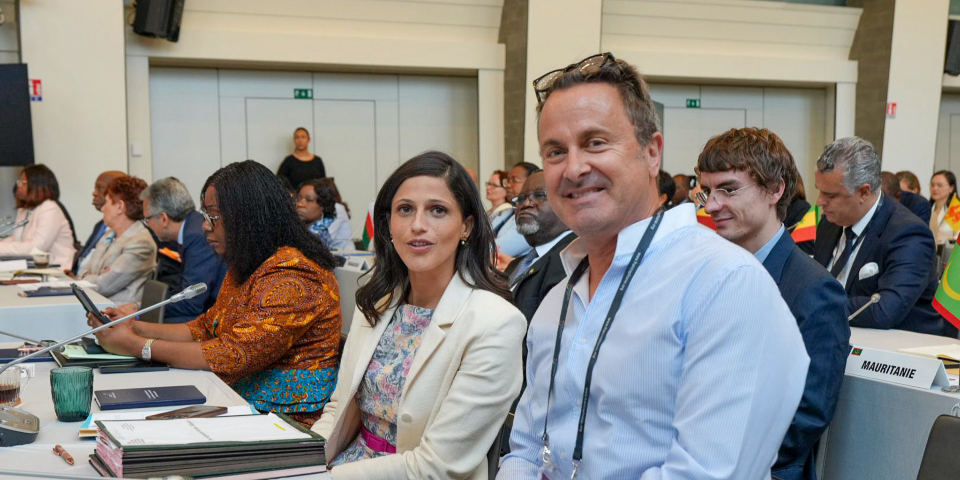
A ministry communiqué confirms that The Vice-Premier Minister, Minister for Foreign Affairs and External Trade, Xavier Bettel, was in Paris on June 30th, 2026. This visit centered around two distinct engagements: participation in the ninth World Congress against the Death Penalty and a session of the Ministerial Conference of the Francophonie. The statement does not address the duration or specific cost of this trip.
Background
The 9th World Congress against the Death Penalty, organized by Ensemble contre la peine de mort (ECPM), brought together political figures, international organizations, and civil society representatives. The goal was to reaffirm a commitment to universal abolition of the death penalty and strengthen international cooperation in this area. This event occurred within a context of ongoing debates surrounding capital punishment globally – specifically, concerns about its disproportionate application against vulnerable populations.
Simultaneously, Bettel participated in a special session of the Ministerial Conference of the Francophonie. The purpose was to discuss candidates for the position of Secretary-General of the Organisation internationale de la Francophonie (OIF). This election is scheduled for the next Francophone Summit in Phnom Penh in November 2026.
Analysis
Bettel’s statements reveal a prioritization of human rights advocacy, particularly concerning the death penalty. The explicit condemnation of capital punishment – “À l’occasion de ce congrès, nous avons réaffirmé avec force notre engagement commun en faveur de l’abolition de la peine de mort” – suggests a continued focus on Luxembourg’s role as a vocal proponent within international human rights forums. This aligns with the Ministry’s stated goals of promoting democratic values and rule of law.
The participation in the OIF session indicates a commitment to maintaining Luxembourg’s engagement within the Francophone community. The emphasis on “multilateralism, dialogue and links of friendship” – as Bettel articulated – highlights a desire for continued collaboration within this influential regional bloc. This suggests an intention to support the OIF’s ongoing efforts and contribute to its strategic direction.
The statement does not address any specific negotiations or discussions that took place during these engagements. It is unclear whether Luxembourg formally endorsed any particular candidate for the OIF Secretary-General position, or if it offered any concrete support for a chosen strategy. The presence of Adel Nassar, Minister of Justice from Lebanon, at the anti-death penalty congress signals an interest in broader regional security issues – though this remains largely unexplored.
Implications
Bettel’s activities have implications for Luxembourg’s foreign policy positioning. The firm stance against the death penalty reinforces its international reputation as a defender of human rights, potentially strengthening alliances with like-minded states. Should the visit yield support within the EU for similar initiatives, it could bolster Luxembourg’s influence on broader European policy.
The engagement with the OIF carries implications for regional stability, particularly in Francophone Africa. Luxembourg’s continued involvement demonstrates a commitment to supporting the organization’s initiatives promoting democracy and good governance – though the specifics of this support remain undefined. The competition for the OIF leadership role reflects broader geopolitical dynamics within the region.
Furthermore, the Ministry’s activities have implications for trade and security cooperation. Luxembourg seeks to foster economic partnerships with Francophone countries, leveraging its strategic location and diplomatic network.
Outlook
If the visit yields support from key EU member states for a coordinated approach to promoting human rights globally, it could strengthen Luxembourg’s advocacy efforts. Should the OIF election result in a leader with a strong commitment to democratic values and international cooperation, this would align with Luxembourg’s priorities.
Conclusion
The visit concluded without explicit details regarding concrete policy outcomes or strategic alignment. The statement does not address whether Luxembourg will actively participate in shaping the direction of the OIF under its new leadership – leaving open a key question for future diplomatic initiatives.