
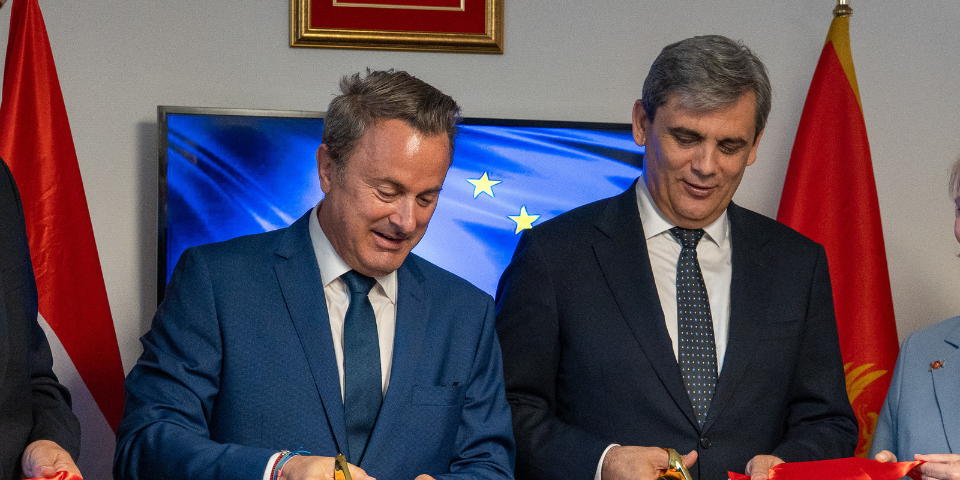
The official readout frames the trip as The 2 July 2026 press release from the Ministry of Foreign and European Affairs, Defence, Development Cooperation and Foreign Trade detailed the inauguration of a diplomatic bureau for Montenegro in Luxembourg by Vice-Premier Minister and Minister for Foreign Affairs and Commerce Xavier Bettel. (https://mae.gouvernement.lu/en/actualites.gouvernement2024%2Bfr%2Bactualites%2Bactualites%2B2026%2B07-juillet%2B02-bettel-bureau-montenegro) This event involved the Deputy Prime Minister and Minister of Foreign Affairs of Montenegro, Ervin Ibrahimović, alongside the Minister Bettel. The statement indicates the cutting of a ribbon by both officials to formally open the office.
Background
The Monténégro bureau represents the third country, after Hungary and Armenia, to establish such an outpost in Luxembourg. Furthermore, it marks the first nation from the Western Balkans to do so. Twenty-three countries maintain resident embassies within the city.
Analysis
The act of opening this bureau is framed by Minister Bettel as a means of strengthening bilateral relations with Montenegro. The statement highlights the significance of the Monténégro diaspora residing in Luxembourg, suggesting a key factor motivating this initiative. This suggests a desire to foster closer ties with countries within the region that share historical and cultural connections with Luxembourg.
Implications
The inauguration has implications for Luxembourg’s engagement in the Western Balkans. It demonstrates a willingness to cultivate relationships with nations seeking NATO membership or alignment with European values. The opening of this bureau could signal increased diplomatic activity and potential collaboration within areas such as trade and security, though the statement does not address specific sectors of cooperation.
Outlook
Should the visit yield continued dialogue on Montenegro’s NATO aspirations – a topic not mentioned in the release – it would represent a significant step. If Luxembourg continues to prioritize bilateral engagement with countries like Montenegro, this could potentially strengthen its influence within the region, offering support for stability and economic development. Should the Monténégrin diaspora prove to be a key driver of this relationship, further investment in supporting their interests may occur.
Conclusion
The opening of the Montenegro bureau underscores Luxembourg’s strategic interest in the Western Balkans, yet leaves open the question of whether this represents a broader shift in European foreign policy priorities or a targeted effort to bolster specific partnerships.