
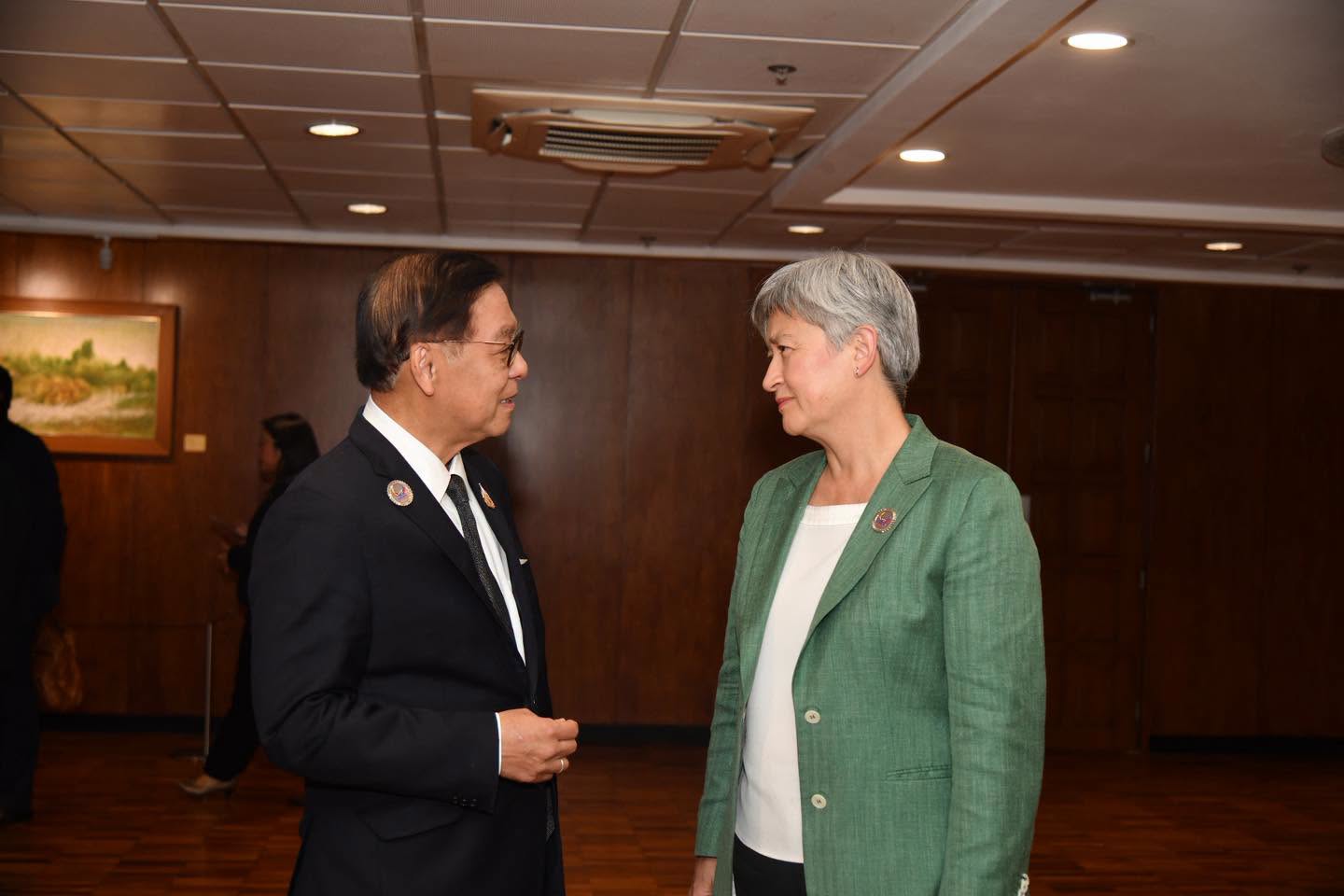
The official readout frames the trip as On 22 July 2026, Deputy Prime Minister and Minister of Foreign Affairs Sihasak Phuangketkeow held a pull-aside meeting with Senator the Honourable Penny Wong, Minister for Foreign Affairs of Australia, during the 59th ASEAN Foreign Ministers’ Meeting in Manila, the Philippines. This event highlights a strategic prioritization of bilateral relations between Thailand and Australia, as defined by both nations. The significance lies in this engagement occurring on the periphery of a broader multilateral forum – the ASEAN summit – suggesting a deliberate choice to advance specific interests rather than simply participating in collective discussions.
Background
The statement does not mention prior meetings or agreements; however, it references “close bilateral relations between Thailand and Australia as strategic partners.” This designation is further reinforced by the acknowledgement of “wide-ranging areas of cooperation” – the precise nature of which remains unspecified. The meeting’s timing coincides with the 59th ASEAN Foreign Ministers’ Meeting and Related Meetings, indicating a desire to align with regional developments. Senator Wong’s presence at this event underscores Australia’s continued engagement within Southeast Asia and its commitment to strategic partnerships across the region.
Analysis
The stated welcome of “close bilateral relations” suggests an attempt to solidify a partnership that benefits both nations. The promotion of “more high-level engagements towards concrete outcomes” indicates a shift away from purely symbolic gestures toward tangible results, though the specifics are not detailed. The exchange of “views on the key regional developments” implies a shared assessment of evolving geopolitical dynamics – again, without elaboration. This suggests that Thailand and Australia recognize overlapping interests in maintaining stability within Southeast Asia, particularly given Australia’s broader security commitments to the region.
Implications
This engagement carries implications for regional stability, primarily through shared perspectives on ASEAN’s future. Should the visit yield concrete outcomes – as both sides intend – it could bolster Thailand’s position within a complex and often contested multilateral framework. The strengthening of bilateral ties also has trade and security ramifications. Australia is a key trading partner for Thailand, and deepened cooperation could further integrate Thailand into Australian supply chains and defense networks.
Outlook
If the visit yields an increased level of engagement with concrete outcomes, then Thailand’s foreign policy will be increasingly focused on bilateral partnerships. Should this outcome not materialize, it may signal a recalibration of Thailand’s approach to regional diplomacy, potentially leading to a reduced emphasis on multilateral platforms like ASEAN. The statement does not address whether this strengthened partnership will translate into increased security cooperation or specific defense agreements.
Conclusion
The meeting in Manila establishes a renewed focus on strategic partnerships between Thailand and Australia, but the lack of detail regarding future engagements leaves open the question of what concrete steps will be taken to advance this relationship within the context of shifting regional dynamics.