
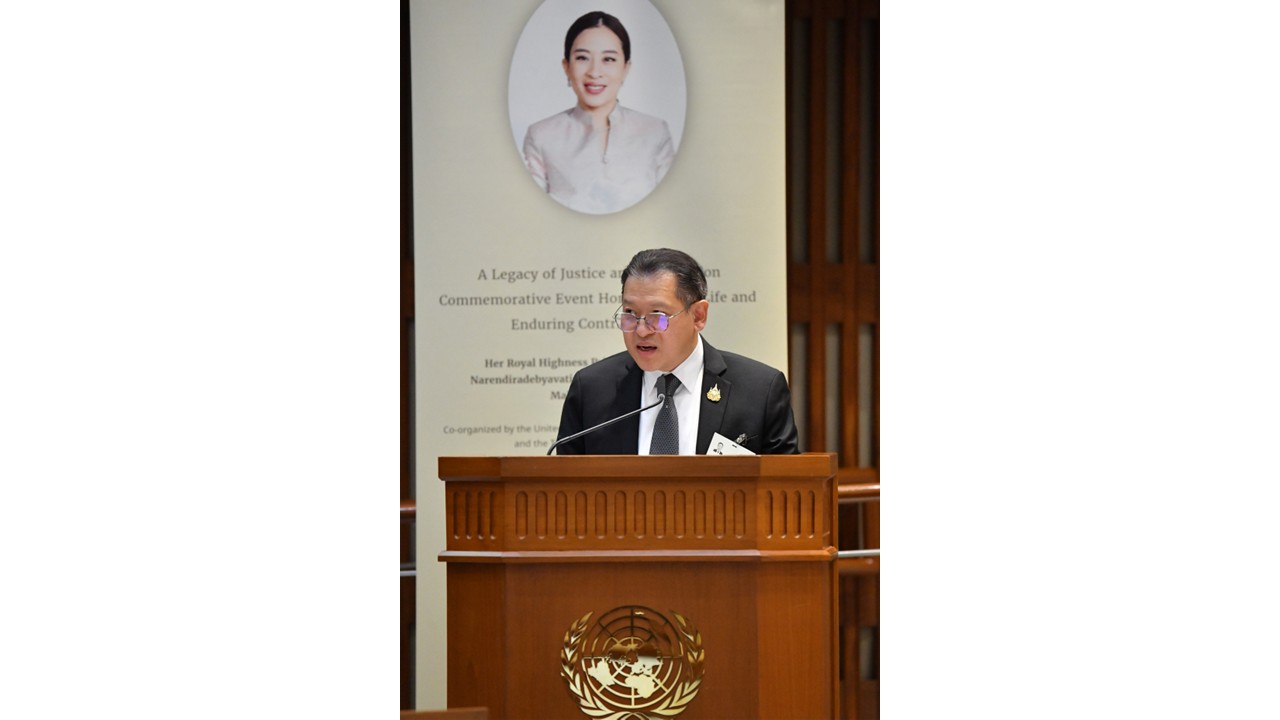
Details in a press release show that On 23 July 2026, H.E. Mr. Sarun Charoensuwan, Vice Minister for Foreign Affairs, delivered a keynote address at an event commemorating the life of Her Royal Highness Princess Bajrakitiyabha Narendiradebyavati Kromluangrajasarinisiribajra Mahavajrarajadhita (23 Jul 2026). This event, held at the United Nations Conference Centre in Bangkok, matters because it formally recognized the enduring impact of Her Royal Highness’s work advocating for justice and the rule of law within Thailand and internationally. The statement does not mention specific details about the Princess’s contributions beyond her documented roles and projects.
Background
The event was co-organised by the United Nations Office on Drugs and Crime (UNODC) and the Thailand Institute of Justice (TIJ). This collaboration underscores a continuing effort to promote legal reform within Thailand. The statement does not detail the precise timeline or prior meetings leading up to this commemorative address. It references the 20-Year “5S” Foreign Affairs Masterplan, a framework for Thailand’s foreign policy objectives, but offers no specific details on how Princess Bajrakitiyabha’s work aligns with that plan.
Analysis
The focus of the commemoration centers on Her Royal Highness’s involvement in developing the United Nations Rules for the Treatment of Women Prisoners and Non-custodial Measures for Women Offenders – commonly known as the Bangkok Rules. This suggests a prioritization of international legal standards related to women’s justice within Thailand’s foreign policy. The event’s co-organisation by UNODC and TIJ indicates an alignment with global human rights initiatives, particularly concerning vulnerable populations. The attendance of figures like Monica Juma, Deputy Secretary-General of the United Nations, further highlights the significance placed on this area of work.
Implications
The event’s implications extend to Thailand’s engagement with international organizations and its efforts to align domestic legal practices with global norms. Should the visit yield increased collaboration with UNODC, it could strengthen Thailand’s capacity in areas such as criminal justice reform and human rights advocacy. The inclusion of representatives from ESCAP demonstrates a broader focus on sustainable development initiatives related to rule of law. This also raises questions about the ongoing prioritization of Thailand’s diplomatic resources.
Outlook
If the event successfully reinforces Thailand’s commitment to the Bangkok Rules, it could influence future negotiations with international partners regarding criminal justice reform. Should the participation of youth representatives from BBG: Bounce Be Good and those supported by the Kamlangjai Project continue, this would signal a sustained focus on addressing systemic inequalities within the Thai legal system. The event does not address whether there are further plans to expand the scope of Her Royal Highness’s legacy initiatives.
Conclusion
The commemorative event reflects Thailand’s continued interest in promoting justice and human rights through international collaboration, particularly concerning women’s rights within the legal system. The statement does not offer a clear assessment of whether this work will translate into concrete policy changes or sustained investment in addressing underlying inequalities.