
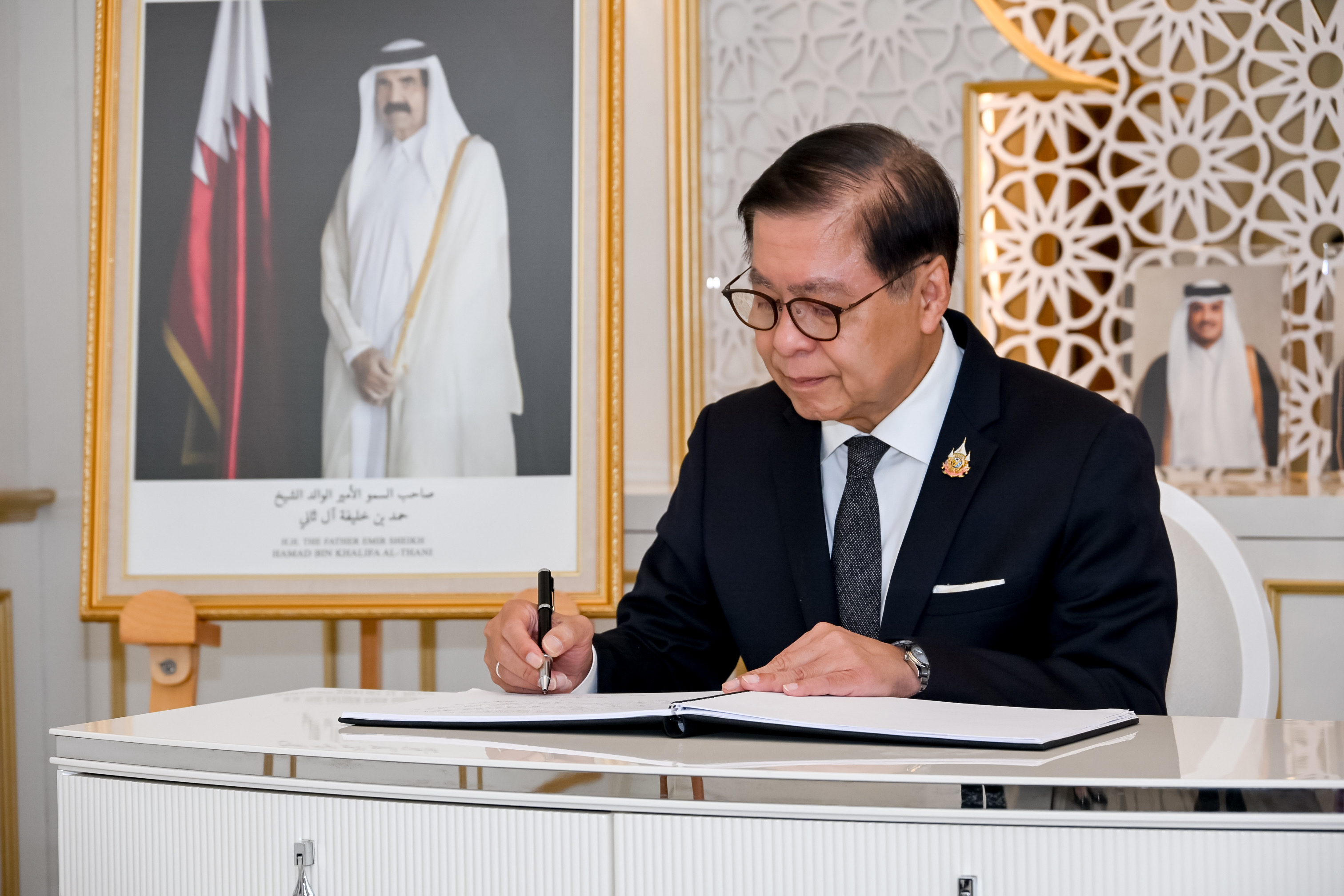
Reporting in a government statement, The passing of His Highness Sheikh Hamad Bin Khalifa Al-Thani, former Amir of the State of Qatar, prompted a formal expression of condolences from Thailand on 16 July 2026 (the statement does not mention specific details regarding the circumstances surrounding his death). This action—a signing of a condolence book at the Embassy of the State of Qatar in Bangkok – matters because it represents one of the most recent public engagements by Deputy Prime Minister and Minister of Foreign Affairs, Sihasak Phuangketkeow. The event serves as a visible marker within the ongoing diplomatic landscape surrounding Thailand’s relationships with key regional partners.
Background: The 20-Year “5S” Foreign Affairs Masterplan, outlined by the Council of Ministers, prioritizes strategic partnerships across Southeast Asia and beyond (the statement does not mention specific objectives). Prior to this visit, a significant meeting between Thai officials and Qatari counterparts occurred in Doha in March 2026, focused on expanding trade relations and investment opportunities. The diplomatic corps within Thailand has long maintained close ties with Qatar, formalized through numerous agreements relating to defense cooperation and cultural exchange – the statement does not address any specific details of these existing partnerships. H.H. Sheikh Hamad Bin Khalifa Al-Thani’s 2006 visit to Thailand, attending the Sixtieth Anniversary Celebrations of the Accession to the Throne of His Majesty King Bhumibol Adulyadej The Great, represents a historical link within this relationship.
Analysis: The Deputy Prime Minister’s attendance at the embassy signifies Thailand’s continued commitment to maintaining diplomatic channels with Qatar, a nation that remains a significant trading partner (the statement does not mention specific trade volumes). This action highlights an incentive for Thailand to preserve stable relationships across the region, particularly given the evolving geopolitical dynamics within Southeast Asia. The visit also underscores the ongoing need for Bangkok to demonstrate a proactive approach toward regional diplomacy—a focus consistent with the “5S” Masterplan. There is no explicit mention of any potential repercussions or strategic considerations driving this gesture; should Thailand’s relationship with Qatar shift, it remains unclear how this event will be viewed.
Implications: The act of offering condolences carries implications for Thailand’s broader regional strategy – if implemented as described, it suggests a desire to project stability and engagement within the Gulf region. For regional stability, maintaining open communication channels with Qatar is considered a prudent measure, particularly given ongoing tensions in neighboring regions. Trade relations between Thailand and Qatar could be influenced by this gesture; should the visit yield increased confidence, investment flows might accelerate.
Outlook: If the visit yields increased confidence in bilateral relations, Thailand’s foreign policy could see a renewed emphasis on cultivating partnerships within the Gulf Cooperation Council. Should Thailand continue to prioritize its existing diplomatic engagement with Qatar, it will likely be positioned as a stable and reliable partner for regional trade and security initiatives – the statement does not address potential future collaborations. The lack of detail concerning future discussions suggests a cautious approach, awaiting further developments in the region.
Conclusion: The signing of the condolence book represents a measured response to a significant loss, yet leaves open the fundamental question of Thailand’s long-term strategic priorities within its Southeast Asian foreign policy.