
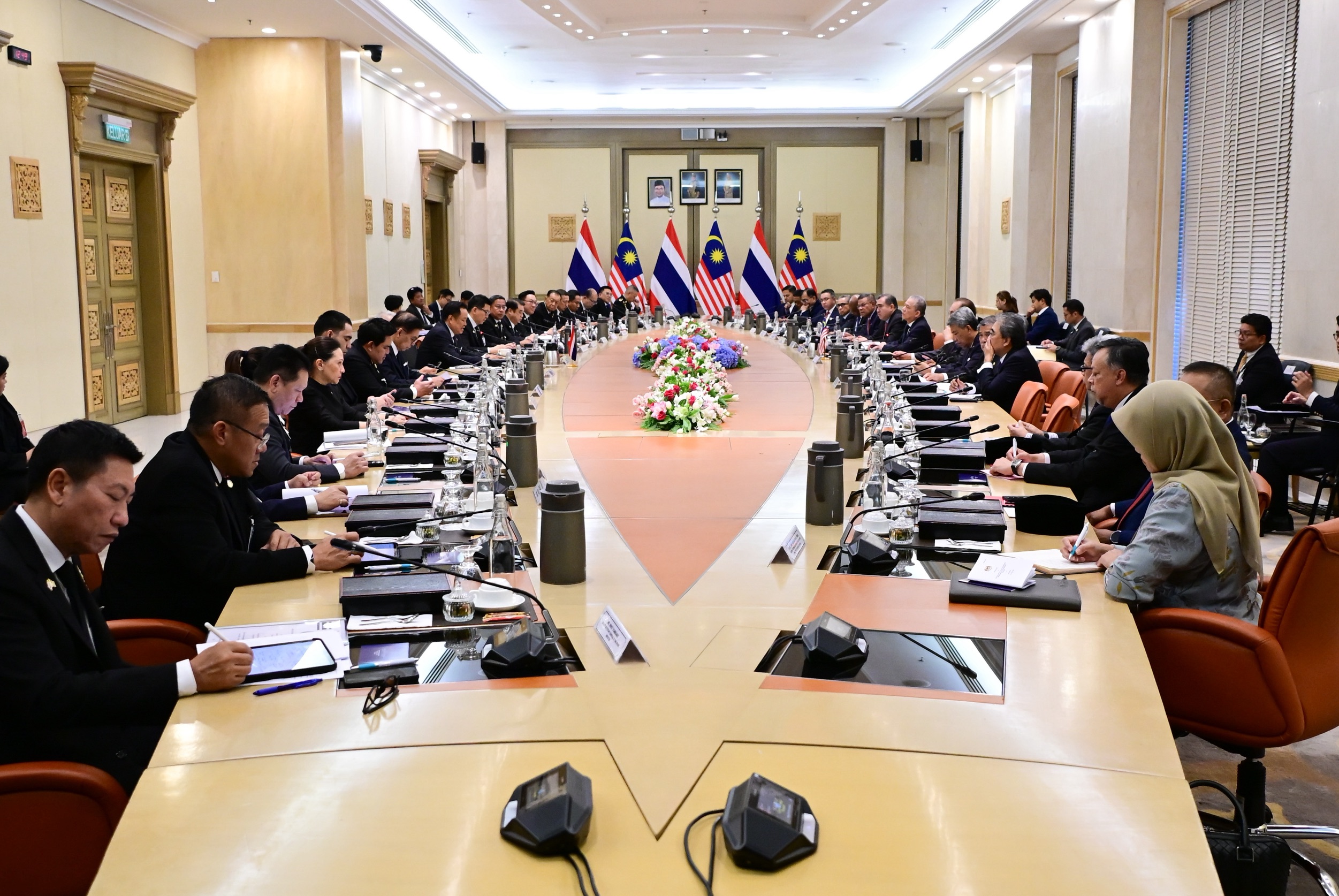
Deputy Prime Minister and Minister of Foreign Affairs Sihasak Phuangketkeow took part in a bilateral meeting with Prime Minister Anutin Charnvirakul and Malaysia’s Prime Minister Dato’ Seri Anwar Ibrahim during the Thai premier’s official visit to Malaysia, as outlined in the press release dated 9 July 2026. The leaders affirmed a shared commitment to boost cooperation that benefits the peoples of both countries, focusing on security and development in Thailand’s southern border provinces and Malaysia’s northern states, and on expanding transport connectivity, trade and economic activity in the border region. — the full statement has further detail.
Background
The small‑group meeting on 9 July 2026 included the two prime ministers and the Thai deputy prime minister/foreign minister. Both leaders said they would increase cooperation on border‑security management and the fight against trans‑national crime, while pursuing deeper transportation links, trade and economic development of the border areas. A plenary session followed, attended by deputy prime ministers and ministers from both sides, where the prime ministers praised the “close, dynamic relations” and existing bilateral mechanisms. They noted that Thailand and Malaysia will mark the 70th anniversary of diplomatic relations in 2027.
The two sides agreed to broaden cooperation across trade, investment, food security, agricultural products, tourism, the digital economy and energy security, citing Malaysia’s position as Thailand’s top ASEAN trading partner, its top source of tourists and a fast‑growing digital economy. At the joint press conference the leaders announced a joint vision for “security and seamless border connectivity” through the development of cross‑border travel and the transport of goods, especially roads and railways. They scheduled the official opening of the new CIQ Sadao – ICQS Bukit Kayu Hitam road alignment for 10 July 2026 and witnessed the exchange of a Memorandum of Understanding on agricultural cooperation.
Analysis
The participation of both the Thai prime minister and the deputy prime minister/foreign minister signals a high political priority for the bilateral agenda. The release underscores Thailand’s reliance on Malaysia for trade and tourism, and it couples infrastructure pledges with a stated aim of enhancing border security. However, the statement does not specify the mechanisms for joint policing, training programmes, or budgetary commitments that would underpin the promised security cooperation.
The announced road alignment is presented as a means to facilitate cross‑border travel and goods movement. The release does not mention how customs procedures, tariff rates or regulatory alignment will be handled, leaving the practical impact of the physical link unclear. Likewise, the agricultural MoU is highlighted, but the statement does not detail which crops, investment amounts or technology‑transfer arrangements are envisaged, limiting assessment of its likely effect on food security or farmer incomes.
While the parties reference a “close, dynamic relationship” and existing bilateral mechanisms, the release does not explain how these mechanisms will integrate with broader ASEAN initiatives or whether other regional actors will be involved.
Implications
For Thai policymakers, the announced initiatives could be used to justify increased budgetary allocations for border infrastructure and security forces, portraying the outcomes as progress toward regional integration. In Malaysia, the joint announcements reinforce its role as a conduit for trade and a partner in addressing shared security challenges, potentially strengthening its position within ASEAN discussions.
The focus on seamless border connectivity may encourage neighboring states to pursue similar infrastructure projects, influencing the pace of ASEAN’s integration agenda. Conversely, the lack of detail on trans‑national crime mitigation could leave a security gap that illicit networks might exploit, posing a risk to both countries.
The statement does not address monitoring, evaluation or contingency procedures for the announced projects.
Outlook
If the CIQ road alignment opens on schedule and operates as described, short‑term benefits could include reduced crossing times and a modest increase in cross‑border trade. Should the agricultural MoU be implemented with concrete projects, medium‑term outcomes might involve joint agribusiness ventures and enhanced coordination on food security.
If the parties later provide clear resource allocations and joint enforcement mechanisms, the cooperation could serve as a model for border integration in Southeast Asia. If funding and operational details remain undisclosed, the initiatives risk stalling, leaving border regions under‑served and the broader ASEAN integration goals unmet.
Conclusion
The announced road link and agricultural agreement represent visible steps toward deeper Thai‑Malaysian ties, but the release offers no detail on security arrangements or implementation plans, leaving the durability of the promised benefits uncertain.