
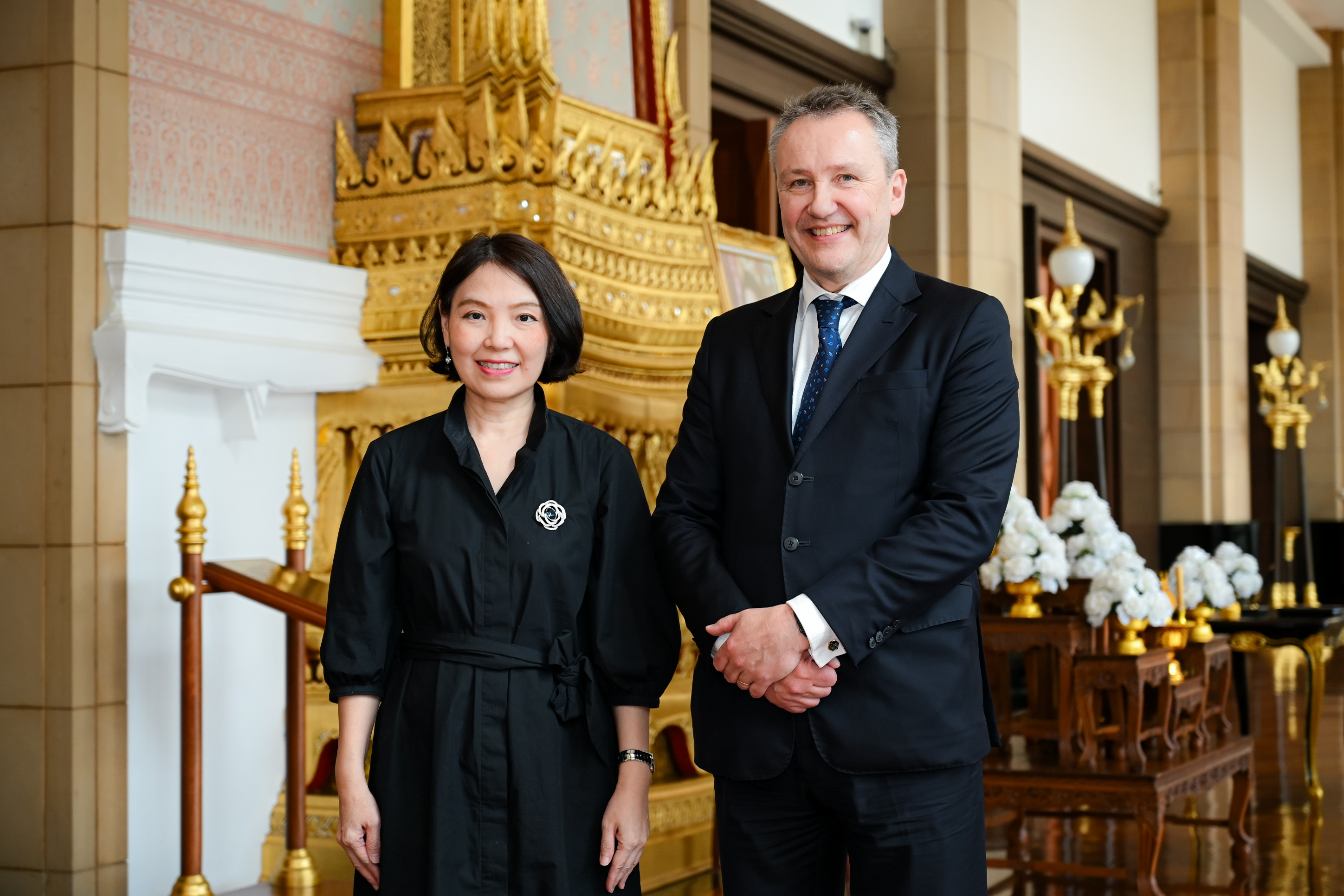
On 3 July 2026 the Ministry of Foreign Affairs hosted the sixth Thailand‑Finland political consultations, co‑chaired by Acting Director‑General Ms Somrudee Poopornanake and Finland’s Director‑General Mr Jari Sinkari. A working dinner followed the talks, during which the parties discussed protection of Thai berry pickers in Finland, education, the bio‑circular‑green (BCG) economy, digital technology, innovation and startup development. They also examined trade and investment opportunities, the ongoing Thailand‑EU Free Trade Agreement negotiations, and cooperation in international organisations, including Finland’s support for Thailand’s OECD accession. The full statement is available here.
Background
Thailand and Finland have maintained diplomatic relations for more than seven decades. The latest consultation took place at the Ministry of Foreign Affairs headquarters on Sri Ayudhya Road, Bangkok. Key agenda items included the protection of Thai workers in Finnish agriculture, expansion of educational links, and the pursuit of a BCG economy that blends biotechnology, circular‑economy principles and green growth. Digital technology, innovation and startup development were also highlighted. The parties referenced the ongoing Thailand‑EU FTA negotiations and reaffirmed Finland’s support for Thailand’s bid to join the Organisation for Economic Co‑operation and Development (OECD). Regional and global issues discussed covered the Thailand‑Cambodia border situation, developments in Myanmar, ASEAN dynamics, the Middle East, the Indo‑Pacific region and the war in Ukraine. The meeting also recalled the joint co‑chairing of the 2026 OSCE Asian Conference held on 28‑29 May 2026 in Bangkok.
Analysis
The dialogue reflects divergent but complementary interests. Finland appears keen to promote its expertise in sustainability and digital innovation through cooperation on the BCG economy and startup ecosystems. Thailand used the platform to raise a labor‑rights issue concerning Thai berry pickers, a move that underscores concern for its overseas workforce, and to advance education and high‑value‑added sector development.
The joint emphasis on OECD accession suggests that Thailand views membership as a benchmark for policy standards, while Finland’s expressed support could enhance Thailand’s credibility in multilateral settings. However, the statement does not address the financing mechanisms required for the BCG and digital initiatives, leaving an open question about how these projects will be funded.
Implications
For policymakers, the consultations underline the importance of aligning trade diversification with sustainability goals. If Thailand can integrate BCG principles within the framework of the EU FTA negotiations, it may provide a model for other ASEAN members seeking green economic transitions. The absence of disclosed funding pathways could compel Thai authorities to seek external financing, though the nature of any such arrangements is not detailed in the release.
Regionally, the coordinated discussion of security topics—from the Myanmar situation to Indo‑Pacific stability—indicates an intent to present a united stance in multilateral fora. Finland’s backing of Thailand’s OECD bid may signal broader European endorsement of Bangkok’s integration into Western‑led institutions, potentially influencing ASEAN’s collective diplomatic posture.
Outlook
In the short term, concrete outcomes will depend on whether the working dinner yields memoranda or agreements on the highlighted sectors. Should the parties develop actionable plans for BCG projects and digital startup cooperation, pilot programmes could emerge within the next year.
Medium‑term scenarios hinge on two variables. If Finland provides technical assistance or facilitates private‑sector matchmaking that supports Thailand’s OECD accession, Bangkok could accelerate its membership process and potentially attract additional European investment. Conversely, if financing for the BCG and digital initiatives remains undefined, the projects may stall, reducing momentum built during the consultation.
On the security front, should the shared statements on Myanmar, the Thailand‑Cambodia border and Indo‑Pacific stability translate into coordinated actions within ASEAN, the OSCE or other multilateral mechanisms, both countries could strengthen their influence over regional norms. Failure to operationalise these positions would limit the practical impact of the diplomatic exchange.
Conclusion
The sixth Thailand‑Finland political consultation reaffirms a long‑standing partnership and outlines a cooperative agenda spanning green economy, digital innovation and multilateral engagement. While the agenda is ambitious, the lack of explicit financing and implementation details leaves the durability of these initiatives uncertain.