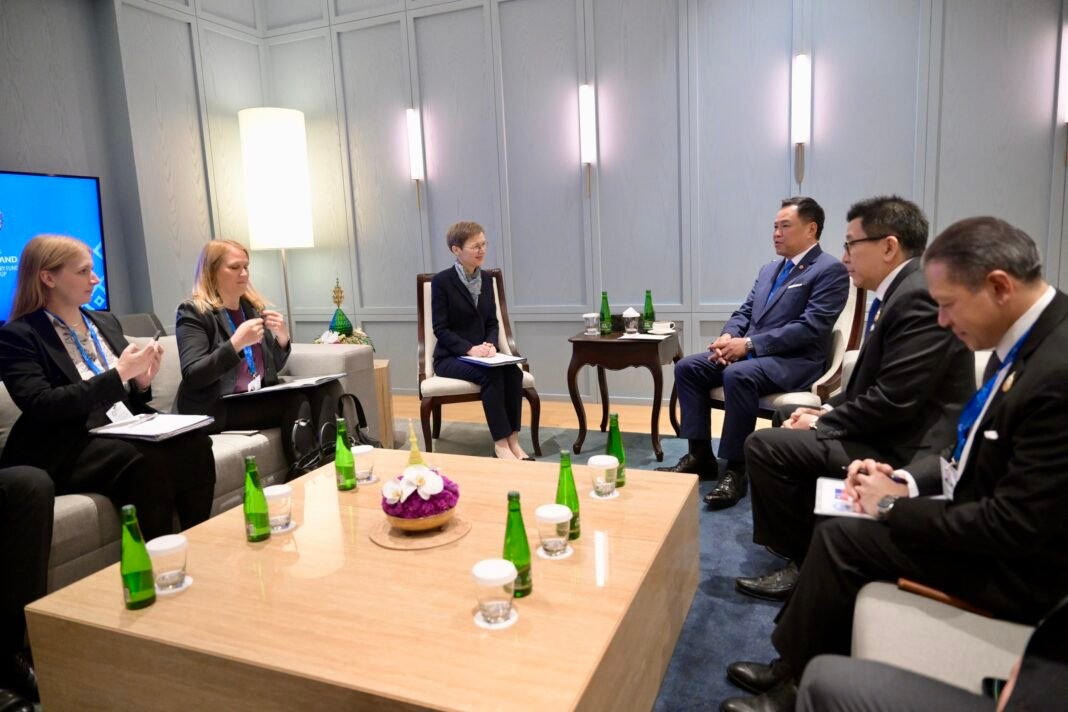
A ministry communiqué confirms that The United States welcomes the conclusion of the third round of political reconciliation talks between Venezuela’s 2015 National Assembly, led by Dr. Dinorah Figuera, and the interim government. This Venezuelan-led process continues to strengthen democratic institutions, expand political freedoms, and lay the groundwork for free, fair, and credible elections. The statement focuses on tangible results achieved during this latest round, signaling a measured approach to the complex situation within the country.

Background
Prior meetings between Secretary Rubio and Dr. Figuera have consistently centered on advancing this Venezuelan-led process. In March, the ministry said that Secretary Rubio met with Dr. Figuera to discuss progress on political freedoms and electoral reform. The Trump Administration remains committed to supporting this Venezuelan-led process as part of President Trump and Secretary Rubio’s three-phase plan for stabilization, economic recovery, and political reconciliation leading to a peaceful democratic transition. This latest round builds upon earlier efforts to address the country’s challenges.
Analysis
The statement’s emphasis on Venezuelan leadership is a key element of the administration’s strategy. This approach prioritizes local ownership of the reconciliation process, aiming to foster genuine reform from within Venezuela. The inclusion of specific deliverables – agreement to review repressive laws, progress on rebuilding an independent Supreme Court, and the release of political prisoners – suggests a focus on demonstrable results. The release of more than 1,000 political prisoners since Operation Absolute Resolve represents a significant, though not universally celebrated, step. The statement does not address the underlying economic challenges or the broader geopolitical context of the situation in Venezuela.
Implications
The continued US support for this Venezuelan-led process has implications for regional stability. Should the visit yield further progress on electoral reform and judicial independence, it could potentially reduce the risk of further instability within Venezuela. The agreement to recover gold holdings in the Bank of England for earthquake relief demonstrates a commitment to addressing humanitarian needs. The continued pressure on the interim government to release all political prisoners underscores the US’s commitment to upholding human rights. The statement does not address the broader implications for trade or security in the region.
Outlook
If the visit yields continued progress on the items outlined in the statement, the administration will likely maintain its support for the Venezuelan-led process. Should the process falter, the administration has previously indicated a willingness to consider further measures. The continued release of political prisoners, for a total of more than 1,000, suggests a potential pathway forward, dependent on the interim government’s continued commitment.
Conclusion
The third round of talks represents another step in a protracted process, yet the statement offers no definitive assessment of its ultimate impact on the trajectory of Venezuela’s democratic transition. The question remains whether sustained, verifiable progress can be achieved before the next scheduled elections.
Sources & Further Reading
- Official press release
- Foreign ministry source
- Secretary Rubio’s Meeting with Venezuela’s 2015 National Assembly President Dinorah Figuera (Unknown Da)
- Reconciliation Talks Deliver Concrete Progress for Venezuela’s Democratic Transition (Unknown Da)
- Secretary of State Marco Rubio and 2015 Venezuelan National Assembly President Dinorah Figuera Before Their Meeting (Unknown Da)