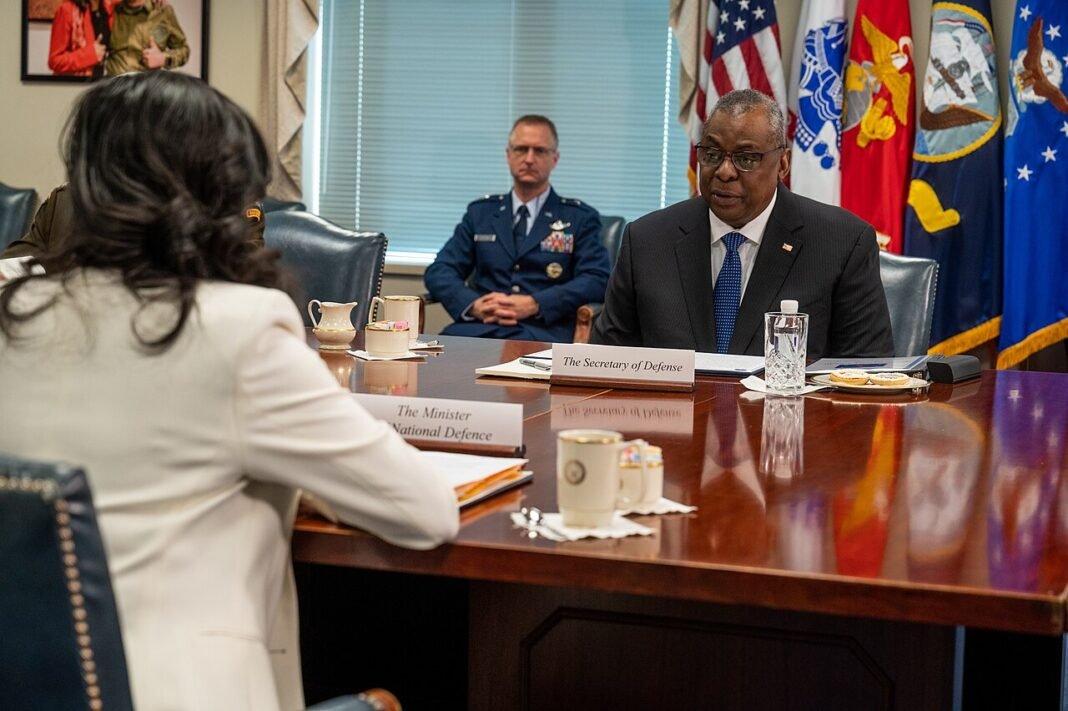
The official readout frames the trip as The United States Secretary of State, Marco Rubio, met today with Republic of Korea (ROK) Foreign Minister Cho Hyun to discuss a range of issues central to the U.S.-ROK Alliance. This meeting, as announced by the State Department, underscores the continued importance of this longstanding security partnership. The fact that the discussion centered on semiconductors – a critical sector for both nations – highlights a strategic emphasis on bolstering supply chain resilience, a priority repeatedly articulated by the Biden administration.

Background
Prior to this meeting, the U.S. and ROK have maintained a robust bilateral relationship, characterized by extensive security cooperation and economic engagement. In March, the ministry said that the two nations had already agreed to collaborate on semiconductor technology. The 2025 Joint Fact Sheet, a framework for cooperation, outlined specific commitments, including investments intended to be swiftly executed. The statement does not address the nature of these investments or the specific timelines for their implementation.
Analysis
The Secretary Rubio’s emphasis on securing freedom of navigation in the Strait of Hormuz suggests ongoing concerns about regional instability, particularly in light of geopolitical developments in the Middle East. The reiterated need for a fair, transparent, and equitable business environment for American companies operating in the Republic of Korea indicates a desire to mitigate potential trade friction and address perceived imbalances in the economic relationship. This suggests a recognition that sustained cooperation hinges on addressing these concerns.
Furthermore, the focus on securing supply chains for critical industries signals a broader shift in U.S. foreign policy, driven by vulnerabilities exposed during recent global events. The Secretary’s insistence on the swift execution of investment commitments from the 2025 Joint Fact Sheet demonstrates a proactive approach to maintaining economic leverage and ensuring access to vital resources. The statement does not mention the specific industries targeted by these investments.
Implications
This meeting carries implications for regional stability, particularly regarding U.S. engagement in the Indo-Pacific. The reaffirmation of trilateral cooperation with Japan underscores the U.S. commitment to upholding a free and open Indo-Pacific, a strategic priority aimed at countering Chinese influence. This signals a continued effort to bolster alliance cohesion in the face of evolving regional dynamics. The meeting also has implications for trade and investment, potentially impacting the flow of goods and capital between the two nations.
Outlook
Should the visit yield further collaboration on semiconductor technology and supply chain security, it would represent a positive step for the U.S.-ROK Alliance. If the execution of investment commitments from the 2025 Joint Fact Sheet remains slow, this could create tensions between the two nations. If the commitment to denuclearization of the DPRK remains a key focus, it would indicate a continued prioritization of this objective by both parties.
Conclusion
The meeting between Secretary Rubio and Foreign Minister Cho underscores the enduring, albeit currently focused, nature of the U.S.-ROK Alliance. The statement does not offer a definitive assessment of the long-term strategic implications of this partnership, leaving open the question of how the alliance will adapt to evolving geopolitical pressures.