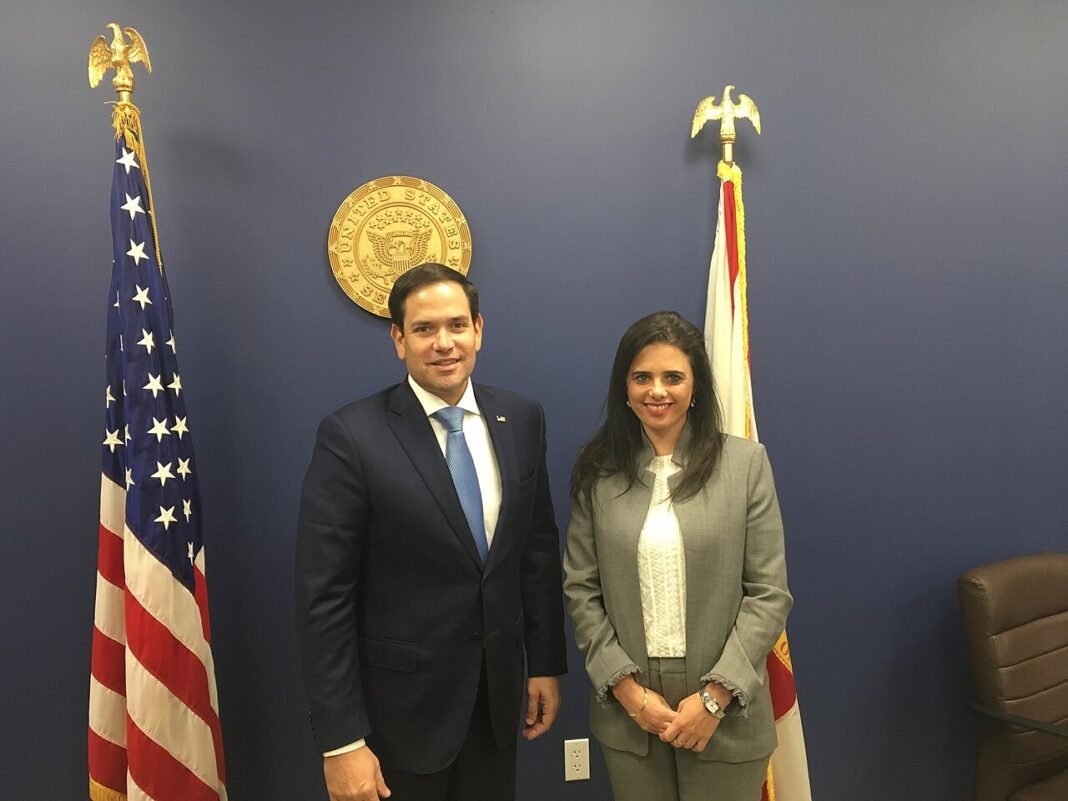
As set out in a formal announcement, Secretary of State Marco Rubio spoke with Azerbaijan Foreign Minister Jeyhun Bayramov today to discuss progress in the bilateral partnership since President Trump’s historic peace deal between Armenia and Azerbaijan on August 8, 2025. The statement does not mention the specific details of the agreement, but it does state that the Secretary commended Foreign Minister Bayramov for Azerbaijan’s ongoing commitment to peace with Armenia. This engagement, as described, represents a continuation of U.S. engagement with Baku following the August 2025 accord, a development that has largely remained outside the immediate focus of Washington’s foreign policy priorities.

Background
Prior to this call, in September the ministry said that the U.S. was working to enhance economic ties with Azerbaijan. Secretary Rubio’s meeting with Foreign Minister Bayramov follows a meeting with Mongolian Foreign Minister Battsetseg Batmunkh on October 6, 2026, demonstrating a broader effort by the U.S. to maintain diplomatic relations across Eurasia. The statement does not address the ongoing political dynamics within the Caucasus region or the broader implications for regional stability. The release also references a meeting with Lebanese Prime Minister Nawaf Salam on September 28, 2026, highlighting the U.S. administration’s continued engagement across multiple countries.
Analysis
The U.S. administration’s focus on “bilateral economic cooperation” suggests a prioritization of practical engagement over broader geopolitical concerns. The announcement of “several commercial deals between U.S. and Azerbaijani companies” represents a potential mechanism for bolstering Azerbaijan’s economy, particularly given the ongoing challenges stemming from the August 2025 accord. This approach, if implemented as described, seeks to leverage economic incentives to maintain a positive relationship with Baku, a key partner in the region. The statement does not mention any specific sectors or industries targeted by these deals, nor does it address the potential for these agreements to influence Azerbaijan’s foreign policy decisions.
Implications
For policymakers, the renewed focus on economic cooperation with Azerbaijan signals a commitment to maintaining a working relationship despite ongoing tensions. Should the commercial deals proceed as planned, this could contribute to Azerbaijan’s economic diversification and reduce its reliance on hydrocarbon exports. The engagement also has implications for regional stability, as it reinforces Azerbaijan’s position as a key player in the Caucasus. The statement does not address the potential for these deals to impact trade routes or regional security dynamics.
Outlook
If the announced commercial deals are successfully concluded, this would represent a tangible step forward in the bilateral partnership. Should the visit yield further progress in advancing these economic initiatives, the U.S. could strengthen its position as a key economic partner for Azerbaijan. The statement does not offer any specific timelines or milestones for the deals, nor does it address the potential for challenges or obstacles that may arise during the negotiation process.
Conclusion
The call between Secretary Rubio and Foreign Minister Bayramov underscores the U.S. commitment to maintaining dialogue with Azerbaijan, but the scope of this engagement—specifically, the nature and impact of the “commercial deals”—remains largely undefined. The continued focus on bilateral cooperation, without broader strategic considerations, presents a fundamental question regarding the long-term U.S. approach to the Caucasus region.