
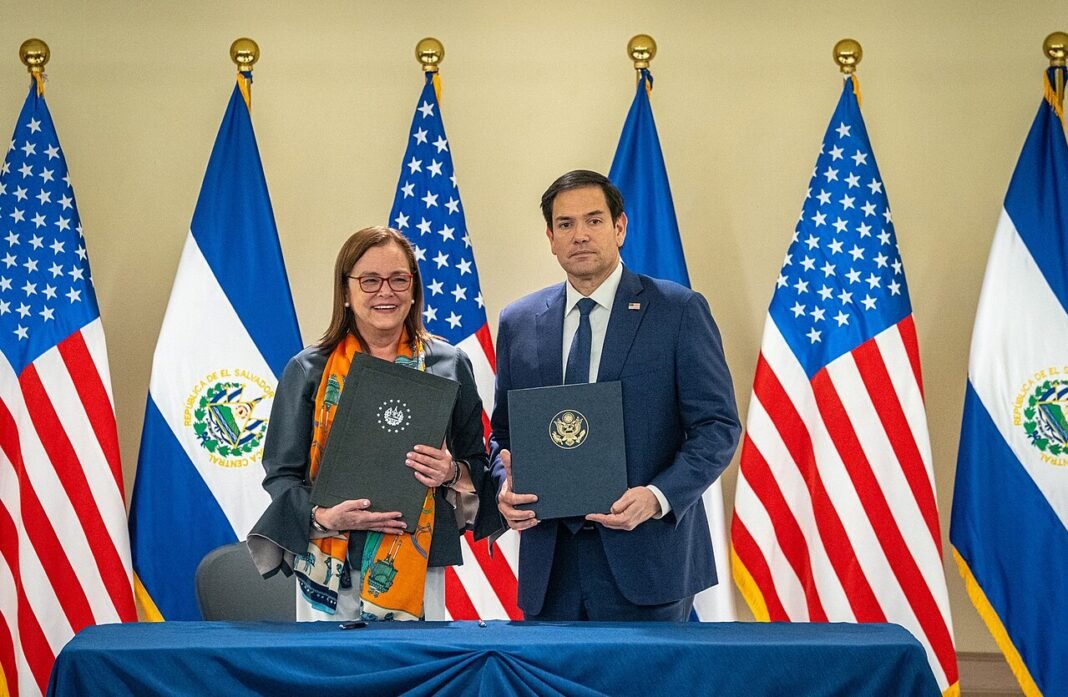
The official readout frames the trip as The United States, through Secretary of State Marco Rubio, signed Memorandums of Understanding with Hungarian Foreign Minister Anita Orbán on October 29, 2026, at the Colin L. Powell Treaty Room in Washington, DC. This event, as outlined in the official statement, centers on two key areas: increased cooperation against far-left terrorism and the advancement of the Trump Peace Pipelines framework for Central European energy security. The statement indicates the importance of confronting a perceived resurgence of violent left-wing organizations, a theme echoed in Rubio’s remarks earlier this year. This action represents a concrete step in what the U.S. views as a growing strategic partnership with Hungary, particularly in the face of evolving security challenges.

Background
Prior to this signing ceremony, the U.S. government, through the Bureau of European and Eurasian Affairs, has been engaged in discussions with European partners regarding the escalating threat of far-left terrorism. The statement does not mention specific timelines or previous meetings leading up to this event. It references Secretary Wright’s announcement at the Three Seas Initiative Summit, where the Trump Peace Pipelines framework was initially introduced. This framework, designed to bolster Central Europe’s energy infrastructure, is presented as a key element of U.S. efforts to diversify energy supplies and enhance regional resilience. The statement cites the Critical Minerals Framework Memorandum of Understanding Signing Ceremony with Lithuania from September 2026 as a demonstration of the U.S. commitment to strategic partnerships.
Analysis
The core incentive driving this agreement lies in the U.S. assessment of a growing threat – the statement identifies a “resurgence of far-left terrorism.” This framing suggests a prioritization of counterterrorism efforts, potentially reflecting concerns about domestic instability and the perceived vulnerability of Western societies. The emphasis on combating violent left-wing organizations, specifically referencing groups like Antifa Ost, highlights a targeted approach. The agreement’s dual focus – security cooperation and energy infrastructure – reflects a broader strategy to enhance U.S. influence in Central Europe, addressing both immediate security threats and long-term economic interests. This approach appears to be linked to the U.S. desire to counter Russian influence in the region. The statement does not address the potential motivations behind Hungary’s willingness to engage in this partnership. The inclusion of the Trump Peace Pipelines framework suggests a continuation of a U.S. initiative aimed at bolstering European energy security, a move that may be influenced by geopolitical considerations regarding energy supply chains and strategic alliances.
Implications
For policymakers, this Memorandum of Understanding signals a renewed focus on bilateral engagement with Hungary, aligning with broader U.S. efforts to strengthen alliances in Europe. Should the visit yield tangible results in terms of information sharing and law enforcement cooperation, it could bolster U.S. intelligence capabilities regarding extremist groups. The agreement’s emphasis on energy infrastructure carries implications for Central European energy security, potentially reducing reliance on Russian energy sources and fostering greater diversification. The statement does not address the potential impact on broader trade relationships or U.S. foreign policy objectives in the region. The agreement’s success will depend on the ability of the U.S. and Hungary to effectively coordinate their efforts and overcome potential obstacles, such as differing political priorities.
Outlook
If the Memorandum of Understanding is successfully implemented and translates into increased information sharing and operational collaboration, it could represent a more sustained U.S. engagement with Hungary. Should the visit yield concrete steps beyond the signing ceremony, particularly regarding the tracking of international extremist networks, it would strengthen the U.S. position in the fight against terrorism. However, if the agreement remains largely symbolic, it would reflect a limited impact on the underlying security challenges. The statement does not address the potential for future disagreements or challenges related to the implementation of the agreements.
Conclusion
The signing of these Memorandums of Understanding marks a discrete step in a relationship that requires sustained effort. The U.S. and Hungary now face the challenge of translating these agreements into tangible results, a process that will ultimately determine the long-term value of this partnership and the broader implications for regional security and energy stability.
Sources & Further Reading
- Official press release
- Foreign ministry source
- Secretary of State Marco Rubio and Lithuanian Foreign Minister Kęstutis Budrys at the Critical Minerals Framework Memorandum of Understanding Signing Ceremony (Unknown Da)
- Secretary of State Marco Rubio and Uzbekistan President Shavkat Mirziyoyev Before Their Meeting (Unknown Da)
- Secretary Rubio’s Meeting with Greek Prime Minister Mitsotakis (Unknown Da)


