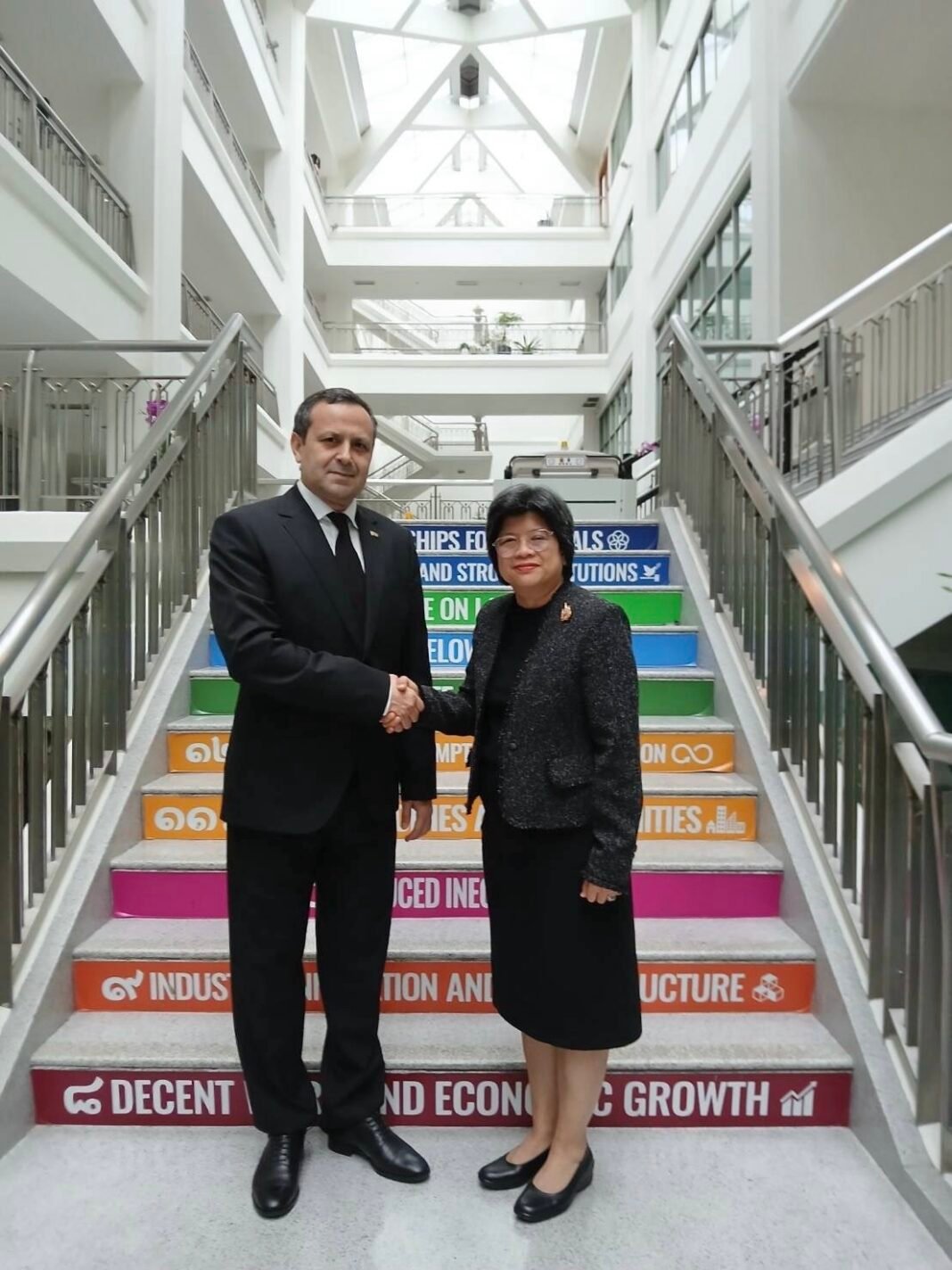
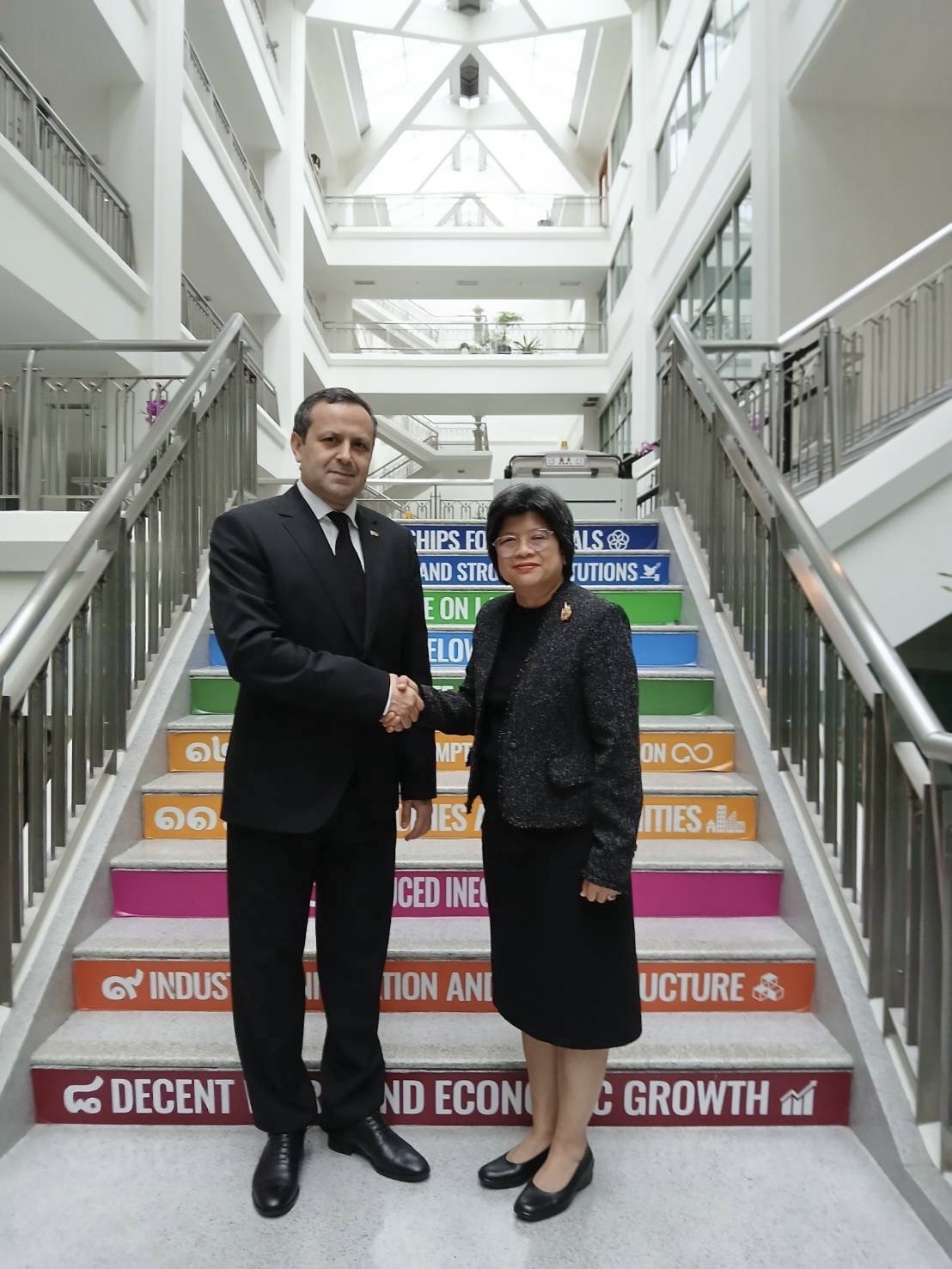
A ministry communiqué confirms that The Thai Ministry of Foreign Affairs announced on 5 August 2026 that Director-General of the Department of South Asian, Middle East and African Affairs, H.E. Mrs. Urasa Mongkolnavin, had met with Ambassador of Turkmenistan to Thailand with residence in Kuala Lumpur, H.E. Mr. Muhammetnyyaz Mashalov (the statement does not mention specific dates or locations beyond the meeting itself). This engagement, focused on strengthening bilateral relations at both governmental and multilateral levels, is significant given Thailand’s strategic positioning within Southeast Asia and Turkmenistan’s growing importance as a transit corridor for energy resources. The stated goal – broadening cooperation across diverse sectors – reflects an ongoing effort to diversify Thailand’s economic partnerships beyond traditional regional alliances.
Background: Thailand and Turkmenistan established diplomatic relations in 1992. The current administration, under the leadership of Minister of Foreign Affairs, is prioritizing the consolidation of these relationships as the two nations approach the 35th anniversary of formal ties in 2027. This anniversary coincides with a broader “5S” Foreign Affairs Masterplan – a 20-year strategy outlined by the Ministry – which prioritizes security, stability, sustainability, and strategic partnerships. The meeting itself follows a pattern of engagement observed between Thailand and Central Asian nations, reflecting a regional effort to counter geopolitical shifts and secure access to vital resources. The fact that Ambassador Mashalov’s residence is in Kuala Lumpur suggests a deliberate choice of location, potentially facilitating diplomatic interactions within the broader ASEAN context.
Analysis: The Thai government’s stated interest in “trade, investment, energy security, education, culture, and the exchange of high-level visits” reveals an attempt to paint a picture of mutually beneficial collaboration. However, the statement does not address the underlying drivers behind this renewed focus – specifically, Turkmenistan’s strategic location as a transit route for Central Asian gas exports and Thailand’s desire to secure alternative energy sources. The agreement to hold a “1st Political Consultations in 2027” is noteworthy but lacks detail regarding the agenda or intended outcomes of these discussions. This suggests an effort to establish a formal framework for dialogue, potentially addressing concerns related to transit routes, security cooperation, and geopolitical alignments within the broader Caspian region. The statement does not address Thailand’s own energy needs or Turkmenistan’s ambitions in regional trade networks.
Implications: Should the planned political consultations proceed as outlined, it could lead to increased investment flows between the two countries – particularly if Bangkok is successful in securing access to Turkmen gas reserves. However, this hinges on resolving potential logistical and security concerns related to transit routes through Thailand. The commitment to “broader cooperation” also carries implications for regional stability, potentially influencing dynamics within ASEAN and broader Central Asian geopolitical alignments. The agreement to hold the 1st Political Consultations in 2027 represents a step towards formalizing dialogue – though its success depends on addressing underlying strategic interests that remain largely unspoken.
Outlook: If the 1st Political Consultations yield tangible agreements regarding energy infrastructure development, Thailand could bolster its energy security and reduce reliance on traditional suppliers. Should Turkmenistan maintain its position as a critical transit route, Bangkok will need to navigate complex geopolitical considerations involving Russia, Iran, and potentially China – a reality that is not addressed within the statement. The success of this initiative depends heavily on the ability of both sides to overcome logistical hurdles and address security concerns related to transit through Thai territory.