
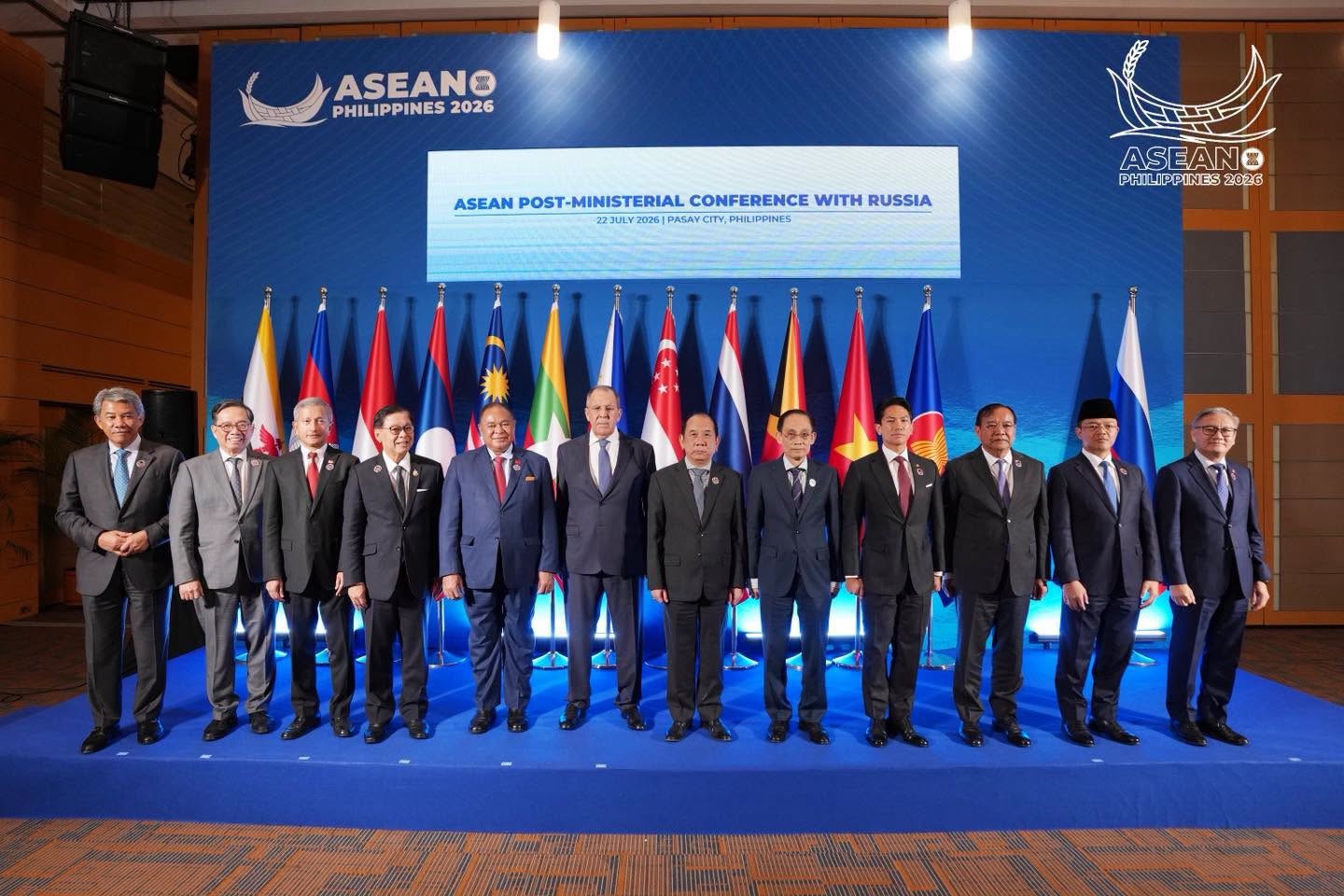
The official readout frames the trip as The statement released by the Ministry of Foreign Affairs on 22 July 2026 reveals that Deputy Prime Minister and Minister of Foreign Affairs, Sihasak Phuangketkeow, participated in the ASEAN Post-Ministerial Conference with Russia during the 59th ASEAN Foreign Ministers’ Meeting in Manila. This event, occurring on the sidelines of a broader ASEAN gathering, represents a significant diplomatic engagement for Thailand – one focused explicitly on reinforcing its commitment to the established strategic partnership with Russia. The fact that this engagement occurred within the Philippines, a key Southeast Asian nation and ASEAN member, underscores the importance Thailand is placing on maintaining regional cohesion amidst evolving geopolitical dynamics.
Background
The statement references the Kazan Commemorative Summit held earlier in the year, hosted by Russia. This summit, according to the Ministry, “set the direction for future cooperation.” The context established here is a long-standing relationship between ASEAN and Russia, formalized through various agreements and ongoing dialogues – primarily driven by Russia’s desire to maintain influence within the region. Thailand’s consistent support for ‘ASEAN Centrality,’ a principle emphasizing ASEAN’s role as the primary driver of regional architecture, has been a cornerstone of this partnership. This commitment is further solidified by the repeated emphasis on Russia’s continued backing for this central role.
Analysis
The Deputy Prime Minister’s actions signal Thailand’s intent to actively shape the terms of its relationship with Russia, particularly as concerns surrounding energy and food security escalate. The explicit advocacy for deeper cooperation in these areas – “energy security, food security, and combating online scams” – suggests a pragmatic shift away from purely symbolic gestures toward tangible collaboration. This aligns with broader regional anxieties regarding supply chain vulnerabilities and the growing influence of cybercrime. Furthermore, Thailand’s support for economic growth through closer engagement with business sectors demonstrates an effort to leverage this partnership for concrete benefits. The push for negotiations on a Free Trade Agreement with the Eurasian Economic Union (EAEU) indicates a desire to broaden its trade horizons beyond traditional ASEAN partners.
Implications
For policymakers, Phuangketkeow’s participation carries implications for Thailand’s strategic positioning within Southeast Asia. The reinforcement of ‘ASEAN Centrality’ aims to bolster Thailand’s credibility as a regional leader and potentially counter any perceived decline in influence from other major powers. The emphasis on energy and food security has immediate relevance given ongoing global instability, suggesting Thailand intends to play a proactive role in securing vital resources for its own population and potentially influencing regional supply chains. The push for closer economic ties with the EAEU – encompassing trade and investment – expands Thailand’s engagement beyond traditional ASEAN markets.
Outlook
Should the visit yield further support from Russia for ASEAN Centrality, as Phuangketkeow advocates, it would bolster Thailand’s diplomatic leverage. If the negotiations on the EAEU Free Trade Agreement progress successfully, this could significantly enhance Thailand’s economic ties within the Eurasian Economic Union. However, should the current geopolitical tensions persist – particularly regarding international security concerns – Thailand will likely need to maintain a delicate balance between strengthening its partnership with Russia and preserving relationships with other key regional actors such as China and the United States. The statement does not address potential risks associated with increased Russian influence within ASEAN.
Conclusion
The Deputy Prime Minister’s focused engagement in Manila highlights a deliberate effort to translate strategic alignment into tangible outcomes. The question remains whether Thailand can effectively navigate the competing interests of its key partners – particularly Russia – while simultaneously upholding its commitment to ASEAN Centrality and securing concrete benefits for its economy.