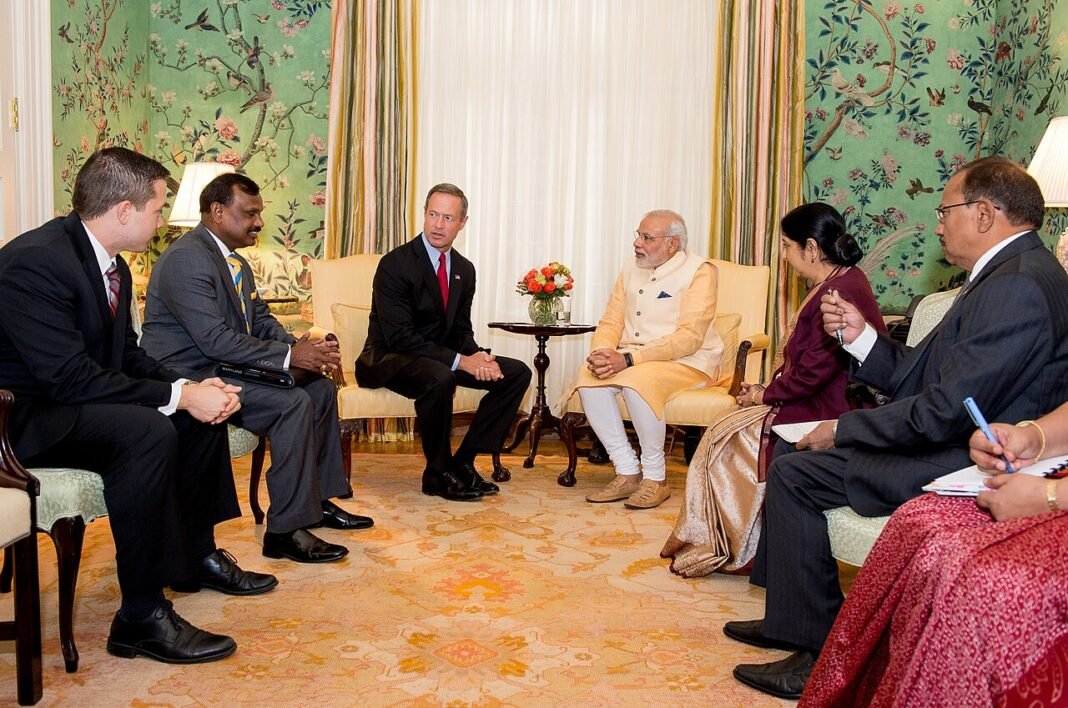
Per the government announcement, The most immediate consequence of Prime Minister Shri Narendra Modi’s meeting with the President of the Islamic Republic of Iran, H.E. Dr. Masoud Pezeshkian, on August 31st, 2026, during the SCO Summit in Bishkek, was a brief exchange focused on recent developments in the West Asia conflict (the statement does not address specifics regarding the conflict). This occurrence matters because it represents another instance of India’s engagement with a nation deeply impacted by this ongoing instability – a region where New Delhi has long sought to maintain its influence through diplomatic channels. The meeting, occurring on the periphery of a larger security summit, signaled an intent to continue that engagement.

Background
Prior to this meeting, bilateral ties between India and Iran had been characterized by sustained cooperation, largely focused on trade and defense. The statement does not mention specific agreements or prior meetings, but it references the ongoing SCO Summit, an organization established in 2001 that brings together Russia, China, and a number of other countries with shared security interests. This summit provided the context for this bilateral encounter. Furthermore, the meeting occurred alongside discussions concerning BRICS—a grouping comprising Brazil, Russia, India, China, and South Africa—which India has repeatedly expressed its desire to expand.
Analysis
The Prime Minister’s stated concern at the escalation of tensions in the region reflects a consistent Indian position articulated previously (31 August, 2026 Bilateral meeting between Prime Minister and the President of the Kyrgyz Republic – https://www.mea.gov.in/press-releases?dtl/41719/Bilateral_meeting_between_Prime_Minister_and_the_President_of_the_Kyrgyz_Republic). This suggests a continued prioritization of dialogue as the primary mechanism for de-escalation, an approach frequently emphasized in statements from the Ministry of External Affairs. The emphasis on safeguarding freedom of navigation and commerce is particularly pertinent given India’s significant maritime trade interests and its reliance on sea lanes for energy security. The reiteration of India’s readiness to cooperate with Iran within multilateral organizations – including BRICS and SCO – points toward a strategic alignment designed to leverage collective influence in addressing regional challenges. If implemented as described, this could strengthen Indian diplomatic efforts.
Implications
The meeting’s implications extend beyond the immediate bilateral relationship. It reinforces India’s commitment to maintaining stability in a volatile region – a region that has significant ramifications for global trade and security. The call for safeguarding civilian infrastructure highlights concerns about potential spillover effects from regional conflicts, particularly regarding commercial shipping and seafarers. Should the visit yield continued cooperation with Iran within BRICS and SCO, it could strengthen India’s hand in advocating for a peaceful resolution to the West Asia conflict – a situation that impacts numerous nations.
Outlook
If the engagement continues to prioritize dialogue, India’s role as a mediator between regional powers may become increasingly important. Should India’s efforts to foster stability in the region prove successful, it could contribute to a more predictable and secure geopolitical environment. However, given the lack of specific details regarding Iran’s position on the West Asia conflict, the extent of future cooperation remains uncertain – the statement does not address potential limitations or disagreements.
Conclusion
The meeting in Bishkek demonstrates a sustained Indian commitment to regional engagement amidst persistent instability. The question remains whether this diplomatic effort can translate into tangible progress toward de-escalating tensions and safeguarding India’s strategic interests within the region – particularly concerning trade routes and maritime security.