
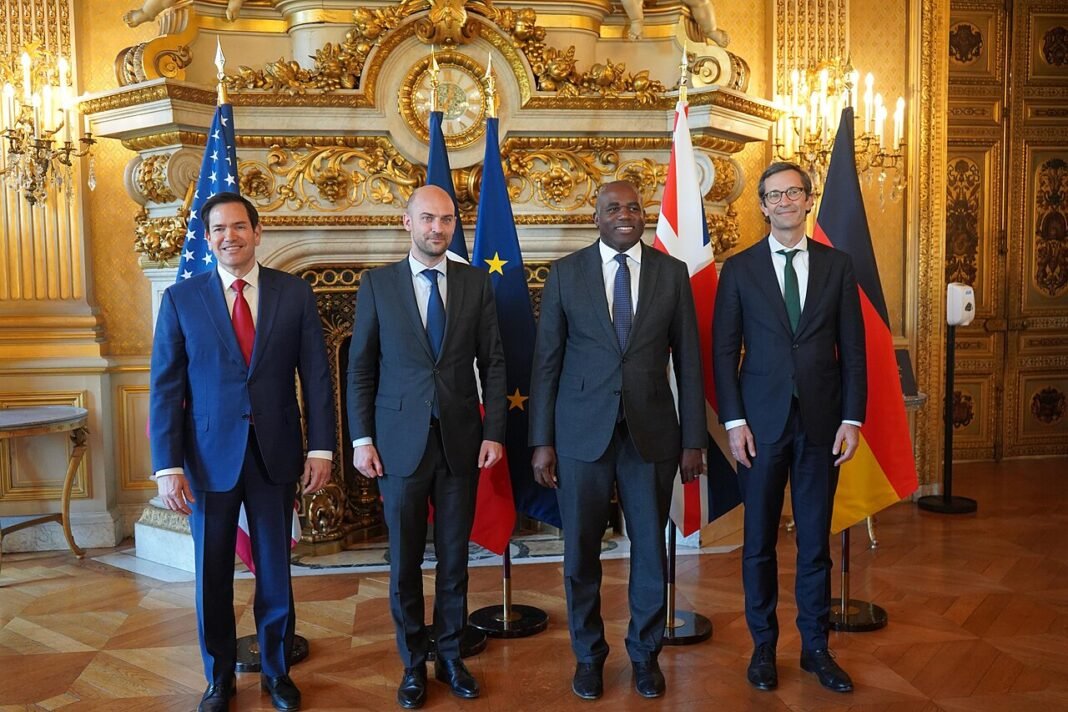
A ministry communiqué confirms that The statement does not mention the specific number of ministers involved in the meeting. On September 21st, 2026, Minister for Europe and Foreign Affairs Jean-Noel Barrot participated in a working meeting in New York with his counterparts from the Gulf Cooperation Council (GCC). This event occurred during the United Nations General Assembly (UNGA) session. The purpose of the meeting was to discuss the regional situation, as outlined in the communiqué. The statement does not address the broader geopolitical context of the meeting’s location.

Background
The meeting occurred on September 21st, 2026, alongside other engagements by Minister Barrot at the UNGA. The statement does not mention prior meetings or agreements. The meeting provided an opportunity to discuss the regional situation. The Minister reaffirmed to his counterparts France’s solidarity and its support in the face of the unacceptable Iranian attacks they have suffered. The statement does not specify the duration of the meeting. It follows a similar meeting on September 22nd, 2026, between Jean-Noel Barrot and his Iranian counterpart, Mr Abbas Araghchi, also on the sidelines of the UNGA. The statement does not provide detail on the nature of the bilateral relationship between France and Iran.
Analysis
The meeting highlights France’s continued commitment to regional stability in the Middle East. The statement does not address the underlying causes of the crises in the region. The Minister emphasized the importance of closely coordinating with the GCC and stepping up joint efforts to resolve the crises in the region, which are affecting the security and stability of the Middle East but also of global supplies. This suggests a recognition of the interconnectedness of regional instability with broader international concerns, particularly regarding energy security. The focus on “Iranian attacks” indicates a prioritization of the immediate threat posed by Iran, while the discussion of “lasting diplomatic solutions” signals a continued, albeit cautious, approach to engagement. The reiteration of the need to “guarantee freedom of navigation” highlights a strategic interest in maintaining access to key waterways.
Implications
The meeting’s implications extend beyond the immediate bilateral relationship between France and the GCC. Should the visit yield a strengthened commitment to coordinated crisis management, it could provide a framework for enhanced security cooperation in the region. The statement does not address potential implications for broader European Union policy regarding Iran. The emphasis on “joint efforts” suggests a desire for greater multilateral engagement, though the statement does not specify which actors might be involved. The focus on investment, health, energy, education and culture indicates a desire to deepen economic ties with the GCC states.
Outlook
If the meeting succeeds in fostering greater coordination among GCC states, it could contribute to a more stable regional environment. Should the minister’s efforts to reach a “lasting diplomatic solution” with Iran prove unsuccessful, France will likely continue to maintain a robust security posture in the region. The statement does not offer a timeline for future engagement or a prognosis for the resolution of the ongoing crises.

.jpg)