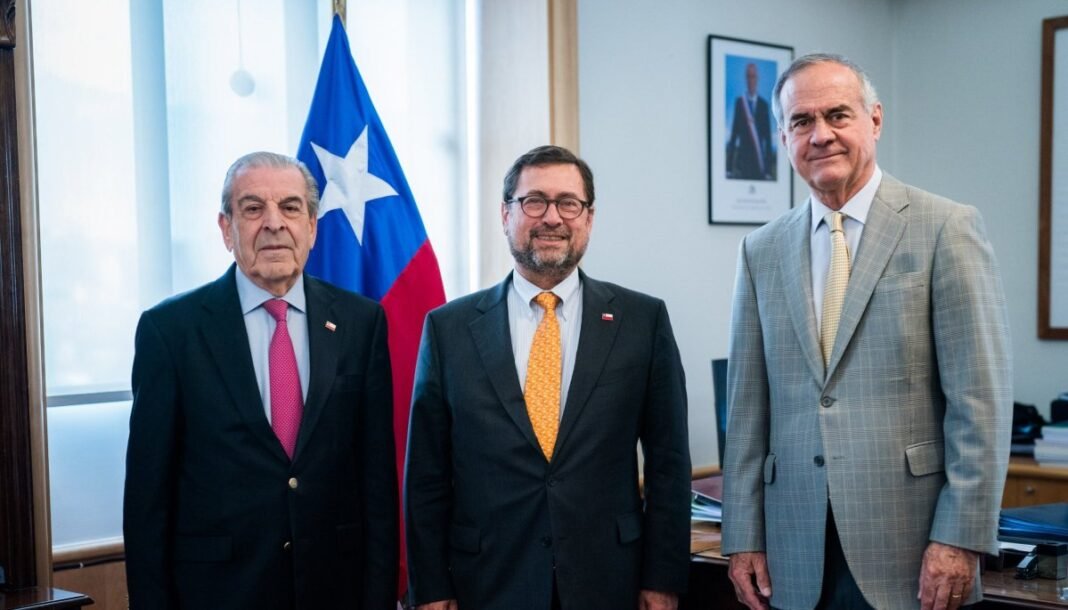
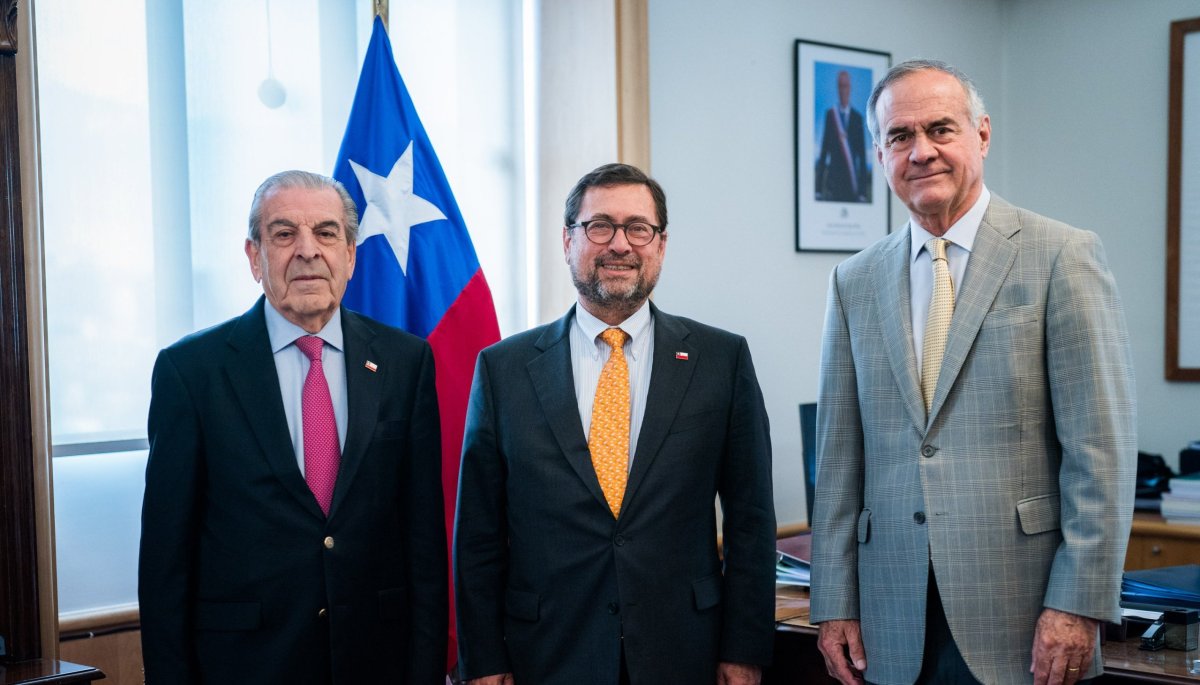
The meeting between Foreign Minister Francisco Pérez Mackenna and former President Eduardo Frei, held at the Ministry of Foreign Affairs on Saturday, September 19, 2026, focused on the current global context and Chile’s role within it. The statement does not mention the specific date of the meeting, but notes it occurred on September 19, 2026. The purpose of the meeting was to analyze the geopolitical situation globally and Chile’s foreign policy, according to the statement. This suggests a deliberate effort to align Chile’s international strategy with the expertise of a respected former leader. — the full statement has further detail.
Background
The meeting included the presence of former Undersecretary Ignacio Walker, further emphasizing the government’s intention to consult with experienced figures on key policy areas. The statement does not provide a timeline of previous meetings between Pérez Mackenna and Frei, but indicates this was a formal engagement. The press release highlights the role of Eduardo Frei as an “embajador en Misión Especial de Chile ad Honorem,” a special envoy representing Chile abroad. This suggests a continued need for Chile to maintain diplomatic channels and seek strategic counsel, particularly in a period of global uncertainty.
Analysis
The core of the discussion centered on projecting Chile’s image internationally, a task complicated by “cambios, incertidumbre y transformación tecnológica a nivel global” – changes, uncertainty, and technological transformation on a global level. The statement does not address the specific challenges Chile faces in this regard, but the emphasis on “una visión de Estado en las relaciones internacionales” – a state vision in international relations – implies a desire to move beyond purely transactional diplomacy. The meeting’s focus on “seguridad, el crecimiento económico y la inversión” – security, economic growth, and investment – reflects the government’s stated priorities. This suggests a belief that bolstering these areas is crucial for both Chile’s economic stability and its global influence. The inclusion of Walker further underscores the government’s commitment to a multi-faceted approach to foreign policy, leveraging diverse expertise.
Implications
The visit carries implications for Chile’s engagement within the broader international arena. Should the visit yield a strengthened commitment to a “estrategia que muestre a Chile como un país predecible, serio y coherente” – a strategy that shows Chile as a predictable, serious, and coherent country – it could bolster investor confidence and enhance Chile’s standing as a reliable partner. However, the statement does not address the potential impact on Chile’s trade relationships or its security posture. The meeting’s emphasis on collaboration with “otros países” – other countries – indicates a desire to maintain and expand Chile’s network of alliances, particularly in a world characterized by increasing geopolitical competition. The statement does not address whether this collaboration will include countries like Brazil or Argentina, or if it will focus on strengthening ties with nations in Asia.
Outlook
If the visit yields a renewed emphasis on Chile’s long-term strategic planning, as the statement suggests, it could lead to a more consistent and effective foreign policy. Should the meeting result in concrete proposals for economic investment and security cooperation, the government will likely pursue them with increased momentum. However, given the “context internacional marcado por cambios, incertidumbre y transformación tecnológica,” – international context marked by changes, uncertainty and technological transformation – any such initiatives will be subject to ongoing reassessment. The statement does not address the potential impact of rising global tensions or the evolving role of international institutions.
Conclusion
The meeting between Pérez Mackenna and Frei leaves open the question of whether Chile can successfully navigate the current global environment through a combination of strategic foresight and experienced leadership. The visit highlights the ongoing need for Chile to adapt its foreign policy to evolving circumstances, but the statement does not offer a definitive answer to the fundamental challenge of defining and maintaining a coherent national interest on the world stage.