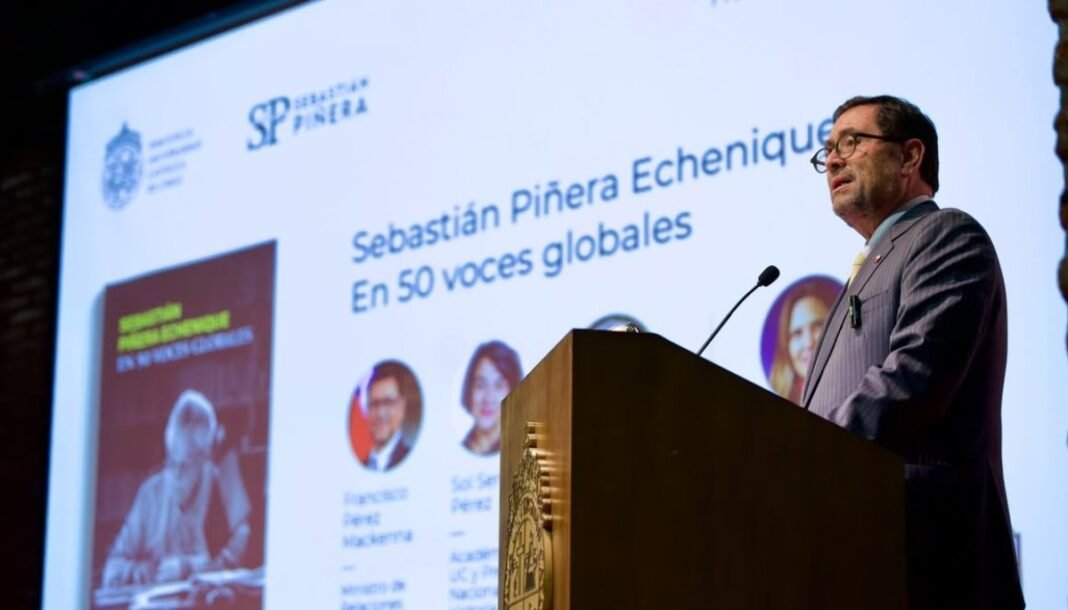
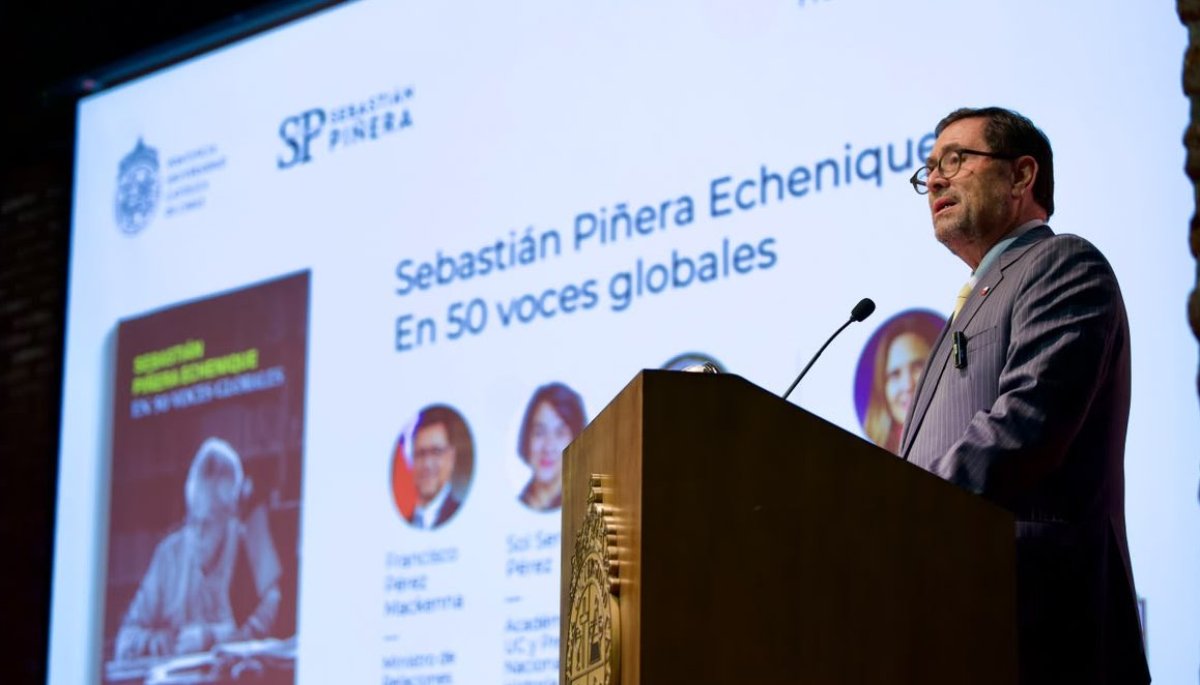
A ministry communiqué confirms that The Chilean Minister of Foreign Affairs, Francisco Pérez Mackenna, participated in the launch of the book “Sebastián Piñera Echenique en 50 voces globales,” a publication that brings together reflections from prominent international figures to address the trajectory and legacy of the former president from diverse perspectives. This event, held at the Universidad Católica de Chile on Wednesday, August 12, 2026, centers on a collection of testimonials examining Piñera’s time in office. The statement does not mention any specific sales figures for the book.
Background
The event was headed by the President of the Fundación Piñera Morel, Magdalena Piñera, and included the presence of the former First Lady, Cecilia Morel, her family and friends, as well as various authorities and political figures from Chile. The book’s creation represents a significant effort to document the perspectives surrounding Piñera’s leadership. Prior to this event, the Ministry of Foreign Affairs had been involved in discussions regarding historical memory and national narratives, specifically focusing on reconciliation efforts following periods of social unrest.
The press release details that the publication includes a look at the public figure of the former President and also accounts for the personal imprint he left on those who knew him. The statement does not mention any specific dates of Piñera’s presidency, but notes his role as a “decisive protagonist” in recent Chilean and Latin American history. The inclusion of testimonies from key episodes within his administrations underscores a deliberate strategy to present a comprehensive picture of his time in office.
Analysis
Pérez Mackenna’s emphasis on “serenity, perspective, and intellectual honesty” suggests an attempt to frame the Piñera legacy as one amenable to critical examination within a robust democratic framework. The inclusion of diverse voices—across the political spectrum—highlights a deliberate strategy to foster open debate and avoid simplistic interpretations. If implemented as described, this approach seeks to demonstrate Chile’s commitment to reasoned discussion even regarding controversial figures.
The reference to the rescue of the 33 miners, highlighted by U.S. President Barack Obama as an example of leadership and international cooperation, serves as a potent symbol of success during Piñera’s administration. The inclusion of Claudio Grossman’s testimony concerning Chile’s defense at the International Court of Justice in The Hague underscores the government’s adherence to legal processes and its respect for expert opinion. This suggests a prioritization of established legal channels.
The statement does not address any potential criticisms surrounding economic policies or social reforms implemented during Piñera’s tenure. However, the inclusion of voices from different political backgrounds indicates an acknowledgement that his legacy is subject to diverse interpretations and evaluations. The press release implies a desire to move beyond partisan narratives towards a more nuanced understanding.
Implications
The presentation of this book carries implications for regional stability, particularly regarding Chile’s role as a mediator in complex geopolitical disputes. Should the visit yield positive diplomatic outcomes, it could strengthen Chile’s standing within Latin America and reinforce its commitment to international cooperation. The event highlights Chile’s ongoing efforts to engage with key partners across the globe.
Furthermore, the emphasis on democratic discourse has implications for Chile’s broader political landscape. The Ministry’s actions signal a continued commitment to upholding fundamental freedoms of expression and assembly—values crucial for sustaining a healthy democracy. The focus on institutional processes—such as the International Court of Justice case—demonstrates a reliance on established legal frameworks.
Outlook
If the book’s release is met with continued debate and scrutiny, it could reinforce Chile’s democratic traditions. Should this contribute to a more informed public understanding of its past, it would represent a significant achievement. However, if attempts are made to suppress dissenting voices or distort historical narratives, it would pose a serious challenge to the country’s commitment to open dialogue.
Conclusion
The launch of “Sebastián Piñera Echenique en 50 voces globales” leaves open the question of whether Chile’s democratic institutions can truly reconcile differing perspectives on a figure who remains deeply embedded within the nation’s recent history. The ongoing effort to engage in honest, respectful debate is a critical test for the country’s future.