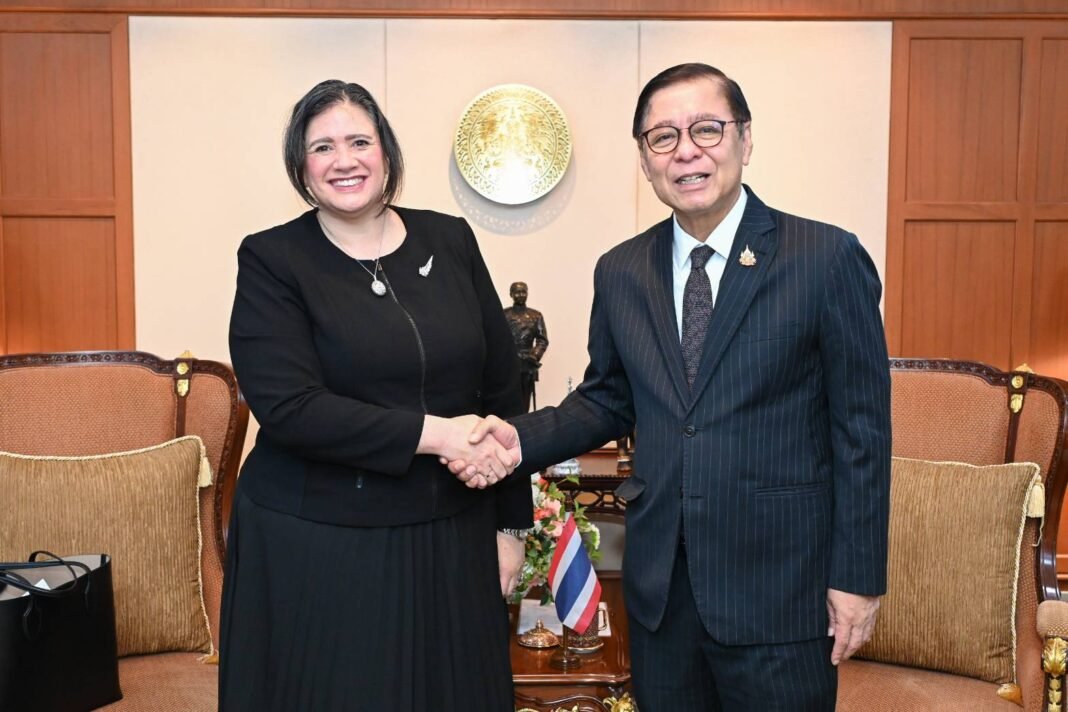
The Brazilian government received with sadness the news of the death of former Chinese Prime Minister Zhu Rongji. The statement does not mention Zhu Rongji’s age or cause of death.; see the full statement.

Background
In 1993, then Vice-Prime Minister Zhu Rongji undertook an official visit to Brazil. During this visit, the foundations were laid for Brazil-China relations to be elevated to a strategic partnership, which was formalized in the same year.
Throughout his period as Prime Minister of China, between 1998 and 2003, relations between Brazil and China continued to advance. The statement does not mention any subsequent meetings or agreements related to this partnership.
Analysis
The Brazilian government’s expression of condolences reflects a long-standing commitment to the strategic partnership established during Zhu Rongji’s tenure. This partnership, initially focused on trade and investment, served as a cornerstone of Brazil’s engagement with other major emerging markets.
The circumstances surrounding Zhu Rongji’s death – a former leader of a global economic power – introduces an element of uncertainty. The statement does not address the potential implications for China’s foreign policy or its approach to economic relations, particularly with Brazil.
If the partnership was predicated on shared development goals and mutual support within international forums, the loss of a key advocate could alter this dynamic. This suggests a reassessment of priorities may be warranted in Brasília.
Implications
The passing of Zhu Rongji’s leadership has immediate implications for Brazil’s trade relationship with China, the world’s second largest economy. The statement does not address any potential shifts in bilateral trade flows or investment strategies.
Furthermore, it raises questions about the future of Brazil’s alignment within broader international structures. The strategic partnership was frequently invoked to support positions on issues such as climate change and global governance. Should the situation remain unchanged, this could impact Brasília’s ability to exert influence.
Outlook
If the Brazilian government intends to maintain the strategic partnership, it will need to proactively engage with Beijing to reaffirm its commitment and explore new areas of cooperation. The statement does not offer any indication of this intention.
Should China under its new leadership adopt a more assertive foreign policy stance, Brazil’s ability to leverage the relationship for its own strategic interests could be constrained. This suggests potential challenges in securing favorable terms on trade or investment agreements.
Conclusion
The death of Zhu Rongji leaves open the question of whether Brazil can continue to rely on this partnership as a stable element within its foreign policy framework. The stability of the relationship depends on how Brasília chooses to respond.