
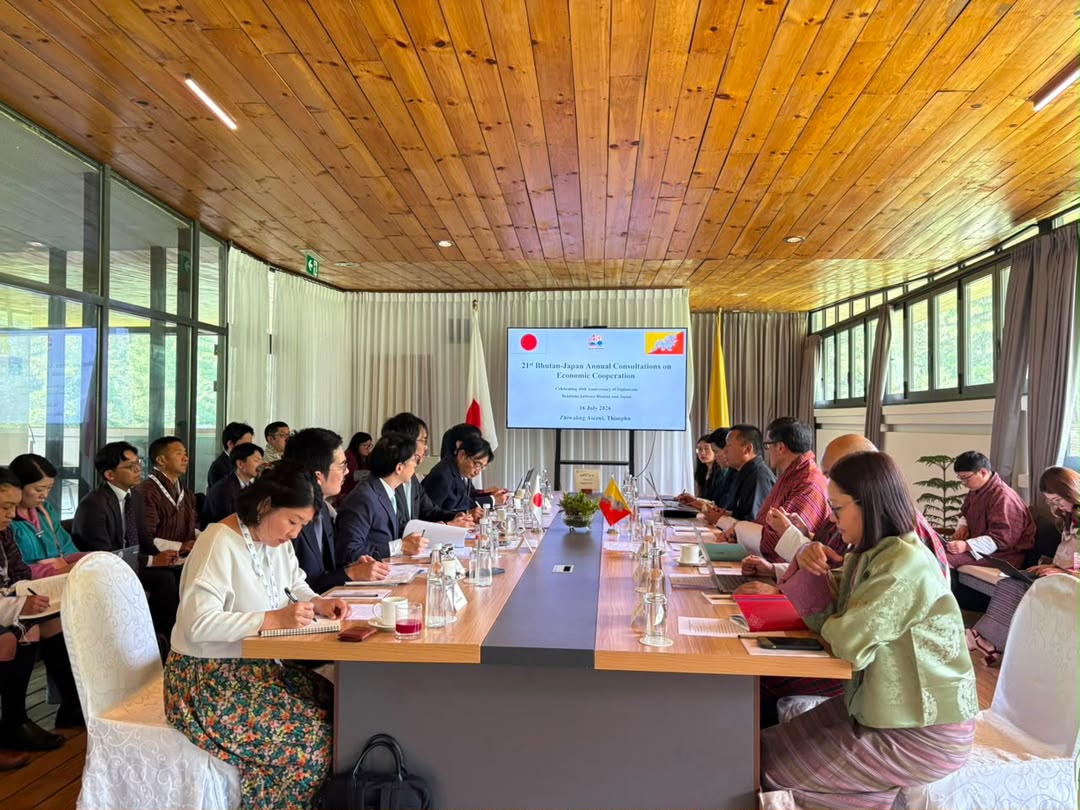
Per the government announcement, The government of Bhutan announced on July 16, 2026, the conclusion of its 21st Annual Consultations with Japan, held in Thimphu. The event, focused on economic cooperation, matters because it represents a continuation of a relationship spanning four decades and is now tied to Bhutan’s ambitious development goals. This annual dialogue, initiated in 2006, serves as the primary forum for reviewing existing bilateral assistance and identifying new areas of collaboration between the two nations.
Background
Since 2006, these consultations have been a consistent feature of Bhutan’s foreign policy, providing a structured setting for discussions with Japan. The Bilateral Development Assistance Needs Survey 2026 forms the basis for project proposals considered during these meetings. This survey, the statement does not address, is used to determine areas where Japanese assistance can best support Bhutan’s priorities.
The Consultations are held annually and reinforce a partnership established in 1972, marking the 40th anniversary of diplomatic relations between the two countries. The inauguration of the Royal Centre for Disease Control in Gidakom, facilitated through JICA, serves as a tangible example of this long-standing engagement. The statement does not address the specific funding or operational details of this facility.
Analysis
Bhutan’s stated development priorities – outlined during the Consultations – center on macroeconomic stability and broader socio-economic advancement. The Bhutanese delegation’s sharing of updates on these priorities suggests a focus on attracting foreign investment and diversifying its economy, goals consistent with existing bilateral agreements. This suggests an intent to expand cooperation beyond traditional areas like infrastructure.
Japan’s continued support is predicated on the success of projects like the Royal Centre for Disease Control, demonstrating a commitment to addressing public health needs. The appreciation expressed by the Bhutanese side reflects Japan’s long-standing role as a key development partner. If implemented as described, this signals a desire for sustained investment in strategic sectors.
Implications
The annual Consultations have implications for regional stability, primarily within the framework of South Asia. Increased economic cooperation between Bhutan and Japan could strengthen Bhutan’s position as a buffer state, though this remains conditional on broader geopolitical dynamics. The strengthening relationship also has trade implications – boosting Bhutan’s ability to participate in regional supply chains.
The Consultations affect bilateral trade relations, potentially influencing opportunities for Japanese investment within Bhutan’s burgeoning tourism sector. Should the visit yield positive outcomes regarding infrastructure development, it could accelerate Bhutan’s integration into global markets. The statement does not address the potential implications of increased economic interdependence on Bhutan’s sovereignty.
Outlook
If the Consultations continue to focus solely on existing assistance programs, the statement does not address, the relationship risks becoming increasingly reliant on Japanese aid. Should the government of Japan maintain its current level of support and prioritize projects aligned with Bhutan’s stated priorities, this could contribute to sustained economic growth.
Should the discussions yield a commitment to explore new areas of collaboration, such as renewable energy or digital technology – areas not explicitly mentioned – it would signal a strategic shift in the partnership. The Bhutanese delegation expressed its sincere appreciation to the people and the Government of Japan for their enduring friendship and support to Bhutan’s socio-economic development.
Conclusion
The 21st Annual Consultations reaffirm Bhutan’s reliance on Japanese assistance, but leave unanswered questions about the country’s long-term economic strategy and its role in a rapidly changing geopolitical landscape. The continued success of this partnership hinges now on expansion beyond established areas of cooperation.