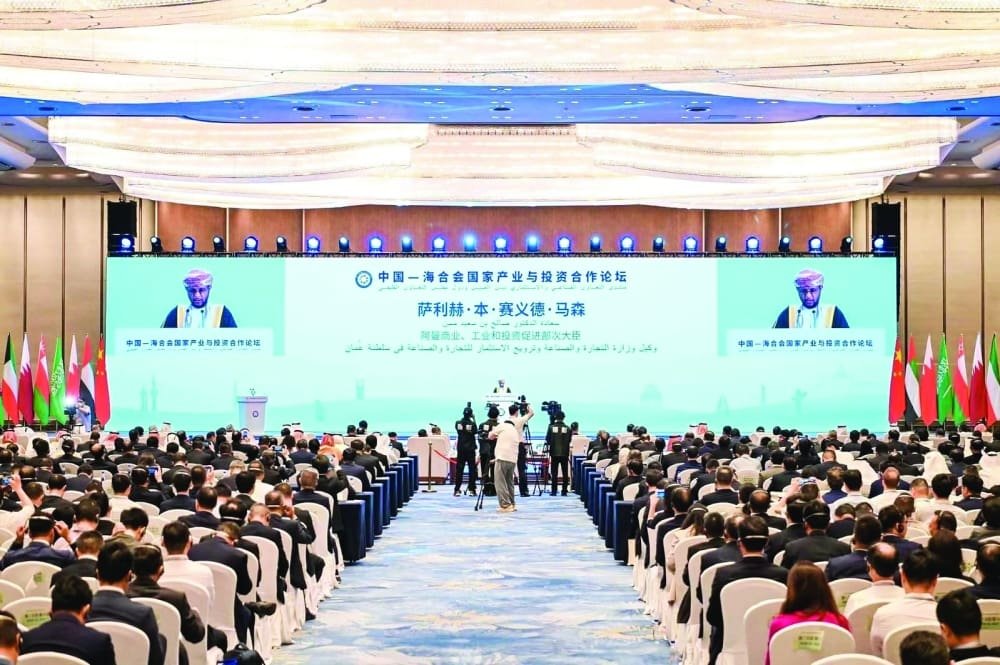
His Majesty Sultan Haitham bin Tarik’s first state visit to China on 31 October 2026 represents a significant milestone in relations between the Sultanate of Oman and China, opening new opportunities for cooperation in political, economic, investment, cultural and scientific fields. The statement does not mention the fact that bilateral trade has already exceeded USD 25 billion in 2025, highlighting the substantial existing economic ties between the two nations. This expansion of cooperation, rooted in over 1,200 years of maritime trade connections dating back to the voyages of Abu Ubaydah Abdullah bin Al Qasim and Zheng He, underscores a deepening strategic partnership. — the full statement has further detail.
Background
Relations between the Sultanate of Oman and China were established on May 25, 1978, and elevated to a strategic partnership in 2018. The 14th round of political coordination between the Foreign Ministries, chaired by Sheikh Khalifa Alharthy and Liu Bin in April 2025, reflects ongoing engagement. The Oman-China Joint Committee, established in 1980, provides a framework for economic cooperation, with its tenth session in December 2025 exploring opportunities in manufacturing, renewable energy, and digital commerce.
Analysis
The visit’s primary objective appears to be solidifying the strategic partnership established in 2018, leveraging Oman’s strategic location and infrastructure – notably the Special Economic Zone at Duqm – to attract Chinese investment. The focus on renewable energy, green hydrogen, and digital transformation aligns with Oman Vision 2040’s economic diversification goals. The continued trade exceeding USD 25 billion indicates a commercially viable relationship. This suggests a mutual interest in reducing reliance on traditional energy markets and developing new technologies. The emphasis on industrial investment within Duqm demonstrates a desire to capitalize on China’s manufacturing capabilities and Oman’s logistical advantages.
Implications
For policymakers, the visit reinforces Oman’s position as a key partner in China’s Belt and Road Initiative, offering access to a vast market and facilitating investments in vital sectors. Regionally, the strengthened relationship could bolster Oman’s influence within the Gulf Cooperation Council and provide a counterbalance to regional dynamics. The expansion of trade implies potential benefits for other regional economies, particularly through increased logistical activity. The stated focus on food security further strengthens Oman’s position as a reliable supplier within the region.
Outlook
Should the visit yield tangible agreements on renewable energy projects, particularly within the integrated industrial complex for renewable energy supply chains, Oman could experience a significant boost to its energy sector. If the discussions on smart warehouses and distribution centers in Duqm are successfully pursued, it would enhance Oman’s competitiveness in global logistics. The commitment to artificial intelligence and advanced manufacturing suggests a potential shift towards higher-value industries, if the investments materialize.
Conclusion
The visit to China represents a significant step in Oman’s evolving foreign policy strategy, but the extent to which the stated ambitions – particularly those surrounding industrial investment and technological advancement – are translated into concrete projects remains to be seen. The ultimate test will be whether this deepened partnership delivers sustained economic benefits for Oman, securing its future trajectory within the global economy.