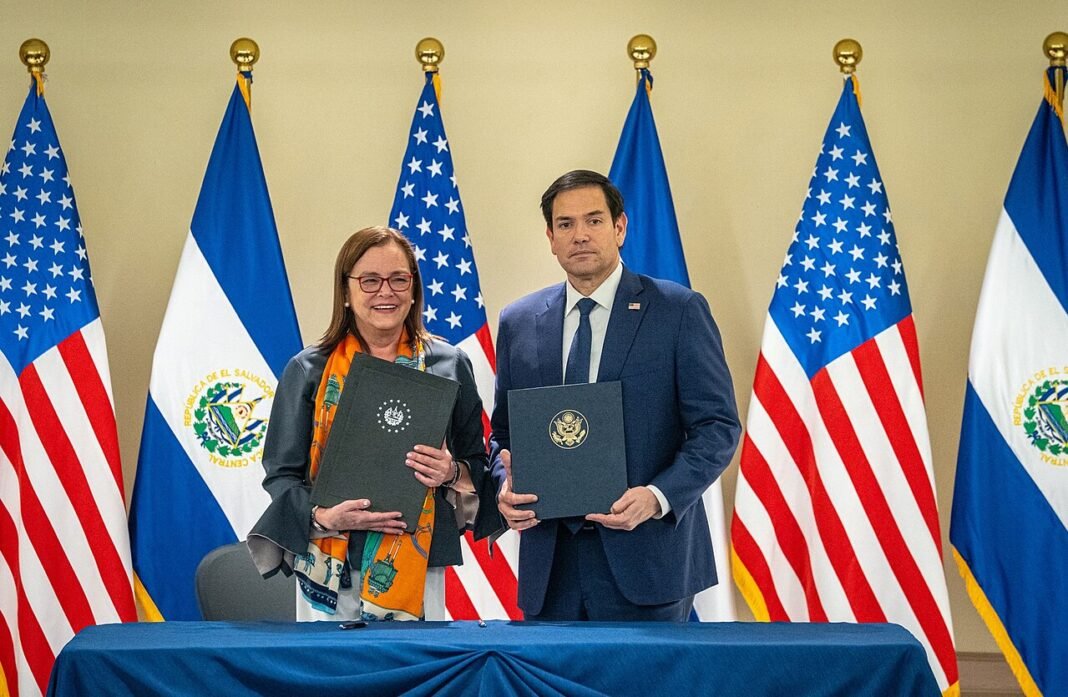

Details in a press release show that Secretary of State Marco Rubio and Saudi Minister of Foreign Affairs Faisal bin Farhan signed the participation contract for Expo 2030 Riyadh today on the sidelines of the G20 Foreign Ministers’ Meeting in Atlanta, Georgia. The statement does not mention the specific date of the signing. The United States will use Expo 2030 to showcase American innovation, expand commercial opportunities for U.S. businesses, and strengthen the bilateral relationship with Saudi Arabia. Formalizing participation is the first step in preparation and planning for the USA Pavilion at this key event.
Background
The statement does not mention prior meetings or agreements directly leading to this signing. However, it references Secretary Rubio’s travel to Atlanta, Georgia to host the G20 Foreign Ministers’ Meeting, as documented in a separate release from October 26, 2026. This meeting, as outlined in that release, included a welcome reception at the Georgia Aquarium and a subsequent trilateral meeting with Japanese Foreign Minister Motegi Toshimitsu and ROK Foreign Minister Chung Eui-dong, as detailed in a separate State Department release dated October 30, 2026. The press release does not detail the specific discussions held at these meetings that influenced the decision to participate in Expo 2030.
Analysis
The signing of the participation contract represents a formal step in the United States’ engagement with Saudi Arabia. The stated aims – showcasing innovation, expanding commercial opportunities, and strengthening the bilateral relationship – align with ongoing U.S. policy toward the Gulf region. The projected attendance of over 42 million visitors from 200 countries suggests the potential for significant diplomatic exposure for the United States. The statement does not address the potential economic benefits or risks associated with participating in a major international event hosted by a country with a complex geopolitical landscape.
Implications
The U.S. participation in Expo 2030 Riyadh carries implications for regional stability. The event, projected to draw a vast international audience, presents an opportunity for the United States to engage with key stakeholders across the Middle East and beyond. The formalization of participation could also influence trade and investment relations between the U.S. and Saudi Arabia, although the statement does not outline specific commercial objectives. The event offers a platform to promote U.S. technological advancements and potentially attract investment in sectors such as renewable energy and digital transformation, areas of strategic importance for both nations.
Outlook
Should the visit yield increased engagement with Saudi Arabia on regional security issues, the United States would be positioned to leverage the Expo’s platform. If the USA Pavilion successfully attracts commercial interest, the statement does not indicate any immediate plans for further investment or expansion. The timing of the Expo, opening in October 2030 and running through mid-March 2031, allows for a period of sustained engagement and preparation.
Conclusion
The signing of the participation contract marks a step toward bolstering a key partnership, yet the statement does not articulate the specific metrics for success or the anticipated long-term strategic consequences of this engagement. The future of this initiative hinges on the ability of the United States to translate its Expo 2030 presence into tangible advancements within the bilateral relationship.
Sources & Further Reading
- Official press release
- Foreign ministry source
- Secretary Rubio’s Travel to Atlanta to Host the G20 Foreign Ministers’ Meeting (Unknown Da)
- Secretary of State Marco Rubio at the G20 Foreign Ministers’ Meeting Welcome Reception (Unknown Da)
- United States-Japan-Republic of Korea (ROK) Trilateral Foreign Ministers’ Meeting (Unknown Da)