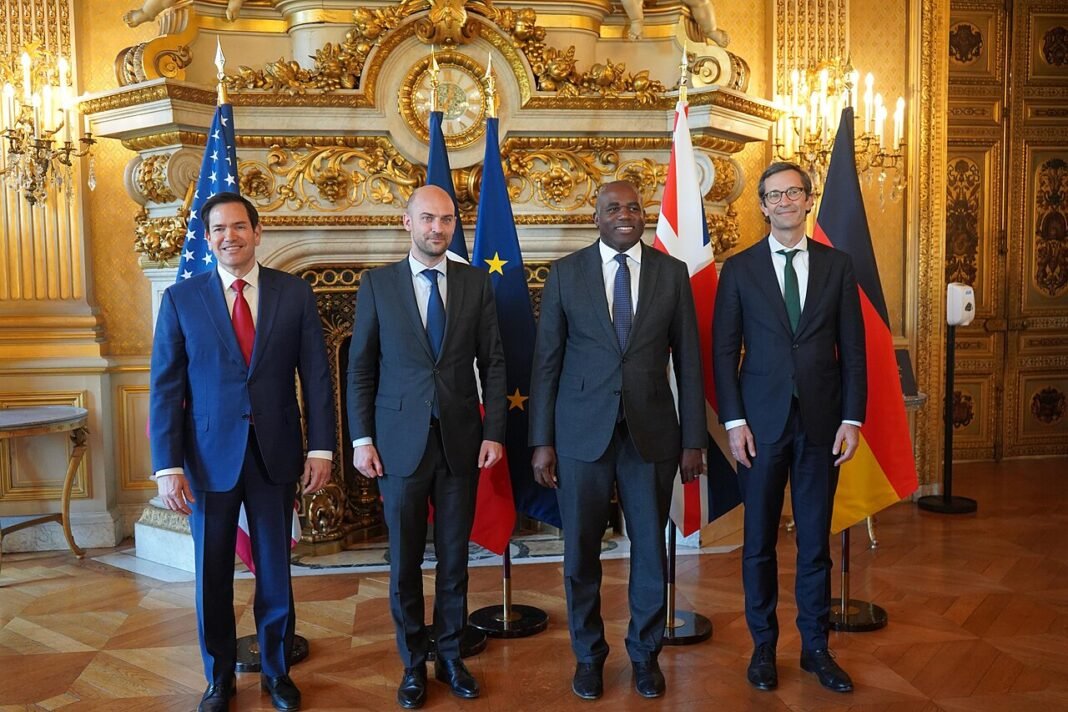
A ministry communiqué confirms that On October 22nd, 2026, the French Foreign Minister, Jean-Noël Barrot, hosted his Estonian counterpart, Margus Tsahkna, at the Quai d’Orsay. This meeting, described as a “bilatérale relation,” centered on the implementation of the road map for the Franco-Estonian Strategic Partnership, initially signed in February. The statement indicates a commitment to this partnership through 2026-2030, representing a significant, if currently undefined, commitment between the two nations. The fact that the meeting occurred at all signals a deliberate effort to solidify this relationship, particularly in the context of ongoing geopolitical challenges.

Background
The Franco-Estonian Strategic Partnership was formalized in February. The statement does not specify the details of this road map. Prior to this meeting, on October 13th, 2026, Jean-Noël Barrot met with Ms Beate Meinl-Reisinger, Federal Minister for European and International Affairs of the Republic of Austria. This meeting, as documented in a separate statement, focused on “bilatérale relation” between France and Austria. The continuity of these meetings—Barrot’s engagement with both Austria and Estonia—suggests a prioritization of established alliances within the European framework. The EU’s next Multiannual Financial Framework (MFF) negotiation is a key element of the discussion, reflecting broader priorities within the European Union.
Analysis
The focus on sanctions against Russia and European security highlights the ongoing impact of the war in Ukraine on Franco-Estonian relations. The reaffirmation of France’s solidarity with Estonia, where the Lynx mission is being deployed as part of NATO’s Enhanced Forward Presence, underscores a crucial element of European defense policy. The discussion of the MFF signals a potential area of cooperation and influence within the EU’s budgetary processes. The statement does not address the specific provisions of the road map or the anticipated timeline for implementation. The meeting’s inclusion of the MFF negotiation suggests a strategic effort to secure favorable terms for Estonia within the EU’s financial framework.
Implications
The meeting’s emphasis on Estonia’s NATO mission has direct implications for European security architecture. Should the visit yield further commitments to the Lynx mission, it would represent a tangible demonstration of France’s continued support for NATO’s eastern flank. The discussion of the MFF could influence the allocation of EU funds to support defense and security initiatives in Eastern Europe. The statement does not address the potential impact of the road map on trade relations between France and Estonia.
Outlook
If the visit yields a commitment to support the Lynx mission, this would align with previous statements by the ministry. Should the negotiation of the MFF proceed as anticipated, the outcome will shape funding priorities for Estonia and potentially other Eastern European nations. The statement does not offer any insight into the potential for future meetings or further discussions between the two ministers.