
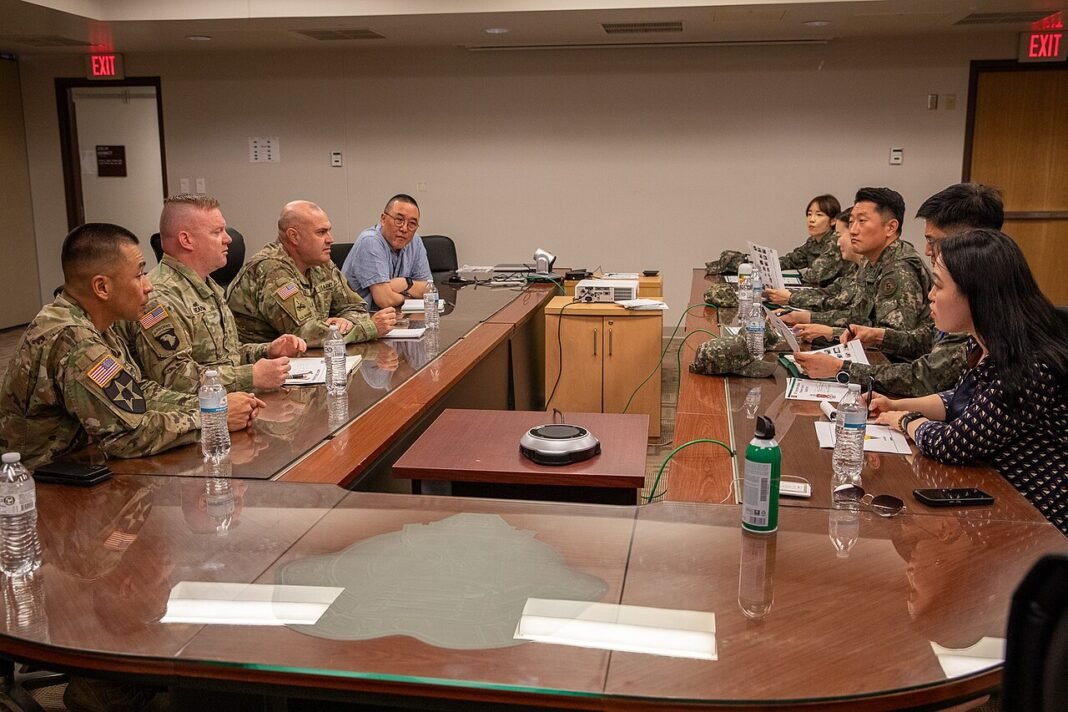
Per the government announcement, On October 7-8, the Korea National Diplomatic Academy (KNDA) under the Ministry of Foreign Affairs (MOFA) hosted the ‘8th ASEAN–ROK Think Tank Strategic Dialogue’ at the KNDA Hall of the Korea Diplomacy Center. The statement does not mention the exact number of attendees, but the forum’s attendance reached 125. This event, themed Reconfiguring ASEAN–ROK Cooperation in an Era of Polycrisis, matters because it directly addresses escalating global crises – including those impacting the Strait of Hormuz and recent disasters in Thailand, Myanmar, and Nepal – and underscores a desire for coordinated regional responses. The event identified key challenges, including crises and energy supply chain concerns near the Strait of Hormuz, cross-border disasters such as recent floods and landslides in Thailand, Myanmar, and Nepal, and increasing geopolitical competition in technology sectors like artificial intelligence and semiconductors.

Background
The Korea National Diplomatic Academy (KNDA) hosts this Dialogue as a Track 2.0 cooperation platform. The ASEAN–ROK Comprehensive Strategic Partnership (CSP) was launched in 2019. Prior to the forum, the Ministry of Foreign Affairs (MOFA) announced the Seoul Diplomacy Forum 2026 hosted by the KNDA under the theme “Global Governance in a Changing International Order” on September 3, 2026. This builds on previous forums, which have focused on sharing forward-looking policy options and connecting discussions to actionable policies. The statement does not mention the number of previous forums.
Analysis
The focus on “polycrisis” signals a shift in the Ministry’s framing of regional challenges. The inclusion of crises like the Strait of Hormuz disruption and the Thailand/Myanmar/Nepal floods demonstrates a recognition of vulnerabilities beyond traditional security concerns. Chancellor KIM Heung-kyu’s emphasis on ASEAN’s role as a partner for “peace and stability” reflects a strategic prioritization of Southeast Asia amid growing global competition. The event’s success hinges on translating these discussions into tangible outcomes, specifically by broadening collaboration in areas like AI and renewable energy. The selection of speakers – including representatives from Brunei, Cambodia, Indonesia, Laos, Malaysia, Myanmar, Philippines, Singapore, Thailand, East Timor, and Vietnam – highlights the breadth of ASEAN engagement and the diverse perspectives sought in addressing regional challenges. The forum’s timing, leading up to the ASEAN-ROK summit in Manila, suggests a deliberate effort to align discussions with key diplomatic priorities.
Implications
The Dialogue’s outcome could bolster South Korea’s diplomatic standing within the Global South. Increased cooperation with ASEAN on disaster response mechanisms would strengthen regional resilience. The prioritized areas of AI, digital technology, and renewable energy align with South Korea’s stated ambitions for technological leadership and sustainable development. However, the focus on ‘practical outcomes’ – as Director General KWON Jaehwan articulated – suggests a potential move away from overly broad CSP objectives towards more targeted, measurable partnerships. The event’s emphasis on maritime collaboration could also influence South Korea’s approach to security in the Yellow Sea and beyond.
Outlook
Should the visit yield a concrete agreement on maritime cooperation, as suggested by President Victor Andres C. Manhit’s focus on building maritime capacity, South Korea could strengthen its position in regional security. If the discussions on AI and digital technology result in joint research projects and technology transfer initiatives, it would support South Korea’s ambitions to become a leader in these fields. Should the ASEAN-ROK summit in Manila be productive, the Dialogue’s recommendations could inform South Korea’s engagement with ASEAN on a broader range of issues, including trade and investment. The statement does not address any potential risks or challenges associated with these scenarios.
Conclusion
The eighth ASEAN–ROK Think Tank Strategic Dialogue confirmed the ongoing importance of this forum for shaping regional cooperation. However, the success of the partnership ultimately rests on the ability of both sides to translate these discussions into tangible, actionable policies—a challenge that remains unresolved.

.png)