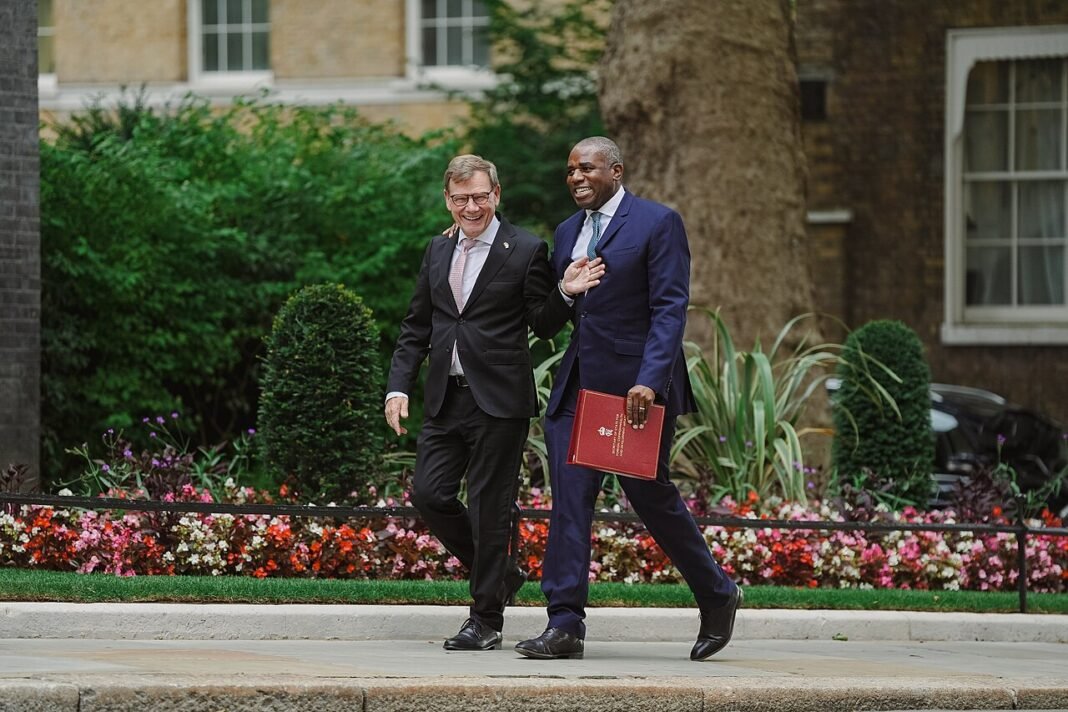

A ministry communiqué confirms that
Background
The Warsaw Security Forum, an annual gathering of European security officials, takes place against the backdrop of Ukraine’s continued vulnerability to Russian attacks. The forum provides a platform for discussion and coordination regarding the escalating hybrid warfare tactics employed by Russia. The statement does not mention prior meetings or agreements, but references the ongoing “Northolt Treaty” signed earlier this year between the UK and Poland. This treaty, the statement does not specify, deepens cooperation across defence, security and economic resilience, and strengthens joint action to tackle hybrid activities, including cyber and sabotage attacks.
Analysis
The Foreign Secretary’s focus on an “energy ceasefire” signals a recognition of the direct threat posed by Russia’s targeting of Ukraine’s energy infrastructure. This tactic, the statement does not address, is framed as an attempt to “weaponise winter” and plunge communities into darkness. The escalation of Russian attacks – 200 in the past week alone – highlights the Kremlin’s willingness to intensify its campaign of disruption. The emphasis on defending against “hybrid attacks across the continent” reflects a broadening understanding of the threat beyond Ukraine, encompassing Poland and potentially other European nations. The UK’s investment of over £300 billion in defence spending over the next four years, described as the “largest sustained increase in defence spending since the Cold War,” represents a significant shift in strategic priorities. The establishment of the “National Centre for Information Defence” and the partnership with Germany to tackle hybrid threats demonstrates a concerted effort to bolster defenses against these evolving threats.
Implications
The visit has implications for regional stability, particularly in Eastern Europe where countries like Poland face direct threats from Russian aggression. The commitment to a “stronger Europe in a stronger NATO” suggests a renewed focus on transatlantic cooperation and the need for collective action to deter further attacks. The increased defence spending will likely impact the UK’s budgetary priorities and could influence future defence procurement decisions. The deepening of the UK-Poland relationship, formalized through the “Northolt Treaty,” is expected to translate into increased operational cooperation and intelligence sharing. The deliberate targeting of energy infrastructure, as demonstrated by the attacks on Poland’s grid, raises concerns about the potential for escalation and the vulnerability of critical systems across Europe.
Outlook
Should the visit yield increased support for an energy ceasefire, and if European partners respond with a coordinated effort to bolster their defenses, it could mitigate the immediate impact of Russian attacks on Ukrainian communities. If the escalation of hybrid warfare continues, with further attacks on infrastructure and cyber-attacks, the UK’s investment in defence may prove insufficient to fully protect its interests. If Russia’s ambitions extend beyond Ukraine, as the statement does not address, the potential for wider conflict within Europe increases.