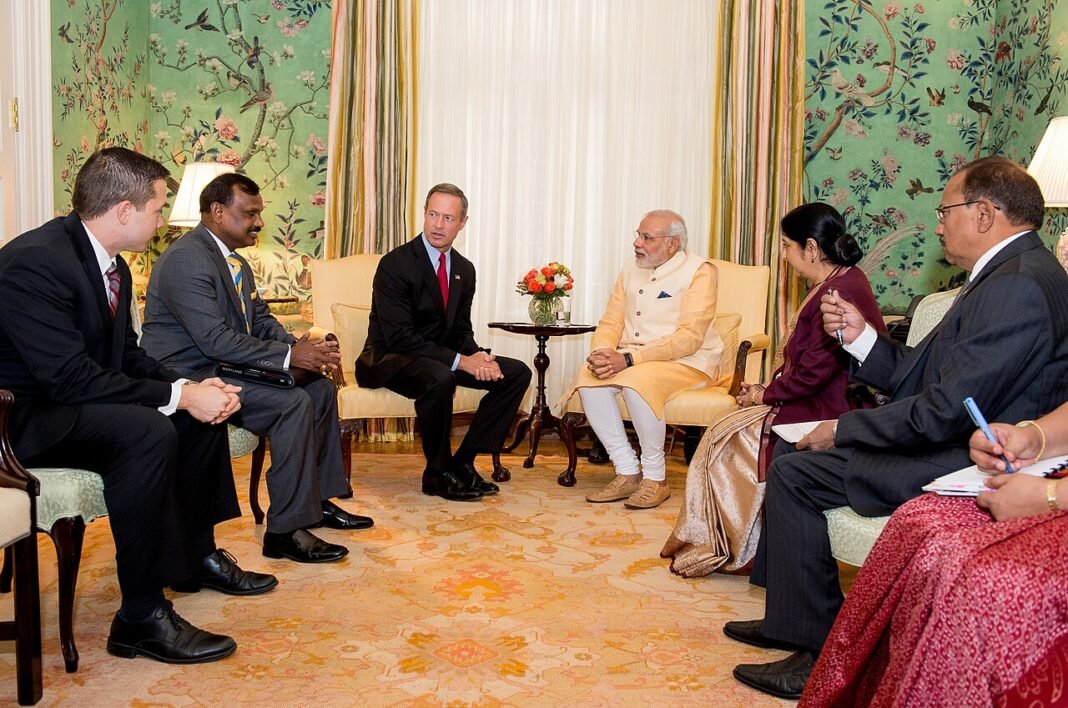
The foreign ministry readout describes The Republic of Singapore’s Ministry of Foreign Affairs issued a joint statement on 13 October 2026 detailing a renewed partnership with the Republic of Finland focused on artificial intelligence (AI) governance and broader technological cooperation. The statement, released following a meeting between Minister for Foreign Affairs Dr. Vivian Balakrishnan and Minister for Foreign Affairs Ms. Elina Valtonen in Singapore, establishes a shared commitment to shaping international AI policy. This commitment is predicated on the recognition that Singapore and Finland are both highly digitalised, globally connected, and innovation-driven economies, sharing a common interest in mitigating the risks associated with rapidly evolving technologies. The core of this renewed focus rests on ensuring AI is developed and utilized in a safe and responsible manner, aligning with a rules-based international order – a stated priority given the increasing influence of AI in foreign and security policy.

Background
Prior to this joint statement, bilateral cooperation between Singapore and Finland had been developing through various channels. The statement references the Group of Friends on Digital Technologies, established by Finland, Mexico and Singapore at the UN in 2019. This group, the statement indicates, intends to strengthen practical cooperation on emerging technologies, including AI. Furthermore, the Ministry of Foreign Affairs cited a visit by Dr. Vivian Balakrishnan to Ottawa, Canada, on 17 and 18 September 2026, as a demonstration of Singapore’s ongoing engagement with key international partners on technology policy. The statement also notes previous engagements, including the 2022 quantum technology memorandum of understanding (MoU) involving Singapore’s National Quantum Office, VTT Technical Research Centre of Finland, IQM and CSC IT Center for Science, and the 2026 bilateral health-sector MoU between Singapore and Finland covering medical research, health technology and AI.
Analysis
The agreement represents a pragmatic response to the accelerating global implications of AI. The stated commitment to “shaping international AI governance grounded in evidence-based policy-making and inclusive dialogue” reflects a cautious approach, avoiding explicit endorsement of specific regulatory models. Singapore’s focus on “trustworthy AI ecosystems” – combining its AI governance expertise with Finland’s strengths in secure digital infrastructure – suggests a desire for practical collaboration rather than ideological confrontation. The reference to “A Call for Control of Frontier AI Models” endorsed in September 2026 highlights a shared concern about the potential risks posed by advanced AI systems. The statement does not address the potential economic implications of this collaboration, nor does it provide details about the anticipated scope of commercial cooperation or any specific investment plans. The emphasis on “open, diverse, and resilient technology ecosystems” signals an awareness of the vulnerabilities associated with concentrated technological power – a common concern across many nations.
Implications
This deepening bilateral relationship has significant implications for regional stability and the broader international landscape. The commitment to international cooperation on AI governance could influence the development of norms and standards within multilateral forums, particularly the UN. The combined strengths of Singapore and Finland – Singapore’s focus on AI governance and its broader innovation ecosystem, and Finland’s expertise in secure digital infrastructure – position them as potential facilitators of dialogue and collaboration among nations with differing perspectives on AI development. The alignment with the EU-Singapore Digital Partnership, which shares a priority on responsible and human-centric AI, further strengthens this position. Should the visit yield a strengthened framework for technology cooperation, it could influence trade agreements and security partnerships involving other nations, particularly those with significant investments in AI.
Outlook
If the joint statement translates into tangible institutional partnerships, the statement suggests a potential model for other nations seeking to navigate the challenges of AI. Should Singapore and Finland successfully establish a working group on AI governance, it could serve as a pilot project for broader international cooperation. However, the statement offers no concrete mechanisms for enforcement or dispute resolution. Furthermore, the statement does not address the potential for competing national interests to undermine collaborative efforts, particularly regarding access to AI technologies or the control of data flows. The success of this initiative hinges on the ability of both countries to maintain a consistent commitment to shared principles and to adapt their approach to evolving technological developments – a process that is inherently uncertain.
Conclusion
The joint statement represents a measured step towards a coordinated approach to AI governance, but the absence of specific commitments or mechanisms for implementation leaves open the question of its long-term impact. The shared interest in fostering ‘trustworthy AI’ remains a central theme, yet the statement does not fully articulate the strategic rationale behind this ambition or the practical steps required to achieve it.
Sources & Further Reading
- Official press release
- Foreign ministry source
- 19 September 2026Official Visit by Minister for Foreign Affairs Dr Vivian Balakrishnan to Ottawa, Canada, 17 to 18 September 2026CountryCanadaOfficial Visit by Minister for Foreign Affairs Dr Vivian Balakrishnan to Ottawa, Canada, 17 to 18 September 2026Press Statements (19 Septemb)
- 1 September 2026Visit By Minister for Foreign Affairs Dr Vivian Balakrishnan to the Republic of Palau for the 55th Pacific Islands Forum Leaders Meeting 31 August to 1 September 2026CountryPalauVisit By Minister for Foreign Affairs Dr Vivian Balakrishnan to the Republic of Palau for the 55th Pacific Islands Forum Leaders Meeting 31 August to 1 September 2026Press Statements (1 Septembe)
- 30 August 2026Visit by Minister for Foreign Affairs Dr Vivian Balakrishnan to the Republic of Palau for the 55th Pacific Islands Forum Leaders Meeting 31 August to 1 September 2026CountryPalauVisit by Minister for Foreign Affairs Dr Vivian Balakrishnan to the Republic of Palau for the 55th Pacific Islands Forum Leaders Meeting 31 August to 1 September 2026.Press Statements (30 August)