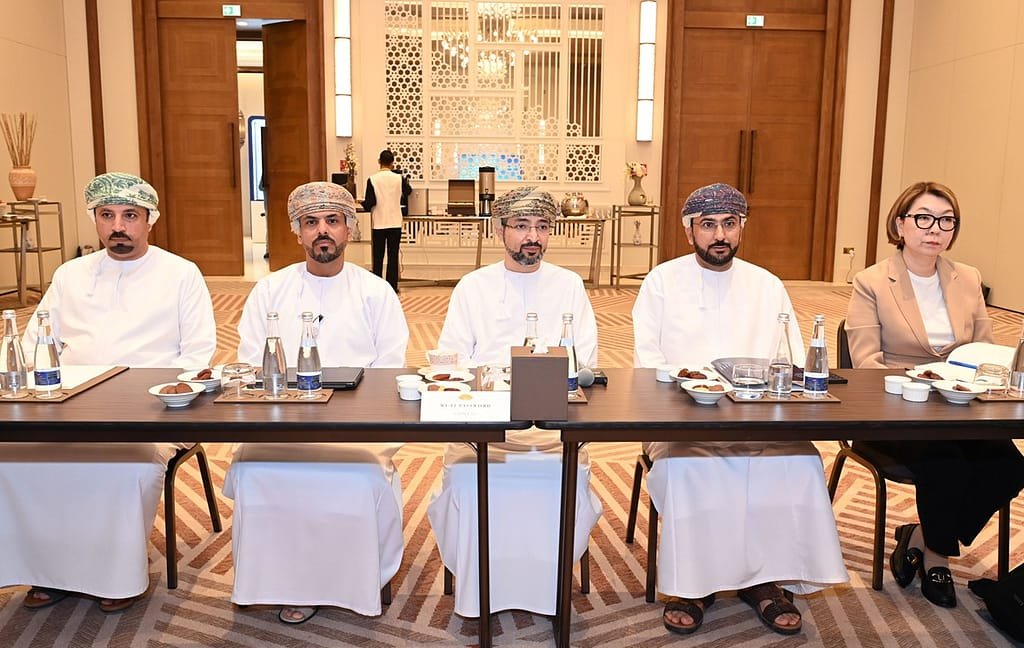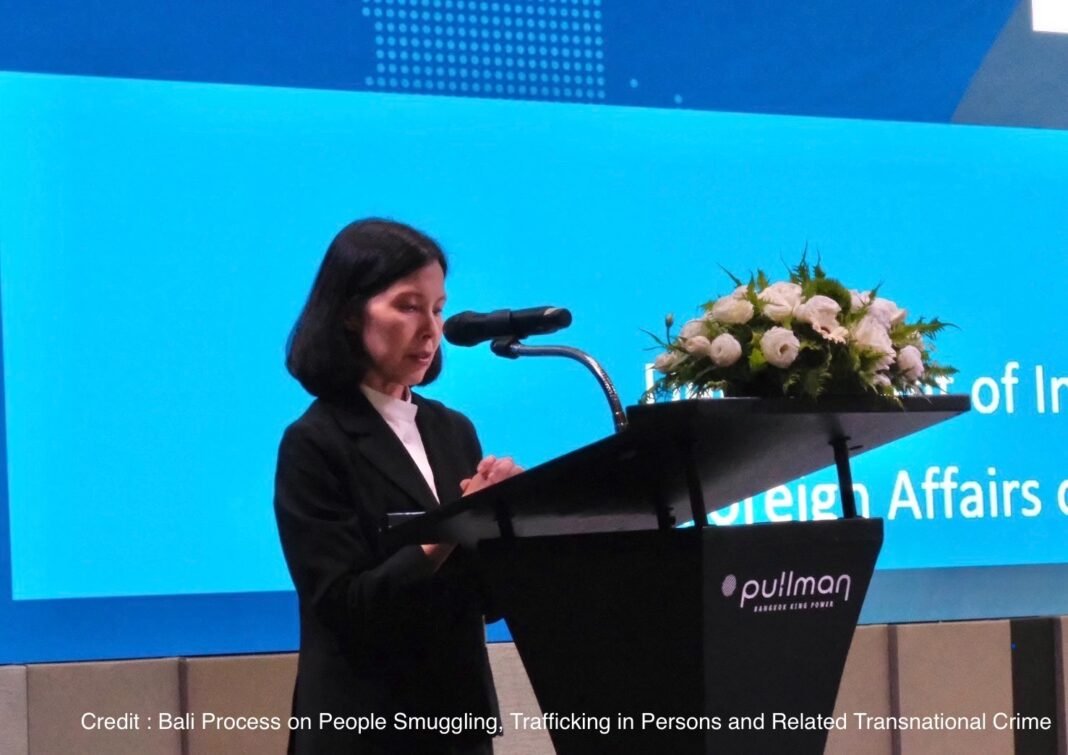
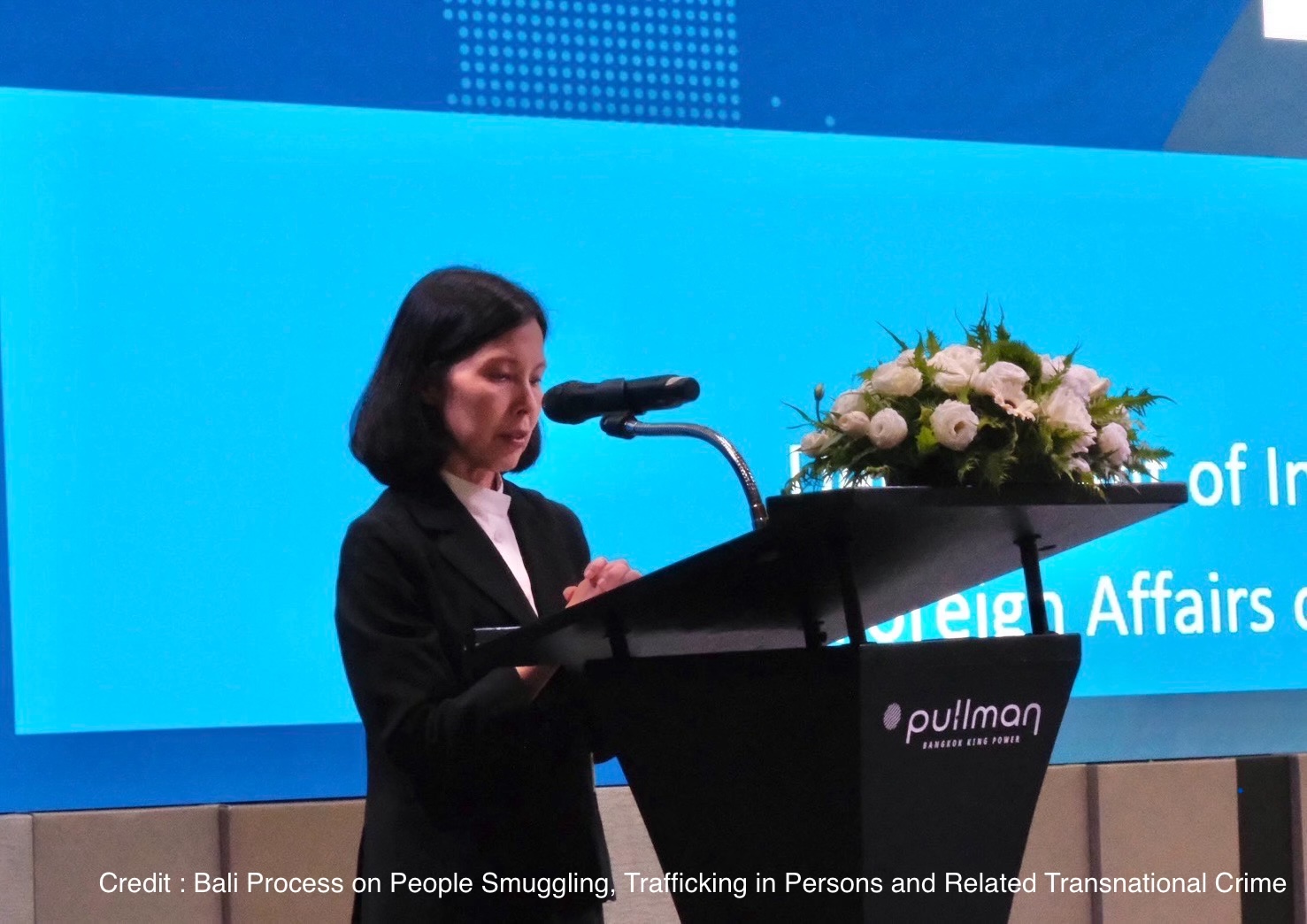
On 7 October 2026, Ms. Pinsuda Jayanama, Director-General of the Department of International Organizations, delivered a keynote address at the 5th RSO (Regional Support Office of the Bali Process) Border Forum, convened at Hotel Pullman Bangkok King Power. The statement does not mention the purpose of this forum, but the event’s title, “From Regional Commitments to Coordinated Action: Thailand’s Role in Advancing Practical Regional Cooperation,” provides a key framing. The Director-General was joined by H.E. Mr. Pablo Chiho Kang, Australian Ambassador to Thailand, Mr. Ben Reeves, RSO Co-Manager (Australia) and Mr. Alif Suaidi, Senior Executive Advisor, Indonesian Ministry of Immigration. The statement does not provide the number of countries represented, but indicates “over 30 countries in the region” were present as frontline officers responsible for immigration and border management.; see the full statement.
Background
The Bali Process, established in 2002, is a multilateral initiative focused on addressing transnational crimes related to people smuggling, trafficking in persons, and related criminal activities. The RSO serves as a regional coordination mechanism within the Bali Process. The statement does not mention the history of the Bali Process, but references “regional commitments” suggesting a prior framework of agreements. Prior to this forum, the Ministry of Foreign Affairs issued a statement on 9 October 2026 regarding Thailand’s ranking in the U.S. Department of State’s 2026 Trafficking in Persons Report (2026 TIP Report). The statement does not detail the specific ranking, but indicates Thailand continues to engage with international partners on combating human trafficking. The 31 August 2026 statement by the Vice Minister for Foreign Affairs at the 19th ATRANS International Annual Conference, while not directly relevant, underscores the Ministry’s broader engagement in international conferences concerning transnational crime. The statement does not provide details on any previous meetings with Australian or Indonesian counterparts that may have informed the Director-General’s address.
Analysis
The Director-General’s focus on “coordinated action” suggests a desire to move beyond aspirational commitments to tangible results. The statement does not elaborate on the nature of this “coordinated action,” nor does it specify the challenges Thailand intends to address with regional partners. The inclusion of online scams in the Director-General’s remarks indicates a shift in focus from traditional smuggling routes to more contemporary transnational crime. The presence of Australian and Indonesian representatives highlights the importance of these bilateral partnerships within the broader Bali Process framework. The statement does not address the potential tensions between Thailand’s own border management practices and the demands for greater transparency and accountability within the regional cooperation framework. The framing of Thailand’s role as “advancing practical regional cooperation” suggests a need to demonstrate tangible benefits to regional partners, potentially bolstering Thailand’s position within the Bali Process.
Implications
The forum’s outcome—if any—will have implications for Thailand’s regional security posture. Increased cooperation could improve Thailand’s standing within the Bali Process, potentially influencing future funding or operational support. However, the lack of specific commitments raises concerns about the level of engagement. Should the visit yield a commitment to joint intelligence sharing, it would represent a significant step forward. Conversely, a failure to achieve concrete outcomes could further erode confidence in Thailand’s ability to effectively address transnational crime. The event’s focus on “online scams” suggests a potential area of collaboration with Australia, given Australia’s expertise in combating cybercrime. The statement does not address the potential impact on Thailand’s trade relations, particularly with countries involved in the Bali Process.
Outlook
Should the visit yield a commitment to a joint working group focused on identifying and disrupting online scams, it would represent a tangible outcome. If the Australian and Indonesian representatives propose specific initiatives, Thailand’s response will be crucial. The statement does not address whether Thailand will accept the proposals, nor does it mention any potential disagreements. Should Thailand remain hesitant to commit to concrete actions, it risks further isolating itself within the Bali Process. The Director-General’s remarks suggest a continued emphasis on Thailand’s role as a facilitator of regional cooperation, but without a clear demonstration of leadership, this role may remain largely symbolic.
Conclusion
The Director-General’s keynote address provided a reiteration of Thailand’s commitment to regional cooperation, yet the absence of specific deliverables raises fundamental questions about the effectiveness of the Bali Process. The statement does not outline a clear path forward for translating regional commitments into tangible action.
Sources & Further Reading
- Official press release
- Foreign ministry source
- Vice Minister for Foreign Affairs delivers a keynote address at the 19th ATRANS International Annual Conference (31 Aug 202)
- Director-General of the International Organizations Department attends the Bali Process Steering Group Senior Officials’ Meeting (30 Aug 202)
- Thailand’s Ranking in U.S. Department of State’s 2026 Trafficking in Persons Report (2026 TIP Report) (9 Oct 2026)