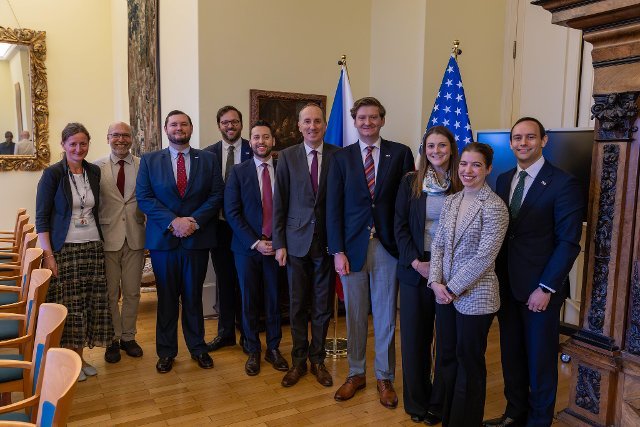
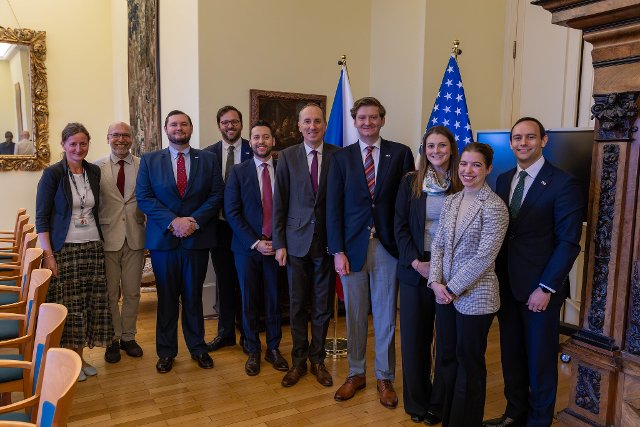
The Ministry of Foreign Affairs of the Czech Republic welcomed a delegation of staffers serving members of the United States Senate and the U.S. House of Representatives on 5 October 2026. The discussions focused on further strengthening Czech-U.S. relations, enhancing transatlantic cooperation, and exchanging views on current foreign policy and security issues. This event, detailed in a statement released by the ministry, marks a continued effort to solidify a strategic partnership between the two nations, a partnership built on shared values and a commitment to collective security. The timing of the visit—announced at 14:30—reflects a period of heightened international instability, as outlined in the accompanying statement.; see the full statement.
Background
The Ministry of Foreign Affairs’ engagement with U.S. Congressional staff represents a recurring element of Czech foreign policy. In March, State Secretary Miloslav Stašek met his Dutch counterpart, focusing on Czech-Dutch relations, current foreign policy issues, and the functioning of the two ministries. This pattern demonstrates a sustained effort to cultivate relationships with key influencers shaping U.S. foreign policy. The statement does not mention any specific prior agreements or meetings that directly preceded this event, but it highlights the ongoing prioritization of transatlantic relations within the Czech foreign policy framework. The delegation’s visit also coincides with the International Industrial Fair in Brno, an event the Czech side intends to leverage for promoting trade and investment ties.
Analysis
The core objective of the meeting, as articulated by First Deputy Minister of Foreign Affairs Jiří Brodský, appears to be to reinforce the Czech Republic’s strategic partnership with the United States. Brodský emphasized the “strategic importance of Czech-U.S. relations,” and the discussions centered around “security, defense and NATO, as well as trade, investment, modern technologies and innovation.” This suggests a deliberate effort to align Czech foreign policy with U.S. priorities, particularly in the context of the “profound changes in the international environment.” The inclusion of the E-1 Treaty Trader visa program signals a specific interest in attracting investment and bolstering trade relations – a move potentially driven by economic considerations. The focus on “evolving priorities of U.S. foreign policy” indicates a responsiveness to shifts in Washington’s strategic outlook, a common tactic in bilateral diplomacy. The delegation’s planned visit to the International Industrial Fair in Brno indicates an intention to leverage this engagement for practical outcomes.
Implications
This visit carries implications for regional stability, particularly concerning Ukraine. The discussion of “support for Ukraine” indicates a continued commitment to assisting the nation in its ongoing conflict, a position aligned with broader NATO consensus. The event also holds implications for transatlantic cooperation, reinforcing the Czech Republic’s role within the alliance. Furthermore, the stated interest in the E-1 Treaty Trader visa program could facilitate increased trade and investment flows between the two countries. The visit provides an opportunity to establish and deepen contacts with key advisors to U.S. lawmakers, who play an important day-to-day role in drafting legislation and shaping the foreign policy positions of the U.S. Congress.
Outlook
Should the visit yield further discussions on security and defense cooperation, the Czech Republic would be reinforcing its commitment to NATO. If the Czech side successfully secures agreement on the E-1 Treaty Trader visa program, it could represent a tangible step towards enhanced trade and investment ties. The event’s success hinges on the continued willingness of both sides to engage in substantive dialogue, particularly given the stated “evolving priorities of U.S. foreign policy.”