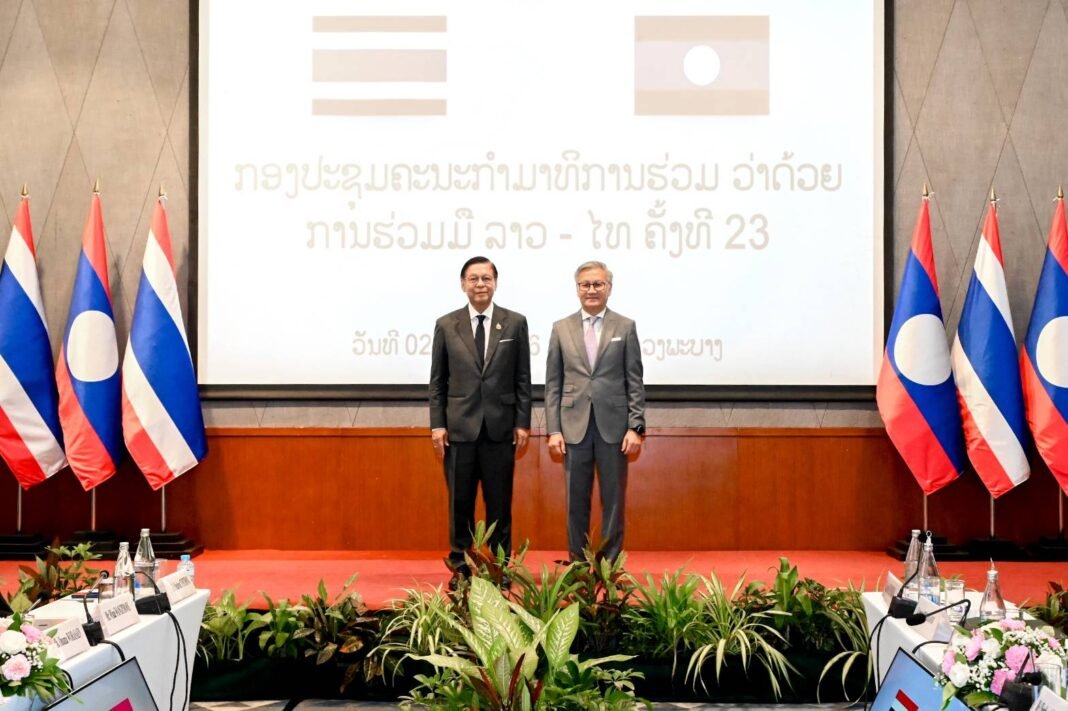
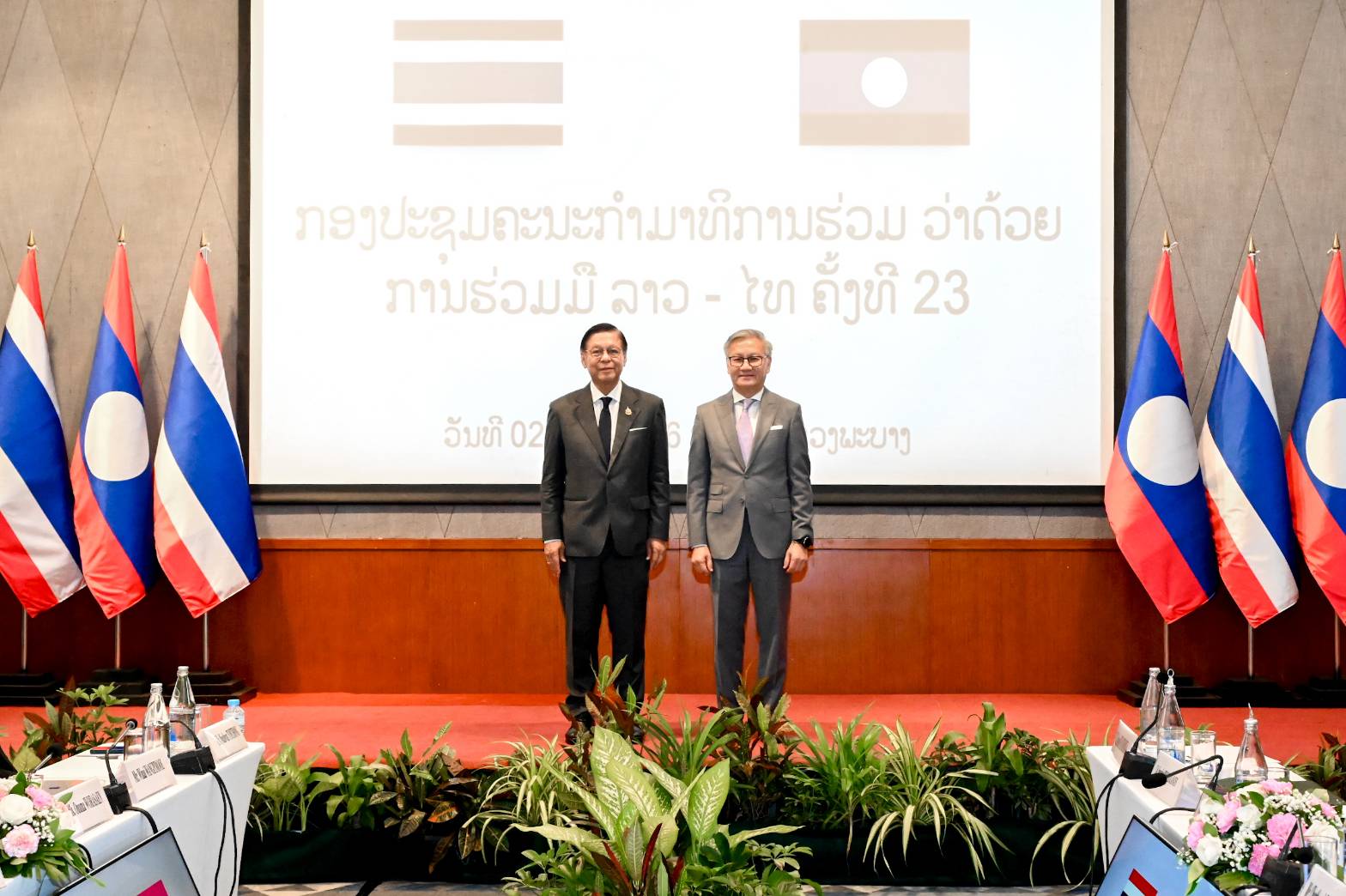
Per the government announcement, The most consequential concrete detail from the press release is that Deputy Prime Minister and Minister of Foreign Affairs Sihasak Phuangketkeow co-chaired the 23rd Meeting of the Joint Commission (JC) on Bilateral Cooperation between Thailand and the Lao PDR with H.E. Mr. Thongsavanh Phomvihane, Deputy Prime Minister and Minister of Foreign Affairs of the Lao PDR in Luang Prabang on 2 October 2026. This meeting, focused on bolstering the “strategic partnership for common security and development,” underscores a continued effort to manage the complex relationship between the two nations. The stated target of 11 billion USD in bilateral trade within 2027 represents a significant ambition, one that, if achieved, would represent a considerable shift in the economic dynamics of the region.
Background
The Joint Commission (JC) is the established mechanism for bilateral cooperation between Thailand and the Lao PDR. The statement does not mention the specific history of the JC, but it references the “20-Year ‘5S’ Foreign Affairs Masterplan,” a strategic framework established in 2016. This masterplan, as indicated by a reference to a prior statement from September 202, focuses on ‘Security, Stability, Sustainability, Synergy, and Service,’ reflecting a long-term commitment to the relationship. The press release also references a prior statement from September 2026, detailing the Deputy Prime Minister’s visit to Malaysia, indicating a consistent pattern of diplomatic engagement across Southeast Asia. These earlier statements, while not directly relevant to the immediate event, provide context for the ongoing diplomatic efforts and the Ministry’s priorities.
Analysis
The meeting’s focus on three key pillars – security, economic cooperation, and social and cultural affairs – reveals a deliberate attempt to address the multifaceted challenges inherent in the Thailand-Lao PDR relationship. The emphasis on “border security” is particularly noteworthy, given the ongoing disputes over demarcation and the persistent issues of narcotics trafficking and online scams. The statement does not address the underlying tensions driving these security concerns. The ambitious trade target of 11 billion USD within 2027 highlights Thailand’s economic ambitions and its desire to leverage the JC to stimulate growth in the border regions. This target, however, is contingent on successful infrastructure development, a point repeatedly emphasized. The inclusion of “clean energy” and the “ASEAN Power Grid” suggests a recognition of Thailand’s energy needs and a potential opportunity for collaboration, though the statement does not provide details regarding the scope of this cooperation. The focus on “twin cities” – Nan Province of Thailand and Luang Prabang of the Lao PDR – demonstrates a strategic effort to foster people-to-people connections and promote tourism, a sector particularly vulnerable to geopolitical shifts.
Implications
The JC meeting carries significant implications for regional stability. A successful increase in trade and investment between the two countries could have a positive ripple effect, fostering economic growth and potentially reducing incentives for illicit activities. However, the continued emphasis on “border security” suggests that underlying tensions remain a key risk factor. The focus on infrastructure development – specifically the Chiangman – Luang Prabang Bridge project – could further complicate the situation, particularly if construction is not managed effectively and does not address the root causes of border disputes. The commitment to the ASEAN Power Grid could contribute to greater regional energy security, but it also raises questions about the potential for geopolitical competition over energy resources. The stated goal of 3 million tourists per year represents a significant opportunity for both economies, but it also necessitates careful management of tourism infrastructure and environmental sustainability.
Outlook
Should the visit yield a concrete agreement on increased trade flows and the commencement of the Chiangman – Luang Prabang Bridge project, this would represent a positive, albeit incremental, step forward. If the trade target of 11 billion USD is not met, this would likely expose underlying weaknesses in Thailand’s economic strategy and potentially exacerbate tensions between the two countries. Should the security issues remain unresolved, the JC could become a site of further friction, potentially disrupting regional trade routes and undermining stability in the Mekong River basin. The statement does not address the potential for further disputes over water resources, a critical concern for both nations.
Conclusion
The 23rd Joint Commission meeting underscores the enduring, if complex, strategic partnership between Thailand and Laos. The commitment to continued dialogue and cooperation is evident, yet the fundamental challenges – particularly those related to border security and economic development – remain unresolved, leaving open the question of whether this collaboration will ultimately deliver on its stated objectives or simply perpetuate a cycle of intermittent tensions.
Sources & Further Reading
- Official press release
- Foreign ministry source
- Deputy Prime Minister and Minister of Foreign Affairs to pay official visit to Lao PDR (30 Sep 202)
- Deputy Prime Minister and Minister of Foreign Affairs to pay a working visit to Malaysia (4 Sep 2026)
- Opening Statement by the Deputy Prime Minister and Minister of Foreign Affairs at the First Meeting of the Conciliation Commission between Thailand and Cambodia under UNCLOS (15 Sep 202)