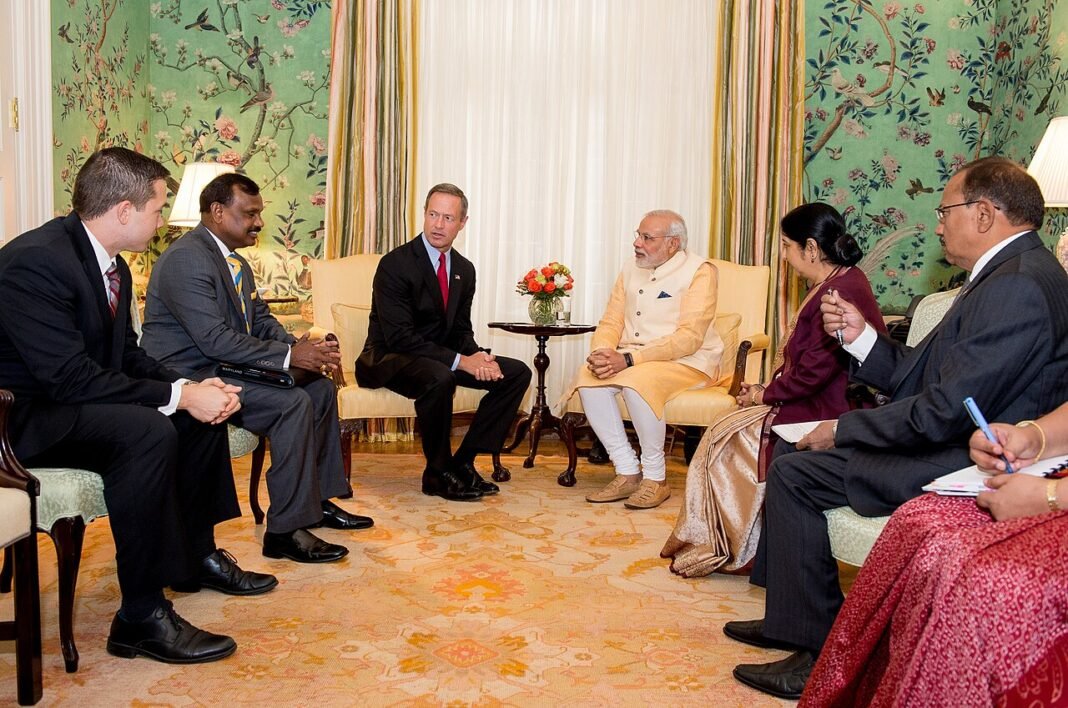
As set out in a formal announcement, The joint statement, released on September 22nd, 2026, reveals a meeting between the Foreign Ministers and high-level representatives of Australia, France, Germany, Japan, New Zealand, Poland, the Republic of Korea, and the United Kingdom. This second gathering, held on the margins of the United Nations General Assembly in New York, acknowledges a growing volatility in the strategic environment since the last such meeting in September 2025. The statement’s core purpose is to reaffirm shared principles and interests, particularly regarding international law and the UN Charter, as the partners navigate increased geopolitical fragmentation. The statement does not address the specific circumstances driving this meeting or the nature of the “volatile and fragmented” environment.

Background
The joint statement’s release follows a meeting of the G7 Development Ministers, chaired by Eléonore Caroit, on September 23rd, 2026, and an informal G7 Foreign ministers’meeting on the sidelines of the United Nations general Assembly G7 Communiqué on September 22nd 2026. Jean-Noël Barrot, Minister for Europe and Foreign Affairs, invited the G7 Foreign Ministers of Canada, Italy, Japan, Germany, the United Kingdom, the United States of America, and the High Representative of the European Union, to meet on the sidel. Furthermore, the statement references a Joint Ministerial Communiqué of the Foreign Policy and Global Health Initiative, convened on September 24th, 2026, involving representatives from Brazil, France, Indonesia, Norway, Senegal, South Africa, and Thailand. These gatherings suggest a sustained effort to coordinate foreign policy across multiple domains, including development, health, and security.
Analysis
The statement’s framing – acknowledging a “more volatile and fragmented” strategic environment – suggests a response to evolving global dynamics. The reaffirmation of shared principles, particularly the UN Charter, reflects a desire to maintain a framework for international cooperation, despite growing challenges. The emphasis on “hybrid threats” and “resilience of our societies” indicates a prioritization of defense and security, aligning with a broader trend among Western nations. The statement’s focus on countering “unilateral attempts to change the status quo across the Taiwan Strait” highlights a continued concern regarding regional stability. The statement does not address the underlying causes of this perceived volatility or the specific implications for the EIPP’s strategic priorities. It’s clear the partners are attempting to signal continued unity, but the underlying tensions remain unaddressed.
Implications
For policymakers, the joint statement represents a commitment to continued collaboration within the EIPP framework. This signals an intention to maintain a robust security partnership, particularly in confronting shared challenges like hybrid threats. The renewed emphasis on upholding UNCLOS suggests a desire to maintain the international legal order, especially in the face of potential challenges to maritime security. The reiteration of support for the sovereignty and territorial integrity of all states is a standard diplomatic posture, but becomes increasingly relevant given Russia’s ongoing military actions. The statement does not address the potential impact of this collaboration on broader trade relationships or defense spending commitments.
Outlook
Should the visit yield further discussions on UN reforms, the EIPP’s commitment to strengthening the organization’s efficiency and resilience could become a key component of their foreign policy strategy. If the partners continue to prioritize counter-hybrid threat cooperation, this could lead to increased joint exercises and intelligence sharing. However, should the strategic environment continue to deteriorate, without a corresponding strengthening of multilateral institutions, the EIPP’s ability to effectively address shared challenges will be significantly constrained. The statement does not offer a timeline for future meetings or specific actions beyond the stated commitment to collaboration.
Sources & Further Reading
- Official press release
- Foreign ministry source
- Meeting of G7 Development Ministers in New York (September)
- Informal G7 Foreign ministers'meeting on the sidelines of the United Nations… (September)
- Joint Ministerial Communiqué of the Foreign Policy and Global Health Initiative (September)
- Germany: Joint Statement of the Foreign Ministers and high-level representatives of Australia, France, Germany, Japan, New Zealand, Poland, Republic of Kore… (Unknown Da)