
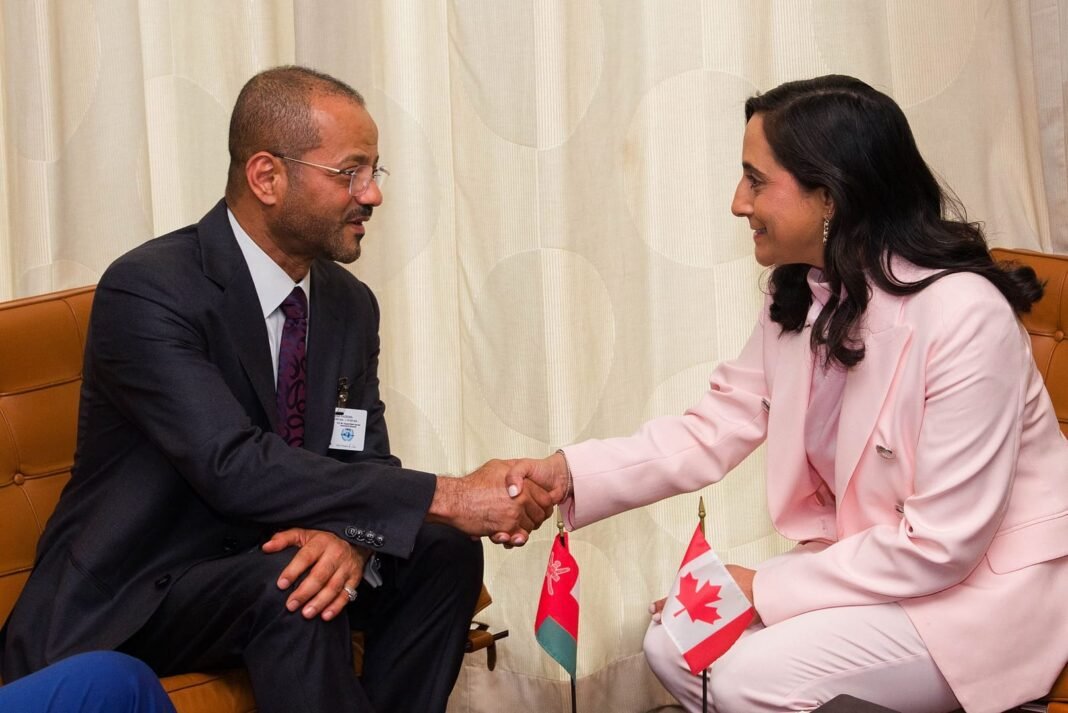
The foreign ministry readout describes Ottawa, Ontario – September 25, 2026 – Global Affairs Canada announced that the Honourable Maninder Sidhu, Minister of International Trade, met with Dr. Johann Wadephul, Germany’s Minister for Foreign Affairs, last week. The purpose of the meeting was to discuss Canada and Germany’s growing economic relationship, with particular attention given to investments from Roch Tech Lithium, Germany’s H2Global initiative, Volkswagen Group’s PowerCo SE, and the Transatlantic Business Initiative. This focus on critical minerals supply chains represents a significant step in Canada’s efforts to diversify its export markets and secure access to essential materials.

Background
The meeting took place on September 25, 2026, in Ottawa. The statement does not mention prior meetings between the two ministers. The context for this engagement is the ongoing bilateral relationship between Canada and Germany, which has been characterized by increasing trade and investment flows. The statement does not mention any specific agreements reached during the meeting, but it highlights the mutual interest in collaborating on projects within the energy and critical minerals sectors.
Analysis
The presence of delegates from multiple German companies – Roch Tech Lithium, H2Global, PowerCo SE, and the Transatlantic Business Initiative – indicates a concerted effort by Germany to diversify its supply chain for critical minerals. This suggests a recognition by Germany of potential vulnerabilities in its existing supply chains, particularly concerning lithium and battery technologies. The engagement with these companies underscores Canada’s ambition to become a key supplier of these materials to the European market. The statement does not address the potential implications of this collaboration for Canadian industry or the broader global market dynamics of critical minerals.
Implications
This meeting signals a deepening of Canada’s strategic engagement with the European Union, specifically Germany, regarding critical minerals. Should the visit yield further investment and partnerships, it could bolster Canada’s position as a leading supplier of raw materials to the automotive and energy sectors. The focus on H2Global, Germany’s initiative to develop green hydrogen technologies, suggests a potential area for future collaboration. The statement does not address the potential impact of this cooperation on Canadian trade policy or its relationship with other major mineral-producing nations.
Outlook
If the meeting’s discussions are successfully translated into concrete investment commitments, Canada could experience an influx of capital into its critical minerals sector. Should the collaboration with Germany prove fruitful, it could incentivize other European nations to pursue similar partnerships with Canada. The statement does not address any potential risks associated with this increased reliance on a single trading partner.
Conclusion
The meeting between Sidhu and Wadephul represents a targeted effort to solidify a key economic relationship. However, the statement offers no indication of the specific outcomes or the broader strategic implications of this engagement, leaving open the question of Canada’s long-term approach to securing its position within the global critical minerals market.
.jpg)