
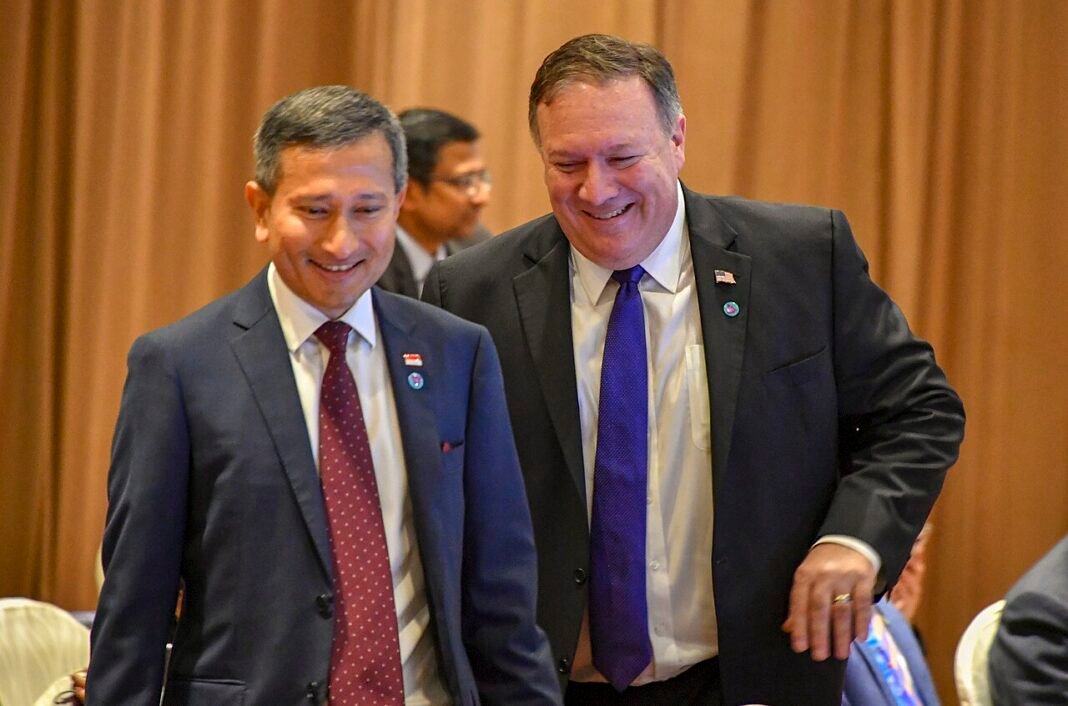

The foreign ministry readout describes The statement from the Ministry of Foreign Affairs details a working visit by Minister for Foreign Affairs Dr Vivian Balakrishnan to the State of Qatar from 16 to 17 September 2026. The visit’s primary purpose is to co-chair the third iteration of the Qatar–Singapore Implementation Monitoring Mechanism (IMM) with Qatar Minister of State for Foreign Affairs Sultan Bin Saad Al Muraikhi on 16 September 2026. This event matters because it represents a formalized process for translating bilateral agreements into tangible outcomes, a cornerstone of Singapore’s foreign policy approach to regional partnerships. The statement does not mention any specific agreements or outcomes expected from the IMM’s review.
Background: Singapore and Qatar enjoy warm and longstanding relations, underpinned by the Qatar–Singapore High Level Joint Committee (HLJC), the primary platform for advancing bilateral cooperation. The HLJC, as described in a statement from 5 September 2026, represents the foundational framework for this relationship. The IMM supports the work of the HLJC by facilitating regular follow-up on bilateral initiatives and translating them into practical outcomes. The statement from 30 August 2026 describes the HLJC as the “primary platform for advancing bilateral cooperation.” The third IMM will review the progress of bilateral cooperation and identify opportunities to further deepen cooperation between Singapore and Qatar. The statement does not address the composition or mandate of the IMM beyond its support role.
Analysis: The continued focus on the IMM suggests a desire for sustained engagement with Qatar, reflecting a strategic prioritization of this relationship. The purpose of the IMM, as outlined, is to ensure that agreements are implemented, but the statement offers no insight into the challenges or priorities driving this cooperation. The engagement highlights Singapore’s approach to bilateral relations – a commitment to operationalizing agreements through structured mechanisms. The fact that the visit is being co-chaired with Qatar Minister of State for Foreign Affairs Sultan Bin Saad Al Muraikhi indicates a shared commitment to the process. The statement does not mention any specific sectors of cooperation being prioritized.
Implications: This visit, if implemented as described, does not inherently alter regional stability. It represents a continuation of existing diplomatic engagement, a standard practice for Singapore’s foreign policy. The operationalization of the IMM, should it yield positive results, could strengthen trade and investment ties between the two countries. The visit does not address any potential security concerns or strategic alignments. The statement does not offer any insights into the potential impact on broader regional dynamics.
Outlook: Should the visit yield a commitment to further review existing bilateral initiatives, it would signal a proactive approach to relationship management. If the third IMM meeting identifies specific areas for collaboration, it would represent a tangible step forward. However, the statement does not address the possibility that the IMM may simply reaffirm existing priorities or identify minor adjustments. The visit, in itself, offers no indication of future strategic shifts.
Conclusion: The visit to Qatar underscores Singapore’s continued prioritization of the Qatar–Singapore relationship, but the statement reveals no new strategic considerations or potential shifts in the bilateral dynamic. The mechanism’s continued operation remains a procedural step, devoid of substantive implications.
Sources & Further Reading
- Official press release
- Foreign ministry source
- 1 September 2026Visit By Minister for Foreign Affairs Dr Vivian Balakrishnan to the Republic of Palau for the 55th Pacific Islands Forum Leaders Meeting 31 August to 1 September 2026CountryPalauVisit By Minister for Foreign Affairs Dr Vivian Balakrishnan to the Republic of Palau for the 55th Pacific Islands Forum Leaders Meeting 31 August to 1 September 2026Press Statements (1 Septembe)
- 30 August 2026Visit by Minister for Foreign Affairs Dr Vivian Balakrishnan to the Republic of Palau for the 55th Pacific Islands Forum Leaders Meeting 31 August to 1 September 2026CountryPalauVisit by Minister for Foreign Affairs Dr Vivian Balakrishnan to the Republic of Palau for the 55th Pacific Islands Forum Leaders Meeting 31 August to 1 September 2026.Press Statements (30 August)
- 5 September 2026Official Visit by Prime Minister of the Grand Duchy of Luxembourg Luc Frieden, 6 to 8 September 2026CountryLuxembourgOfficial Visit by Prime Minister of the Grand Duchy of Luxembourg Luc Frieden, 6 to 8 September 2026Press Statements (5 Septembe)

.jpg)