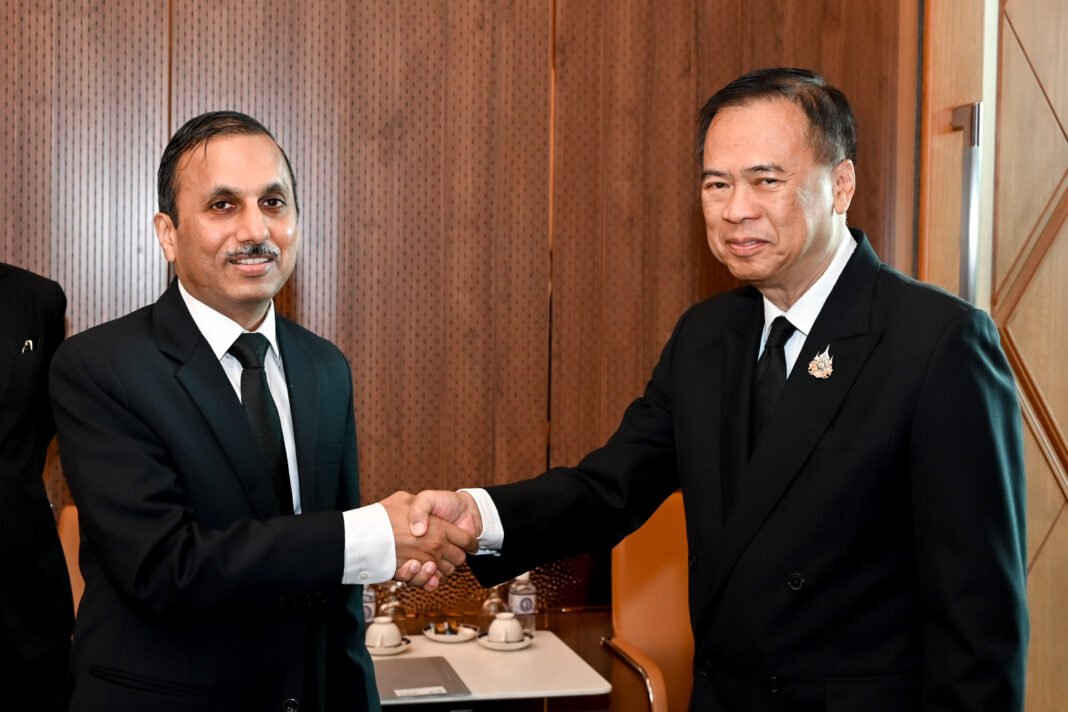

A ministry communiqué confirms that During Secretary of State Marco Rubio’s trip to Barranquilla, Colombia, on September 8, he and Colombian Foreign Minister Omar Bula signed two arrangements to advance cooperation in the fields of critical minerals and civil nuclear cooperation. These arrangements are part of our countries’ efforts to reinvigorate the over 200-year U.S.-Colombia partnership and restore it as a linchpin of security and economic cooperation in our hemisphere. The statement does not address any specific funding amounts or timelines for these projects.
Background: The signing follows previous statements by the Ministry regarding Secretary Rubio’s travel to Colombia, Ecuador, and Peru from September 8-10. In March, the Ministry released a statement outlining Secretary Rubio’s planned trip to strengthen key U.S. relationships in the region. This arrangement builds on the established framework of over 200 years of partnership between the United States and Colombia. The Trump Administration launched the Foundry School to build the workforce behind America’s manufacturing comeback, indicating a continued focus on industrial capacity within the hemisphere. Tajikistan Independence Day was commemorated on September 8, with Secretary Rubio extending congratulations to the nation.
Analysis: The establishment of these arrangements represents a deliberate effort by the United States to secure access to critical minerals, resources increasingly viewed as essential for both economic and national security. The inclusion of civil nuclear cooperation signals a broader strategic intent to deepen bilateral ties beyond traditional areas of trade and defense. The commitment to mobilize government and private sector support—via guarantees, loans, equity, offtake arrangements, insurance, or regulatory facilitation—demonstrates a willingness to invest in this partnership. The framework’s stipulations regarding streamlined permitting and price floors suggests an acknowledgement of potential market volatility surrounding critical minerals. The agreement on civil nuclear cooperation, grounded in Non-Proliferation Treaty obligations and International Atomic Energy Agency safeguards, reflects the U.S.’s desire to support Colombia’s ambitions for energy security while mitigating proliferation risks.
Implications: These arrangements could significantly impact regional trade flows, potentially reshaping supply chains for critical minerals within South America. The focus on market-protective pricing mechanisms indicates a concern over potential exploitation of Colombian resources. Increased collaboration in civil nuclear technology and infrastructure raises questions about Colombia’s long-term energy strategy and its alignment with international non-proliferation standards. Should the visit yield tangible progress, it could strengthen U.S. influence within the Latin American Security Initiative. The frameworks may also present opportunities for U.S. companies to invest in mineral extraction and processing projects in Colombia, further bolstering economic ties.
Outlook: If the critical minerals framework is implemented as described, it would create a dedicated mechanism for jointly identifying and financing mining and processing projects within six months of signing. Should this process prove successful, it could accelerate the development of Colombian mineral resources. Furthermore, should Colombia successfully deploy nuclear power to advance energy security and deepen the two countries’ broader strategic relationship, it would represent a significant shift in regional energy dynamics. The agreement does not address potential challenges related to permitting or regulatory approvals within Colombia, suggesting a need for ongoing diplomatic engagement.
Conclusion: The signing of these arrangements underscores a renewed U.S. focus on security cooperation within its own hemisphere—a priority that remains undefined beyond the stated goals of bolstering stability and strengthening partnerships. The commitment to collaborative efforts in critical minerals and civil nuclear power highlights the complex interplay between economic interests, strategic objectives, and regional geopolitical considerations.