
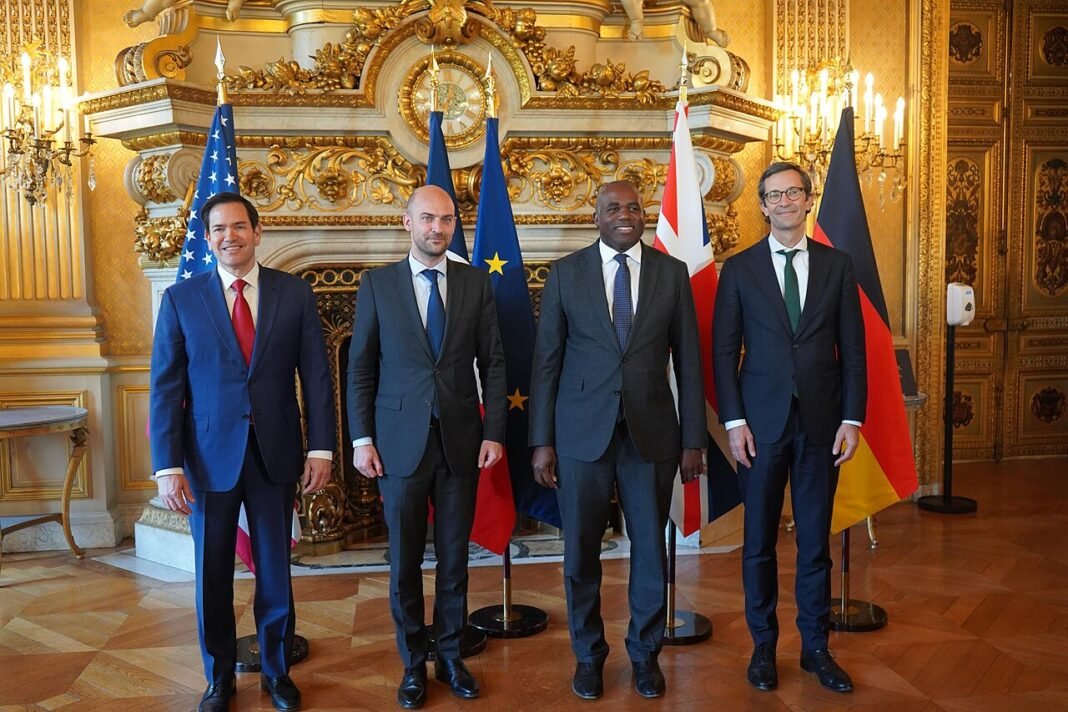
A ministry communiqué confirms that The telephone conversation between Minister for Europe and Foreign Affairs Jean-Noël Barrot and his Ukrainian counterpart, Mr Andrii Sybiha, took place on August 27th, 2026. The call focused on the ongoing situation in Ukraine, where Russia continues systematic strikes against civilian targets and infrastructure. This action follows four and a half years of conflict, during which the Ukrainian people have demonstrated heroic resistance.

Background
The statement does not mention specific details regarding the nature or intensity of the Russian attacks. However, it is clear that the situation remains precarious for Ukraine. The call occurred within the context of France’s ongoing foreign policy engagement with the country and its broader European commitments.
The ministers discussed ways of maintaining and stepping up pressure on Russia. This aligns with France’s role as the current President of the G7, a group committed to coordinating international responses to the conflict. The conversation also referenced forthcoming international meetings, specifically the United Nations General Assembly scheduled for September.
Analysis
The call highlights the sustained commitment of France and its European partners to Ukraine’s defense. The focus on maintaining and intensifying pressure suggests a recognition of the need to escalate support in response to Russia’s actions. This is conditioned by the ongoing, increasingly intense strikes.
The reference to the United Nations General Assembly indicates an understanding that this forum represents a key opportunity to mobilize international support for Ukraine’s fight to safeguard its sovereignty, freedom and independence. The timing of the call, coinciding with the recent celebration of Ukraine’s 35th anniversary of independence, underscores the importance of continued solidarity.
Implications
The conversation has implications for European foreign policy as a whole. Should the visit yield further commitment from France and its partners, it could strengthen the framework for bilateral and multilateral support to Ukraine. The call also reinforces France’s long-term dedication to supporting Ukraine until a just, lasting peace is concluded.
The upcoming United Nations General Assembly presents an opportunity to galvanize international support around Ukraine’s cause. This will be facilitated by France’s position as G7 President and the broader momentum built over the past year.
Outlook
If the situation on the ground continues to deteriorate, should the visit yield no tangible increase in international support, a further escalation of pressure on Russia may become necessary. This could involve expanded sanctions or increased military assistance to Ukraine – actions not explicitly mentioned in the statement.
Should France maintain its commitment as indicated, continued efforts with all partners will be crucial to achieving a just, lasting peace. The long-term nature of this engagement is explicitly stated.
Conclusion
The telephone conversation confirms the enduring nature of France’s support for Ukraine, but it does not offer any indication of shifts in the strategic landscape or new avenues for intensified action against Russia. The question remains whether sustained international commitment can effectively counter Russia’s actions and secure a lasting resolution to the conflict.

.jpg)