
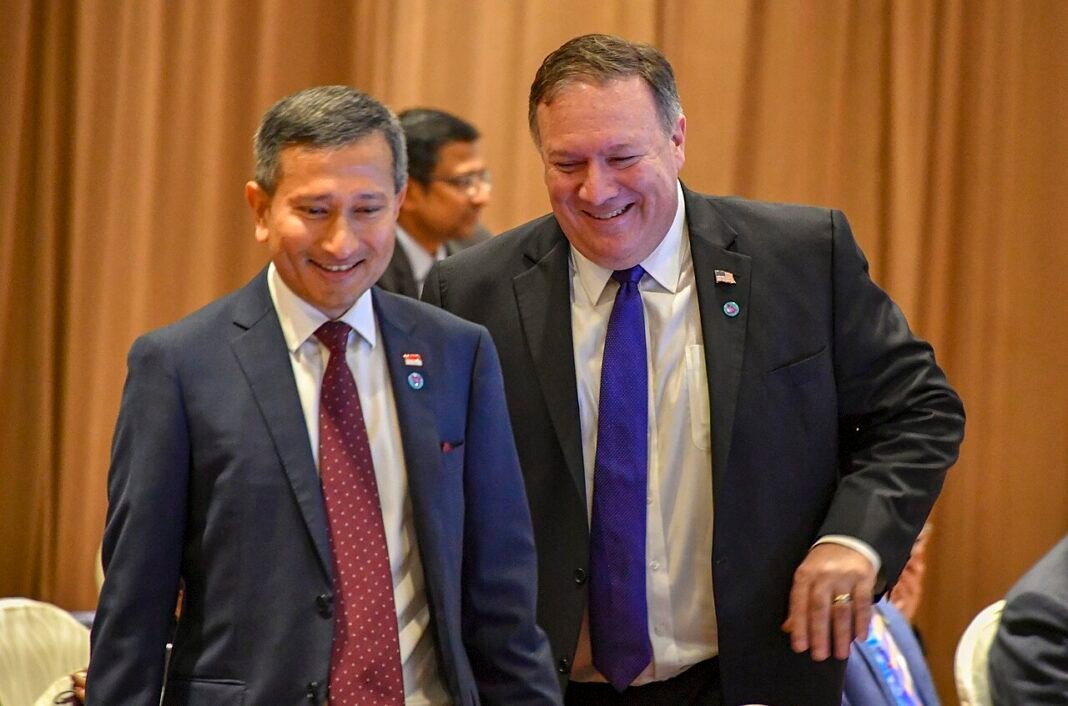
As set out in a formal announcement, The most consequential concrete detail from the statement is that Dr Vivian Balakrishnan, Minister for Foreign Affairs of Singapore, discussed ambitions to make the Pacific Islands a 100% renewable powered region with the leaders of the Pacific Islands Forum on September 1, 2026 (the statement does not mention dates beyond this). This matters because it frames energy security as fundamentally linked to climate change mitigation and strategic autonomy for small states. The statement does not address the specific goals or timelines for achieving this ambition.

Background
The 55th Pacific Islands Forum Leaders Meeting in Koror, Palau, represents a recurring platform for regional cooperation among Pacific Island nations. The Leaders Ascent Dialogue on Climate-Smart Investment is a side event to the broader forum, focusing specifically on investment strategies aligned with climate resilience and renewable energy deployment. Prior meetings of the Pacific Islands Forum have consistently addressed issues of vulnerability to climate change, particularly sea-level rise and extreme weather events – challenges that directly inform discussions about alternative energy sources. The statement does not mention previous agreements or bodies related to regional energy cooperation.
Analysis
Balakrishnan’s remarks reveal a stark contrast in circumstances between Singapore and the Pacific Island nations. The minister identifies a key challenge: the high cost of generating electricity from diesel, the prevalent source across the region – a situation exacerbated by dispersed island geography. This suggests that the Pacific Islands face significant economic barriers to adopting more readily available renewable energy technologies. His argument hinges on economies of scale achievable through a regional grid, mirroring Singapore’s experience with ASEAN – a project focused on building an interconnected power grid across Southeast Asia. The statement does not address whether Singapore has considered similar initiatives for the Pacific region.
The minister’s framing of the issue—that “you are small and dispersed”– highlights a fundamental constraint on renewable energy development in the islands, contrasting sharply with Singapore’s limited land area and alternative energy disadvantages. The statement does not address why gas-powered combined cycle turbines were not already implemented across the Pacific Islands. His suggestion of connecting to Australia’s renewable energy superpower represents an attempt to leverage external resources and expertise.
Implications
Balakrishnan’s discussion has potential implications for regional stability, particularly concerning energy security. Should Singapore’s ideas regarding a Pacific grid be adopted – if the political will and financial commitments align – it could dramatically reshape the region’s economic landscape. The statement does not address how such a grid might impact existing trade relationships or geopolitical alliances within the Pacific. Furthermore, the initiative raises questions about access to technology and expertise, potentially creating dependencies on external actors like Australia.
Outlook
If Singapore continues to offer technical assistance and training programs – as outlined in the statement – it could foster greater regional collaboration. Should this approach yield tangible results in terms of reduced energy costs and increased renewable energy adoption, the Pacific Islands would gain strategic autonomy. However, if political obstacles or financing challenges impede progress – if the IEA regional training programme proves insufficient – the ambition to become 100% renewable powered may remain unrealized.
Conclusion
Balakrishnan’s presentation concludes with a call for collective action against an “existential challenge,” yet leaves open the critical question of how disparate nations—particularly small, dispersed island states—can effectively combine their resources and political will to achieve ambitious climate goals. The statement does not offer any concrete proposals for overcoming these inherent logistical difficulties.
Sources & Further Reading
- Official press release
- Foreign ministry source
- 2 September 2026Visit by Minister of State in the Ministry of Foreign Affairs and the Ministry of Home Affairs Zhulkarnain Abdul Rahim to Batam, Indonesia 3 to 4 September 2026CountryIndonesiaVisit by Minister of State in the Ministry of Foreign Affairs and the Ministry of Home Affairs Zhulkarnain Abdul Rahim to Batam, Indonesia 3 to 4 September 2026Press Statements (2 Septembe)
- ASEAN



.jpg)