
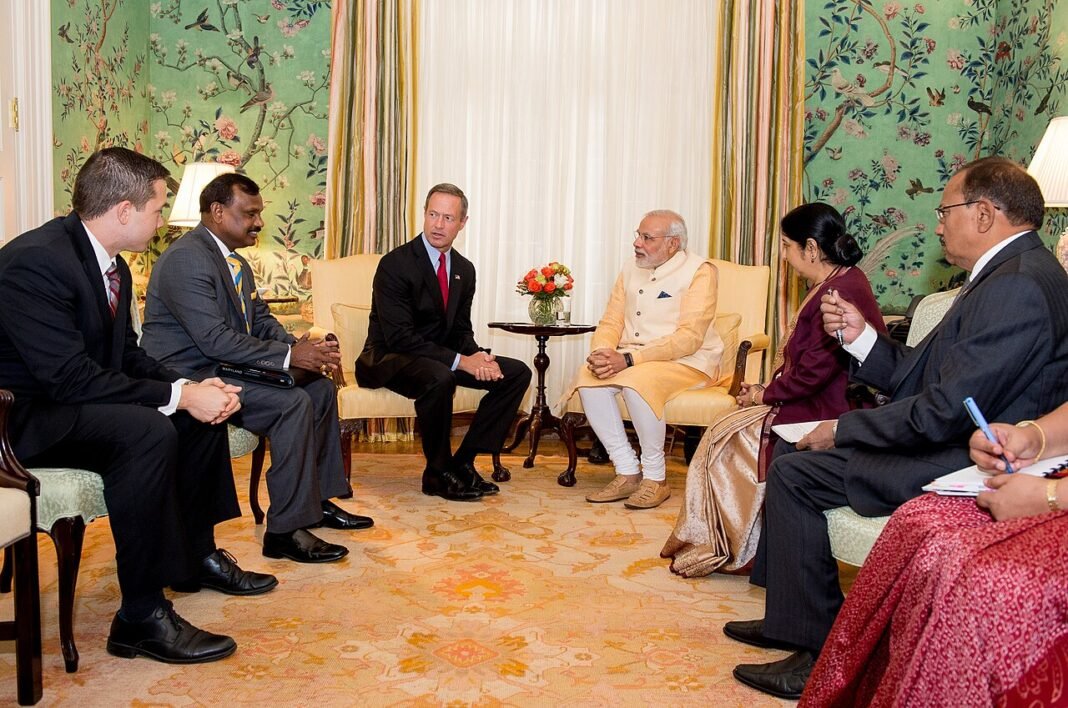
The official readout frames the trip as On August 31st, 2026, Prime Minister Shri Narendra Modi met with the Prime Minister of the Republic of Armenia, H.E. Mr. Nikol Pashinyan, in Bishkek, Kyrgyz Republic during the 26th SCO Summit. This meeting represents the first engagement between the two leaders since Mr. Pashinyan’s re-appointment following June’s general elections in Armenia. The significance lies in the implicit acknowledgement of a shift in Armenia’s political landscape and underscores a renewed effort by India to cultivate a strategic partnership within a region increasingly dominated by geopolitical competition.

Background
Prior to this meeting, engagement between New Delhi and Yerevan had been sporadic. The statement does not address the specific circumstances surrounding Mr. Pashinyan’s initial appointment or the political transitions that have characterized Armenia in recent years. However, the agreement to meet on the sidelines of the SCO Summit – a platform primarily focused on Eurasian economic cooperation – signals a deliberate strategy by India to broaden its diplomatic footprint and leverage this forum for bilateral discussions. The re-appointment of Mr. Pashinyan following elections highlights Armenia’s ongoing political instability.
Analysis
The discussion of “bilateral cooperation in defence, economic, pharma, mining, education and cultural fields” indicates a targeted approach by India to deepen ties with Armenia. The emphasis on ‘mining’ is particularly noteworthy, given the ongoing disputes over border territories between Armenia and Azerbaijan – an issue the statement does not address directly. The inclusion of ‘pharma’ suggests a potential avenue for investment and technological transfer, aligning with India’s broader ambitions in the healthcare sector. The reference to regional and global developments, including “the situation in West Asia,” signals a recognition of shared security concerns, though the statement provides no detail on how this translates into concrete action.
Implications
For India, the meeting’s success hinges on its ability to translate diplomatic engagement into tangible benefits. The stated commitment to “further strengthening these ties” carries limited weight without a clear framework for investment or security cooperation. The discussion regarding the “Armenia-Azerbaijan Peace Agreement” suggests an interest in mediating regional conflicts – a role that could be strategically advantageous, but also exposes India to heightened risk given its neutral stance.
Outlook
Should the visit yield increased engagement on defence or economic projects, it would represent a significant step. If the situation in West Asia continues to escalate, India’s role as a regional mediator will be tested. Should the meeting primarily focus on maintaining diplomatic channels and exchanging information regarding the Armenia-Azerbaijan Peace Agreement, the strategic impact will remain limited.
Conclusion
The meeting confirms a renewed interest in bilateral relations between India and Armenia, but the limited scope of the discussion – as articulated by the statement – raises questions about the depth and potential impact of this engagement. The underlying challenges to regional stability, particularly concerning the unresolved disputes with Azerbaijan, remain largely unaddressed.

.jpg)